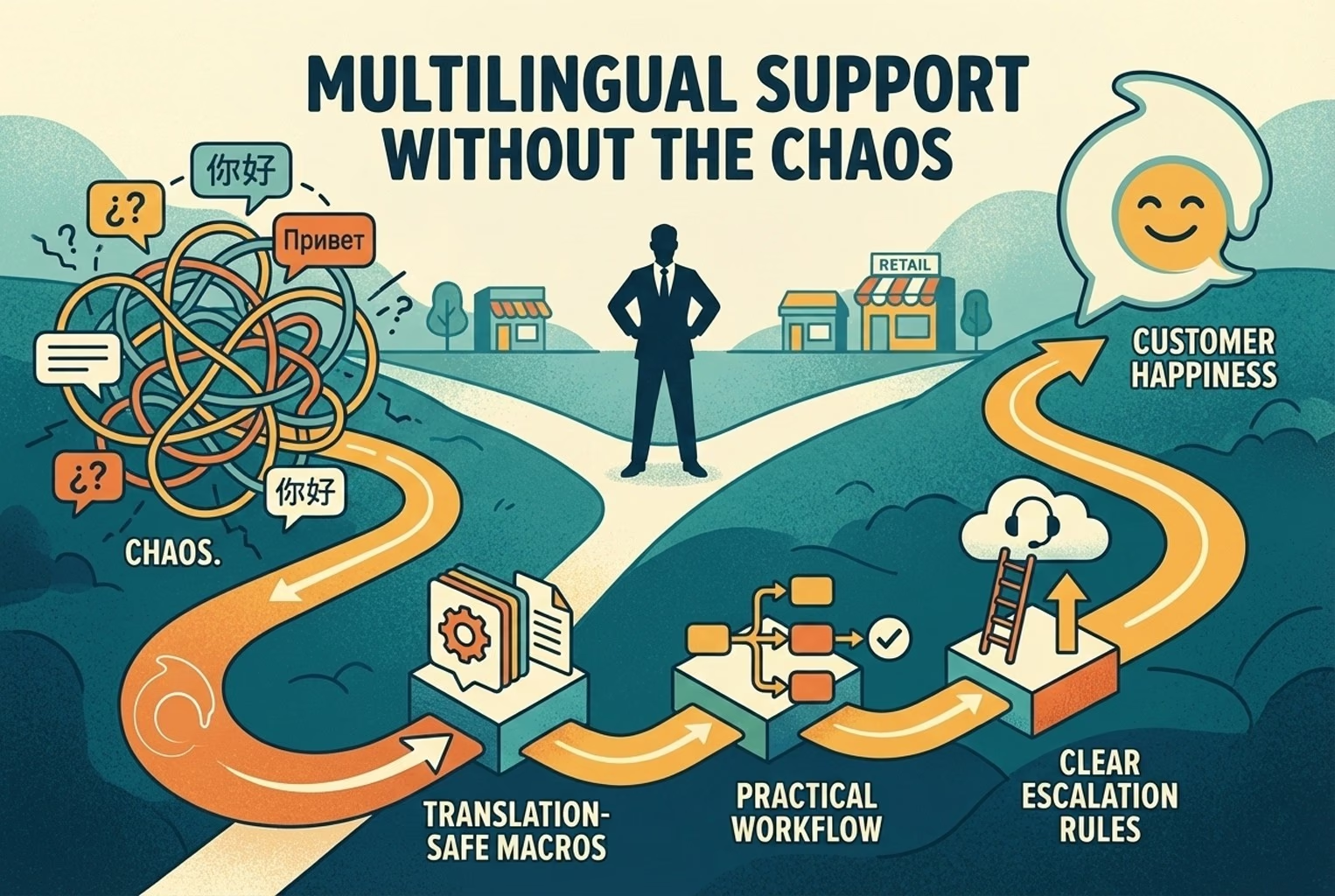
Multilingual support stays under control when you decide, language by language, how much help you will offer, write clear replies in one language before translating them, and agree when a person takes over. The hard part is rarely the words themselves but tone, policy wording and knowing when to hand over.
Language note: AskDolphin’s customer-facing widget supports interface languages including English, Spanish, French, Portuguese (Brazil), Dutch, German, Italian, Arabic, Japanese, and Korean. That is separate from translating all business content automatically. Keep policies and product facts in approved Data Sources for each language you support, and hand complex cases to a human when tone or policy risk is high.
Key takeaways
Across merchants expanding into new regions, the ones that ran into trouble weren't tripped up by language itself; it was tone, fuzzy policy wording, and not knowing when a bot should step aside for a human that caused the real damage.
The teams that stayed on top of things early quietly made a call per language: some markets got full support, some were handled "well enough" with guardrails, and others were nudged towards self-serve instead of promising everything to everyone and watching it unravel.
A few merchants assumed that because their storefront could handle multiple languages, support would naturally follow; however, while Shopify lets you sell in up to 20 languages, the moment you hit live conversations, you realise the tooling needs an actual plan behind it, not wishful thinking.
One pattern that came up again and again: translating messy replies only multiplies the mess. The calmer teams always wrote clean, plain-English macros first, then translated those, never the other way round.
AI translation proved perfectly fine for dull, low-risk questions like delivery updates or basic how-tos, but the smarter merchants hard-stopped automation for refunds, disputes, and anything sensitive.
And when it came to knowing whether things were actually working, speed on its own told them very little; the useful signals were reopen rates, how often translations needed fixing, and whether satisfaction dipped in specific languages rather than across the board.
What does Multilingual Support really mean?
Most merchants start in the same place. They thought multilingual support was a translation problem. Get the words right, job done. What they quickly discovered is that translation is only the surface layer. Support is about helping someone move forward without confusion, hesitation, or false expectations creeping in along the way.
This shows clearly with a brand selling into three European markets. Their replies were technically accurate in every language, yet conversations kept looping. Customers were replying with follow-up questions that suggested they were unsure, not reassured. Nothing was "wrong" on paper, but something wasn't landing. Small phrases caused most of the trouble. A line like "we'll sort it" felt friendly and calming in English, but once translated, it came across as vague, even dismissive, in another language. In a few cases, customers read it as a brush-off rather than reassurance.
Returns were another quiet flashpoint. Policy wording that felt perfectly reasonable in English turned rigid once translated. "You will receive a refund" carried a very different weight than "you may be eligible", and a few merchants learned the hard way that those differences matter when expectations are set in writing.
Tone drifted too. Idioms that felt harmless internally did not travel well. One team had macros peppered with casual phrases like "no worries", which translated into wording that sounded sarcastic or flippant to customers already feeling stuck.
The merchants who steadied things did not chase flawless language. They focused on predictable outcomes. The goal shifted from sounding native to sounding clear, consistent, and aligned with what the business could actually deliver.
This way of thinking made more sense once support was viewed as part of the wider experience rather than a standalone inbox. When teams stepped back and looked at how conversations fit into the overall journey, the gaps became obvious, especially when mapped against ideas like those explored in Customer Service vs Customer Experience and Customer Journey Map.
Pick your service level per language
One of the quickest ways small teams burn out is trying to offer the same level of support in every language from day one. On paper, it looked fair. In reality, it spread attention thin and made quality wobble everywhere at once. The calmer setups always had an unspoken hierarchy. Not every language was treated equally, and that was intentional.
In some markets, support leaned heavily on self-serve. Customers could read help content in their own language, submit a clear request, and only reach a human when something genuinely needed intervention. These were often regions with occasional orders or low-risk products, where most questions followed familiar patterns.
Other languages sat in the middle ground. Messages were answered live, but with translation doing the heavy lifting behind the scenes. Replies followed tightly written macros, and someone on the team would regularly skim conversations to catch tone issues or small wording slips before they became habits.
Then there were a few languages that received full attention. These tended to be the markets driving the most revenue or carrying the most risk. Chargebacks, regulatory expectations, or costly returns meant replies needed to be spot on. In those cases, bilingual staff or native-level review was built in, and help content was kept actively up to date rather than translated once and forgotten.
What made this work was not the labels themselves, but the acceptance that different languages deserved different treatment. Teams that tried to flatten everything ended up firefighting. The ones that quietly prioritised stayed in control, even as order volume grew.
Shopify reality check: storefront vs support tools
A lot of merchants felt confident about going multilingual because the shop itself looked sorted. Products, navigation, checkout, and even emails were appearing in the right language without much fuss. From the outside, it felt like the hard part was done. And to be fair, the storefront side is fairly well covered. You can activate multiple languages, create language-specific URLs, and run a single store that supports up to 20 languages. Customers can browse, place orders, and receive notifications in the language they expect, which removes a lot of early friction. The catch only shows up once real conversations start.
As soon as questions move from browsing to problem-solving, the gap becomes obvious. Live chat, order issues, returns, and edge cases do not automatically inherit the structure of the storefront. The same merchants who felt organised on the front end suddenly found themselves copying text into translators, guessing tone, or answering the same question twice in two different languages. That was the moment many teams realised they had solved selling in multiple languages, but not supporting customers in them. The storefront was tidy. Support was a different animal altogether.
Shopify Inbox limitations for multi-language chat
This is where a lot of merchants hit their first real snag. Inbox looks fine at a glance, especially if your theme is already translated. Messages come in, replies go out, and for a while, it feels manageable. But once customers start writing in different languages at the same time, cracks begin to show.
Most teams noticed that chat tends to default to the theme's primary language. A customer might browse the site in French, but the conversation lands in English. From there, support agents are left guessing. Is this customer comfortable in English, or should the reply switch languages? There's no clear signal, and that uncertainty slows everything down. What followed was a familiar workaround pattern. Copying messages into translators. Saving half-translated replies. Letting tone drift depending on who was on shift. It worked, but only just, and only while volumes were low. The teams that steadied things realised they needed guardrails around the inbox itself, not just better translations. They paid attention to how language was detected at the start of a conversation, how tickets were routed internally, how tone stayed consistent across replies, and where translation was simply not trusted for sensitive topics.
Without those guardrails, automation made things worse rather than better. There are cases where automated replies handled simple questions fine, then confidently fumbled refunds or policy explanations in another language. That was usually the moment merchants went back and rethought what should be automated at all, often after revisiting lessons from Shopify customer service automation and realising multilingual flows need tighter control, not more speed. Inbox itself was rarely the villain. The issue was assuming it would handle multilingual conversations gracefully on its own. The merchants who planned around its limits avoided the spiral. The ones who didn't spent weeks cleaning up misunderstandings that could have been prevented early.
The quality-safe workflow that holds up in small teams!
Among the teams that manage to stay consistent across languages, even with very small support teams, they were all doing something similar. Not because they followed the same framework, but because they had quietly settled on a simple rhythm that stopped quality drifting. It usually showed up as four loosely connected steps. Nothing fancy. Just enough structure to stop things getting messy when messages started coming in from different places and in different languages. It always started with detection. Some teams relied on storefront or browser language, knowing it was only a hint rather than a guarantee. Others added a simple language picker at the start of chat, or asked one direct question before anything else happened. The goal was not perfection, just an early signal so replies did not start on the wrong foot.
Routing came next, and this was where things either held together or fell apart. The teams that struggled let everything land in the same pile. The ones that stayed in control quietly separated conversations by language, by topic like returns or setup questions, and by risk level. A delivery update was treated very differently from a refund dispute, even if both arrived in the same language. Responses followed a familiar pattern, too. Macros did most of the work. They were written plainly, translated carefully, and reused often. Agents then added a line or two that showed a real person had read the message. Promises stayed close to policy wording, which avoided later backtracking and awkward follow-ups.
The final piece was a feedback loop, and this was where many teams surprised themselves. Instead of fixing replies one by one, they pulled a small sample of conversations each week and looked for patterns.
Was the meaning accurate?
Did the tone feel off?
Did anything sound firmer than the policy allowed?
Should a human have stepped in earlier?
When something felt wrong, they fixed the macro or the help article behind it rather than patching the same issue again and again.
This approach lined up closely with broader patterns elsewhere. Teams that focused on translating core replies, keeping help content in sync, and actually checking how multilingual conversations landed avoided a lot of silent failure that comes from assuming translations are fine. Others leaned on in-tool translation so agents could stay focused, which made it easier to scale without bouncing between tabs or losing context. None of this was about speed or sophistication. It was about putting just enough structure in place so a small team could support more people, in more languages, without quietly lowering the bar.
When AI translation holds up, and when a human needs to step in?
Over time, a fairly clear line emerged between where translation worked quietly in the background and where it caused trouble. The teams that avoided blow-ups were not anti-AI at all; they were just selective about where it was trusted. Routine questions rarely caused issues. Order status updates, delivery timelines, and simple "how do I use this" queries translated cleanly because the intent was narrow and the answers were factual. Stock checks and size information also tended to behave, as long as the wording stayed neutral and avoided sounding like a promise.
Problems started when meaning, liability, or emotion crept in. Refund conversations were the biggest flashpoint. A single mistranslated sentence could turn "under review" into "approved", and that gap between expectation and reality was hard to unwind later. The same applied when customers hinted at chargebacks or disputes, where tone mattered as much as accuracy.
Safety questions were another area where teams became cautious. Anything touching supplements, skincare reactions, or product use that could be read as advice was flagged for review, not because translation failed technically, but because subtle wording shifts carried real risk. Legal language around warranties and compliance followed the same pattern. These replies looked short, but they carried weight. Emotion tipped the scale, too. When a customer was clearly upset, frustrated, or anxious, teams learned that accuracy alone was not enough. Even a correct translation could feel cold or dismissive if the tone landed badly.
What worked in practice was not a long rulebook, but a shared understanding of where translation could be trusted and where it could not. That distinction comes up repeatedly when looking at how multilingual AI conversations behave at scale, particularly when it comes to testing how messages actually land across languages. The teams that made this call early spent far less time cleaning up misunderstandings later.
3 retail scenarios that keep coming up in practice!
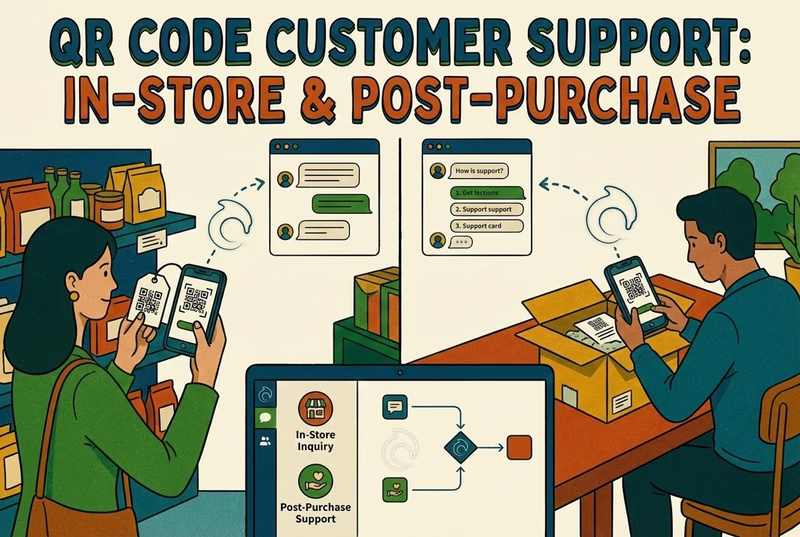
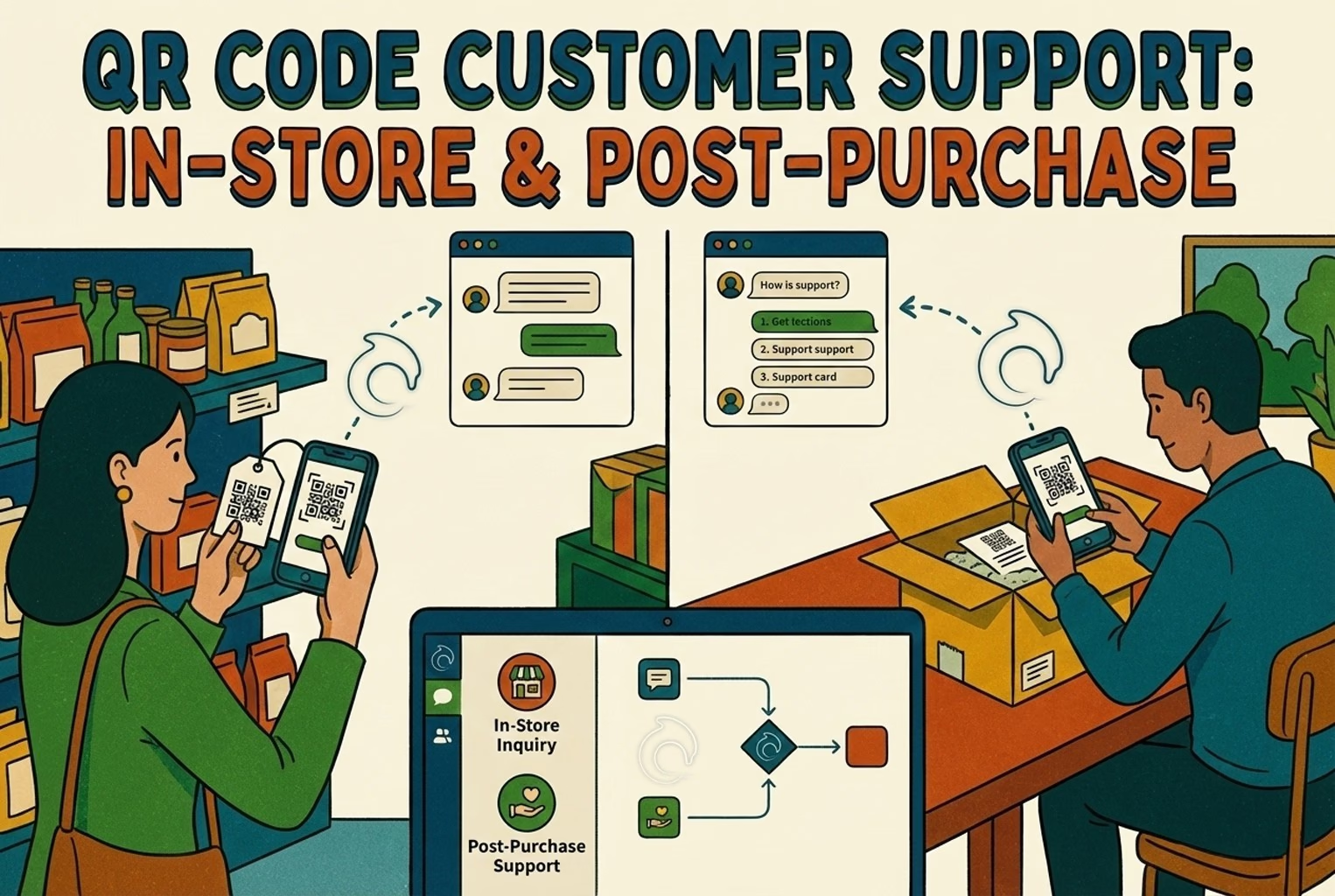
Although this piece focuses on multilingual support, a lot of the cleanest language handling does not start in the inbox at all. It started earlier, often with a simple QR scan that quietly set the context before a single message was sent. For several merchants, QR entry points became the easiest way to guide customers into the right language without forcing them to hunt through menus or guess where help lived. A scan during unboxing or in-store naturally framed the conversation. By the time a customer reached support, their language, product, and intent were already clearer.
This showed up most clearly in teams that treated QR codes as support entry points rather than marketing links. When scans led directly into help flows, setup guides, or chat with the right context attached, conversations were shorter and misunderstandings dropped. The broader thinking behind this approach is explored in QR Code Customer Support: In-Store and Post-Purchase, where QR is positioned as part of the support journey rather than a traffic driver.
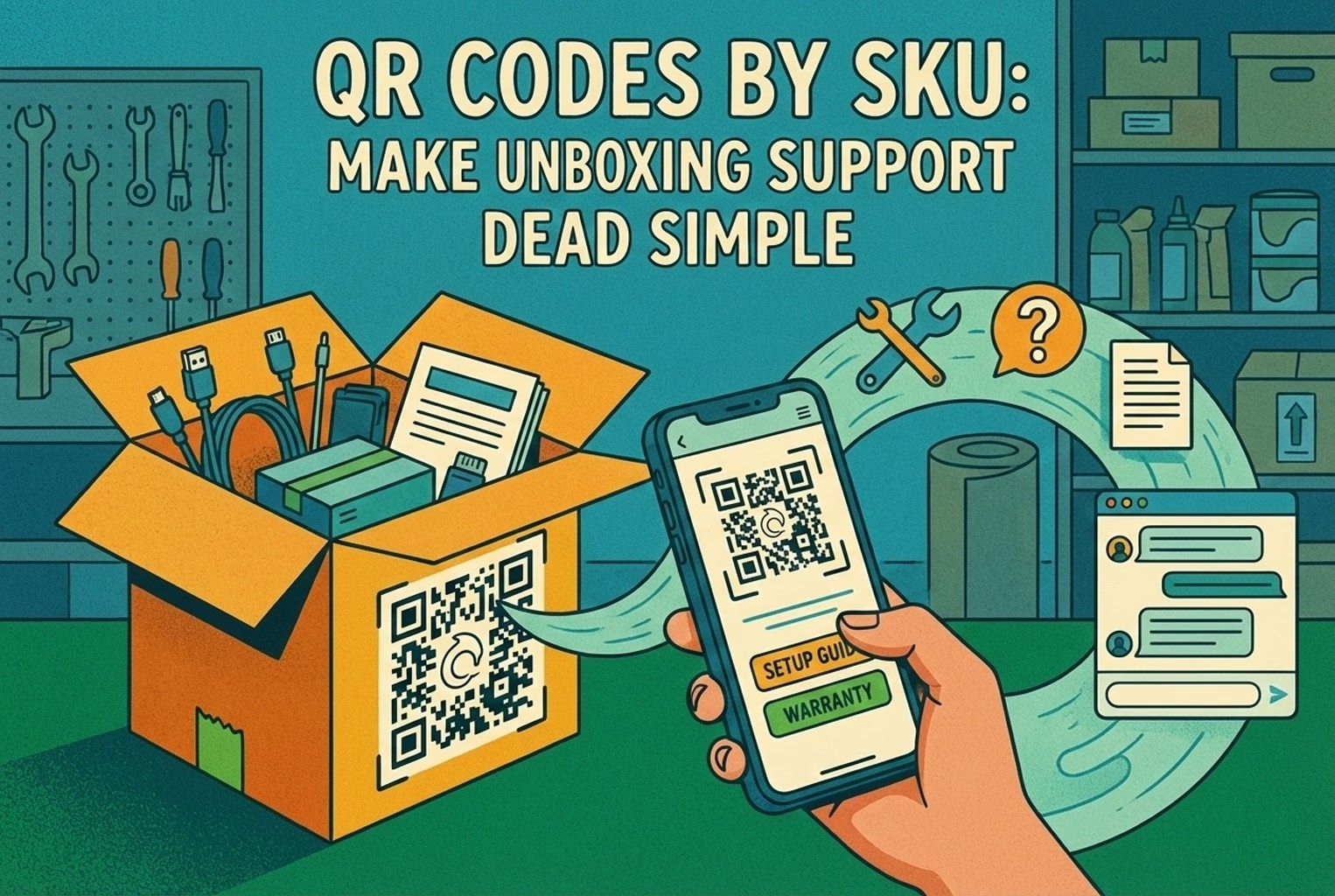
It became even more effective when QR codes were tied to specific products. Brands that used product-level scans on packaging found they could handle multilingual questions far more calmly, because the conversation started with the exact item and language already known. That pattern is unpacked further in SKU-level QR codes on packaging support, which looks at how post-purchase scans reduce back-and-forth before it even begins.
The scenarios below are not edge cases. They are patterns that came up repeatedly once teams stopped thinking of language selection as a chat problem and started treating it as part of the wider support entry experience.
First Scenario: Beauty brand where routine confusion quietly drove returns
This pattern showed up a lot with skincare brands. Returns were not coming from bad products, but from customers who were unsure whether they were using them correctly. The problem usually surfaced a few days after delivery, once someone had tried a routine once or twice and felt something was off. The brands that handled this best did something very simple. They placed a small QR code inside the box, right where customers naturally looked during unboxing, and repeated it again on the insert card with a short line about getting help in their own language. It did not feel promotional. It felt like reassurance.
When customers scanned, they did not land on a wall of content. The first screen asked them to pick a language, then offered two clear paths. One was a short routine walkthrough that took less than a minute. The other was a plain "something went wrong" option, which mattered more than it sounds. Customers who felt unsure did not have to guess which category their problem fit into.
Behind the scenes, this made life easier for the team as well. When someone tapped the problem option, the conversation arrived with the product and language already known. Agents replied using a routine macro, then added a single personal question about skin type or what the customer had already tried. That small touch often unlocked the real issue without dragging the conversation out.
Quality checks stayed lightweight. Once a week, someone skimmed a handful of conversations in a non-English language and looked purely at tone. Was it supportive? Did anything sound abrupt? Nothing formal, just a sense check to catch drift early.
One quiet improvement came from linking returns directly to clear policy language instead of leaving it open-ended. By routing that button to a consistent set of return explanations, teams avoided long back-and-forth conversations that went nowhere. Several merchants leaned on the structure they already had in place from Shopify returns templates & macros, so the wording stayed consistent across languages, and agents did not improvise under pressure.
The end result was not fewer questions, but better ones. Customers got clarity sooner, agents stayed calmer, and a surprising number of potential returns never turned into returns at all.
Second scenario: Electronics and devices where setup issues turned into bad reviews
This came up repeatedly with devices and electronics. Reviews were taking a hit, not because products were faulty, but because the first few minutes of setup were harder than customers expected. By the time someone reached support, they were already frustrated, and that mood often leaked straight into public reviews. The brands that steadied this placed a QR code somewhere customers naturally kept. The quick-start card worked best, as it stayed close during setup rather than getting binned with the packaging. A second QR on the product label covered repeat scans later, when the device had been sitting on a desk for weeks, and a question popped up again.
The scan opened into a small, focused hub rather than a general help page. Customers picked a language first, then saw a short setup video that ran under a minute. Alongside that sat a simple troubleshooting path for the most common failure, usually the device not turning on, plus a clear option to start a chat. Crucially, the device model was already known by the time a conversation began. That context changed the tone of support straight away. Agents did not need to ask which product someone had or guess what stage they were at. Most setup questions were resolved with translated macros that walked through the basics calmly, without rushing the customer or assuming technical confidence. Where teams drew a firm line was around replacements and warranties. The moment a conversation moved from "how do I get this working" to "is this faulty", replies slowed down on purpose. Those messages were reviewed by a human before anything was promised, because wording around eligibility mattered. A single misplaced sentence could easily turn a check into a commitment.
Over time, this approach reduced review fallout more than it reduced tickets. Customers felt supported early, expectations stayed realistic, and the support team avoided the scramble that usually followed a one-star review that could have been prevented.
Third Scenario: Boutique clothing where fit questions followed customers home
This pattern was most obvious in physical stores located in multilingual neighbourhoods. Footfall was healthy, staff were busy, and the same sizing questions kept coming up again and again, often in different languages within the same hour. The stores that eased the pressure did not try to answer everything verbally. They placed small QR signs near fitting rooms and tills with a simple prompt about sizing help. The same code appeared on receipts, which meant the conversation could continue after a customer left the shop, rather than restarting from scratch online later.
When scanned, the experience stayed intentionally light. Customers chose a language, then landed on three clear options covering size guidance, live stock checks, and exchanges or returns. A short line reassured them that replies would happen right there, without needing to download an app or create an account, which removed a lot of friction. For staff, this quietly reduced interruption. Straightforward questions were deflected into self-serve paths, freeing the shop floor for customers who needed in-person help. When a question became more nuanced, usually around fit or body proportions, the conversation escalated with useful context already attached. Agents could see details like height, usual size, and the item in question before replying.
The teams that tracked this closely noticed something interesting. Fit questions were not just common; they were also the most likely to be misunderstood across languages. By watching reopen rates by language, they could spot where explanations were landing poorly and adjust wording before frustration set in. This approach worked best when it was treated as part of a wider network of support moments rather than a standalone trick. Stores that mapped QR, in-store conversations, and post-visit follow-ups together found it easier to keep multilingual support consistent, especially when viewed through the lens of how customer touchpoints connect across the full experience.
Building a translation-ready macro library, without making a mess!
This was one of those lessons merchants usually learned backwards. They translated first, then realised every language carried the same confusion as the original replies, just multiplied. The teams that got ahead of it treated English as a working draft rather than the finished product. Before anything was translated, they stripped their replies down to something that could survive being copied, moved, and read out of context. That meant plain language, fewer flourishes, and no assumptions about shared tone.
A few founders laughed when this came up, especially those writing in British English. Casual phrases felt friendly internally, but they rarely behaved once translated. What sounded warm in one language could sound vague or even dismissive in another, and that gap caused more friction than it solved.
Over time, the strongest macro libraries all started to look similar. Sentences were short. Each line carried one idea. Jokes and sarcasm quietly disappeared. Words like "soon" or "ASAP" were replaced with actual timelines, because anything fuzzy became dangerous once it crossed languages. Once the English version was cleaned up, translation became far less stressful. Replies stayed stable, meaning they stayed intact, and agents did not have to second-guess whether a message sounded odd. Just as importantly, customers stopped replying with "what do you mean by this", which was often the first sign something had gone wrong.
The merchants who skipped this step usually ended up chasing issues later. The ones who slowed down here rarely heard the phrase everyone dreads in support reviews, the one that starts with "your AI told me…".
How did the macro structure quietly make everything easier to translate?
Once teams cleaned up their English, another pattern emerged. The macros that held up best across languages all shared a similar shape, even if nobody had formally agreed on a template. Replies worked better when their purpose was obvious at a glance. A short intent label at the top helped agents understand what the message was for before reading a single line. It also stopped macros from being reused in the wrong situations, which was a common source of confusion early on.
Variables came next. Order numbers, tracking links, and delivery windows. Anything that changed from customer to customer was clearly marked, which meant translations stayed intact while the details flexed around them. Agents stopped rewriting sentences just to drop in a number, and that alone removed a surprising amount of inconsistency.
The most important piece turned out to be the policy wording. Teams that locked this into a fixed paragraph avoided endless debates about phrasing. The rule was simple. If the policy had not changed, the wording did not change either. That consistency mattered far more once replies were being read in multiple languages. Escalation lines rounded things out. A single sentence explaining what would happen next if something stalled gave customers a sense of control. It also reduced follow-ups that started with "just checking" or "any update", which were often driven by uncertainty rather than impatience. One electronics brand shared an early delivery macro that illustrated this well. The message was plain, predictable, and easy to translate. When something went wrong, the escalation path was already baked in, so neither the customer nor the agent had to improvise.
Once this structure was in place, translation stopped feeling like guesswork. Each language version sat alongside the original English, making it easy to update everything together when policies changed. Teams that skipped this ended up with five versions of the same answer drifting apart over time. The ones that stuck to a shared structure stayed aligned without much effort.
Knowledge base and self-serve across languages
Most teams started with the same instinct. If we are going multilingual, the whole help centre should be multilingual too. It felt tidy and fair, but in practice, it was rarely worth the effort.
What worked better was being selective. The merchants who avoided wasted time focused on the questions customers were already asking, not the pages they thought looked important. When they pulled a month of tickets and grouped them, the same themes appeared every time. Delivery timelines, returns and exchanges, warranty or replacement questions, setup and troubleshooting, and the occasional subscription edit if the business model included it. Translating those first made a noticeable difference. Customers found answers without opening a ticket, and when they did reach out, conversations started further along. There was less backtracking, fewer clarifying questions, and far less frustration caused by misunderstandings early on.
Several teams only realise the value of this after seeing how often customers arrived at chat having already read something in their own language. Self-serve did not replace support, but it softened the conversation. That pattern lines up with how multilingual support tends to work at scale, where translated help content acts as the first line of support rather than an afterthought.
Consistency mattered just as much as coverage. When policies were translated unevenly, confusion crept back in. The calmer teams treated their help centre as an extension of their macro library. Same wording, same meaning, just expressed clearly in another language. Over time, that alignment reduced tickets more reliably than adding new articles ever did.
Keeping policies consistent across languages
This was the point where even organised teams stumbled. Everything looked fine until someone compared screenshots. In one language, a line read like free returns were guaranteed. In another, the wording suggested returns were reviewed case by case. Both had come from the same original policy, but once translated and tweaked separately, they no longer meant the same thing.
That mismatch caused more friction than almost anything else. Customers felt misled. Agents got stuck defending wording they had not written. Conversations dragged on because the argument was no longer about the product, but about which version of the policy counted. The teams that got out of this loop all did the same quiet reset. They picked a single source of truth for each policy and locked the wording down before translation. Returns, shipping, and warranty terms. If the meaning needed to change, it changed once, in one place, and every language followed.
What helped was treating policy language as a fixed block rather than something agents could paraphrase. Several merchants leaned on the same structured wording they were already using in support replies, often built from frameworks like those in Shopify returns templates & macros, so returns explanations stayed consistent whether a customer read them in English, French, or Spanish. Once policies stopped drifting across languages, a lot of tension disappeared. Agents spent less time arguing about wording. Customers stopped sending screenshots to prove a point. And support conversations returned to what they were meant to be about, which was resolving the issue rather than debating semantics.
Quality controls that actually scale
As teams added more languages, most of them realised that quality did not fall apart because of volume. It slipped when everyone had a slightly different idea of what certain words were supposed to mean. The teams that stayed aligned kept things surprisingly simple. They did not create sprawling documentation. They kept two short reference docs that everyone could understand and actually use.
The first was a glossary. This covered brand and product terms that should never be translated, along with a handful of phrases that caused trouble if interpreted loosely. Subscription, warranty, exchange. Once these were defined clearly, a lot of low-level disagreement disappeared. Some teams also kept a short list of translations that were banned altogether because they had confused customers in the past.
The second was a style guide, and this mattered more than most expected. It answered small but important questions. Should replies feel formal or relaxed? Were emojis acceptable or off-limits? When was it appropriate to apologise, and when did that create unrealistic expectations? Even simple do and don't phrasing rules helped agents stay consistent across languages without second-guessing themselves.
What made this workable was that neither document tried to be clever. They were written for speed, not perfection. If someone on the team hesitated over wording, they knew exactly where to look. And if debates about definitions started creeping in, managers often pointed people back to a shared baseline like the AskDolphin glossary before refining a brand-specific version that reflected their own tone and policies.
Once these two references were in place, quality stopped relying on memory or individual judgment. New hires ramped faster, translations stayed closer to intent, and the team spent less time correcting each other in chat threads that should never have existed in the first place.
Spot checks and feedback loops!
Most teams tried daily reviews at some point. Almost none of them stuck with it. What lasted was something far lighter and far more realistic. They picked one day a week and treated it as a quick sense check rather than a formal audit. A small sample of conversations was enough to reveal patterns, especially when the same issues showed up repeatedly in one language but not another. The process stayed simple. A handful of tickets per priority language were skimmed and tagged in a shared sheet. Not scored or graded, just noted:
Was the meaning accurate?
Did the tone feel right?
Was there any policy risk hiding in the wording?
Should a human have stepped in earlier?
What mattered most was what happened next. The teams that improved did not fix individual replies in isolation. They went upstream. If a macro caused confusion, it was rewritten. If customers misunderstood a process, the help article was updated. If a certain topic kept triggering problems, the rules around when to escalate were tightened. This rhythm turned feedback into maintenance rather than firefighting. Issues were caught early, before they spread across languages or agents. Over time, teams stopped reacting to mistakes and started preventing them, which is what made the whole system feel manageable instead of fragile.
Escalation phrases for high-risk conversations!
High-risk topics were where even strong teams felt the pressure. Legal questions, safety concerns, anything that brushed up against health or liability tended to arrive charged, and that was exactly when agents were most tempted to improvise.
The merchants who avoided missteps did something quietly sensible. They agreed in advance on a small set of escalation phrases in every supported language, and they made sure those lines were checked by a human before ever being used live. When things got tense, agents did not have to think. They reached for wording that was already approved. These phrases were not dramatic or defensive. They were calm and precise. Lines that explained a pause without sounding like a brush-off, or that set boundaries around what could and could not be advised without escalating the situation further. Customers were told clearly that the issue mattered and that it was being handled carefully, which did more to build trust than any rushed reassurance.
This mattered most with products that carried risk by association. Supplements, skincare reactions, anything that could be read as medical advice. The same applied to warranty edge cases or legal language. A single offhand sentence could carry unintended meaning once translated, especially under stress. Having pre-approved escalation language removed that risk. It protected customers from unclear guidance, protected the brand from accidental promises, and took pressure off agents who no longer had to invent wording on the fly. In teams that adopted this, escalation stopped feeling like failure and started feeling like part of a responsible support flow.
Common mistakes that keep coming up!
One of the most common slip-ups was translating replies that were already a bit of a shambles. If the original macro is woolly, every language version just becomes a translated version of the same confusion. Teams often thought the problem was language, when it was really clarity.
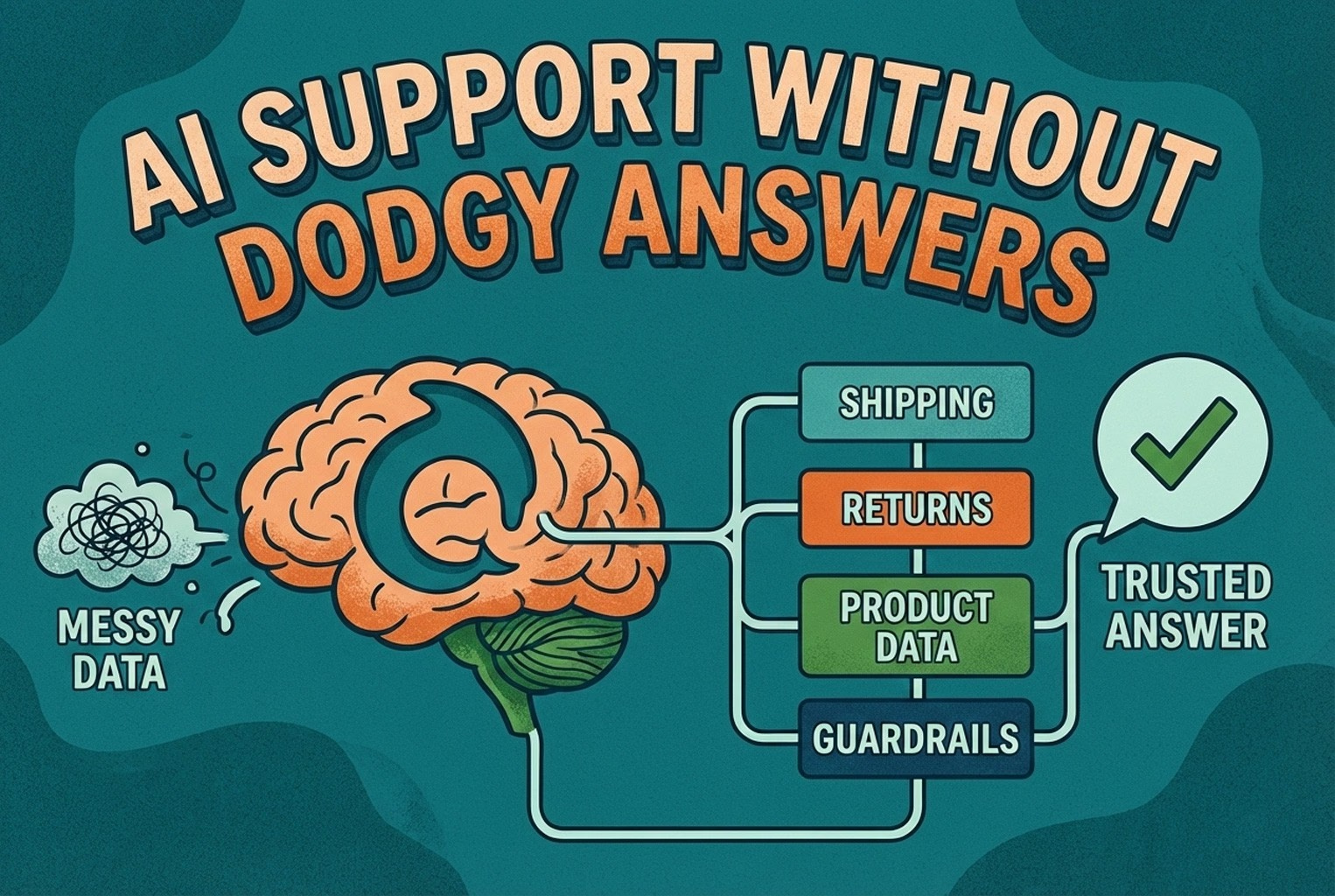
Another classic was letting AI quietly make up policy as it went along. If the system is not grounded in real wording, it starts hedging, softening, or sounding far more generous than intended. That kind of waffle feels harmless until it turns into a screenshot in a chargeback thread.
Routing was another sore spot. Everything landing in one inbox might feel tidy at first, but once messages start arriving in different languages, replies become a free-for-all. Whoever is free answers, tone shifts by the hour, and quality drops without anyone quite noticing when it started.
Testing was often skipped altogether. Teams would roll out a new language and assume it was fine because no one complained straight away. The problem was that nobody on the team actually read that language. Tone issues in French or German went unnoticed until customers stopped replying, or worse, reopened tickets feeling misunderstood.
And then there were QR codes pointed straight at the homepage. That one caused more quiet frustration than almost anything else. If a customer scans a code and lands on your front page, you have made them do the legwork. They came for help, not a treasure hunt. The brands that fixed this sent scans straight to the exact help moment, already framed in the right language, and the difference was night and day.
These mistakes were rarely dramatic. They were small, sensible-sounding decisions that slowly chipped away at trust. The teams that spotted them early saved themselves a lot of grief later.
Measuring whether multilingual support is actually working, or not?
Most teams started by looking at speed. Faster replies felt like progress. It took a while to realise that speed on its own did not mean much if customers were still confused at the end of the conversation.
The more useful signals showed up once results were broken down by language. Satisfaction scores were an obvious starting point, even if it was nothing more than a thumbs up or down. When one language consistently lagged behind the rest, it was rarely about effort. It usually pointed to tone or wording that was not landing as intended.
Reopen rates told an even clearer story. When customers came back with "that didn't answer my question" or "I'm still not sure", it was often the first sign that something had been lost in translation. Teams that watched this closely caught problems early, before they turned into longer threads or public complaints.
Another quiet indicator was how often agents felt the need to rewrite replies. If translations were being tweaked again and again, that was a hint that the underlying macro or help article needed attention. Over time, some teams tracked how many edits cropped up per hundred tickets and used that as a rough sense check for clarity.
Escalation rates added a final layer. When certain languages triggered more handoffs or required more senior review, it helped teams understand where complexity was creeping in. Sometimes that was expected. Sometimes it revealed gaps that had been hiding behind decent response times.
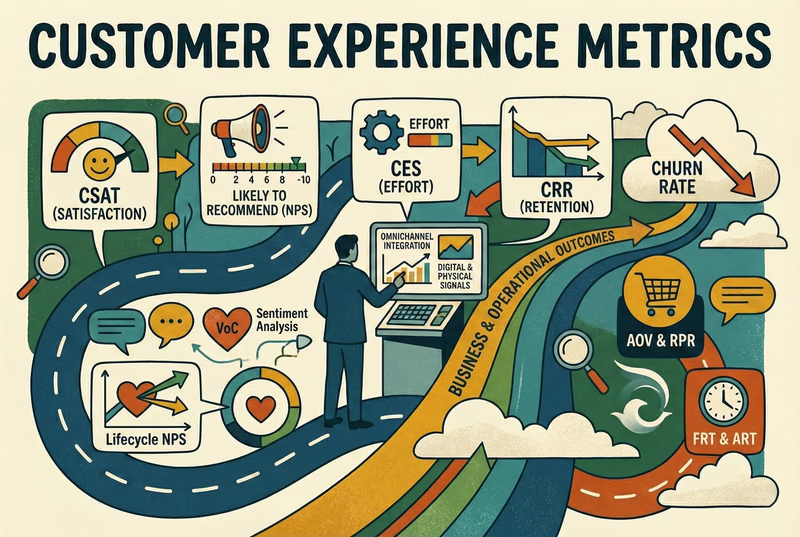
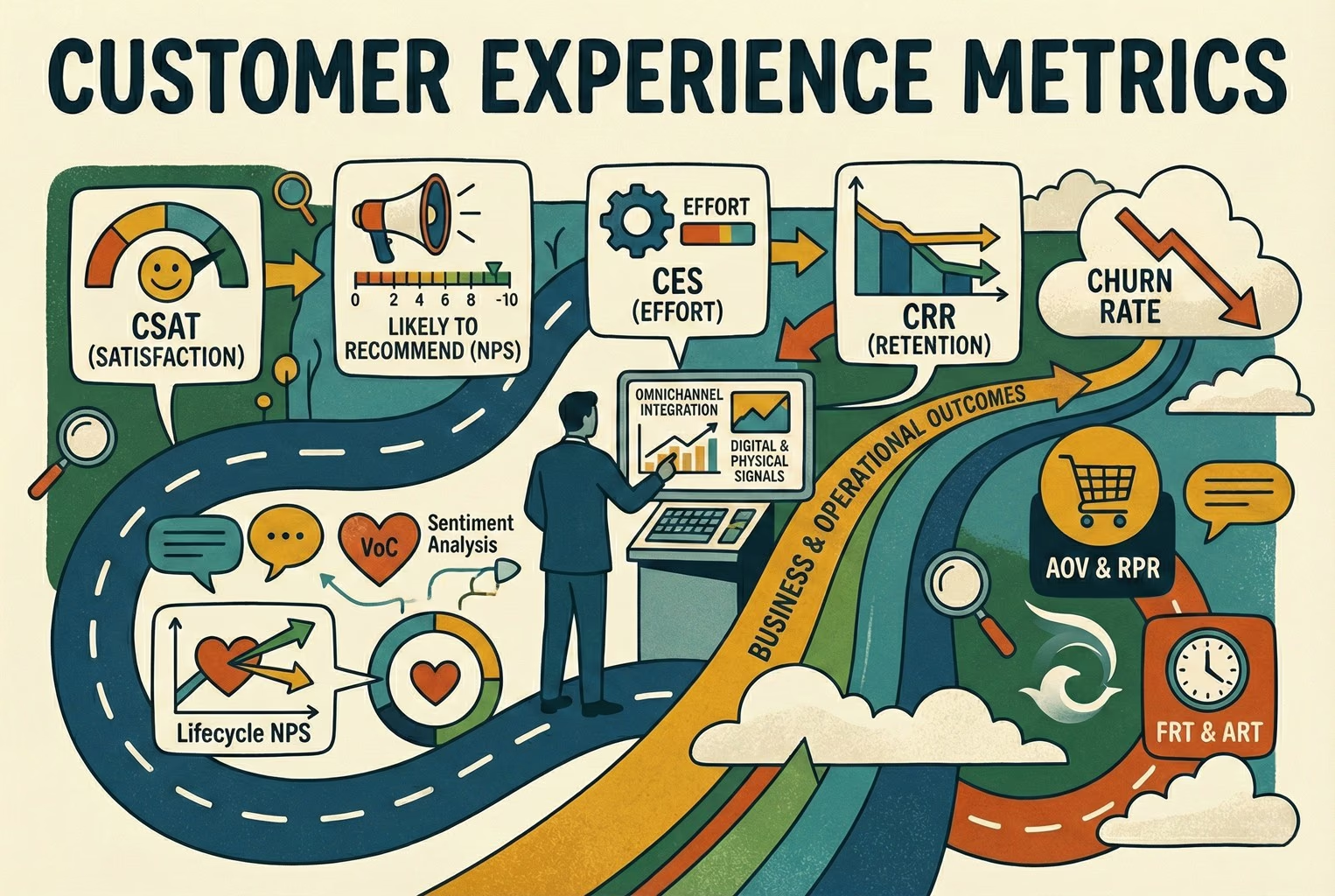
What made this sustainable was resisting the urge to track everything. The teams that stayed focused anchored their numbers in real outcomes rather than dashboards for the sake of it. Looking at metrics through the same lens used in customer experience metrics and keeping a clear distinction between signals and vanity measures, as explored in CX metrics vs CX KPIs, helped them avoid drowning in data that never led to change. In the end, the question was simple. Did customers understand the answer, and did the conversation actually move forward? The numbers only mattered insofar as they helped teams answer that honestly.
Time to first response versus getting it right
Most teams learned this one by accident. They pushed hard on response times, celebrated shaving minutes off replies, and then wondered why conversations kept dragging on. Speed does matter, but not if it comes with sloppy promises. A quick reply that says the wrong thing costs far more time later than a slower one that lands properly. The same story comes up repeatedly. The moment refunds or replacements were rushed, accuracy slipped, and clean conversations turned into long, awkward threads.
The setups that worked struck a quiet balance. Customers heard back quickly, even if the first message was simply acknowledging the issue and saying it was being checked. That alone eased a lot of anxiety. What mattered more was that the final answer was solid, especially where money or eligibility was involved. Teams paid close attention to what happened next. When answers were clear and realistic, customers rarely came back with follow-ups. Reopen rates dropped, not because replies were faster, but because they actually made sense. In contrast, fast but fuzzy answers almost always resurfaced a day later with "just checking" or "can you confirm", which wiped out any time saved earlier.
Over time, most teams stopped obsessing over raw speed. They focused instead on whether the first reply set the tone, whether the resolution matched policy, and whether the customer walked away confident rather than unsure. That turned out to be the difference between support that felt rushed and support that felt reliable.
The Multilingual Support SOP Pack
This is usually the point where things stop being theoretical. The merchants who actually got multilingual support under control all ended up with some version of an SOP. Not a scary document, just a Standard Operating Practice, meaning a shared, written way of handling the same situations consistently, so nobody is guessing under pressure. Once that existed, everything else had somewhere to live.
Language coverage decision matrix
Teams used this to be honest about where to invest effort. It mapped where they sold, how many tickets came in per language, and how risky those conversations were. From there, it was clear which languages needed full support, which could be handled well enough with guardrails, and which were better served by self-serve first.
Translation style guide template
This kept the tone from drifting. A short guide spelled out how formal replies should feel, which brand words stayed in English, and which phrases had caused confusion in the past and were best avoided. It stopped every agent from interpreting "friendly" in their own way.
Top 20 macro pack
This was the workhorse. Around twenty replies covering delivery, returns, product use, warranty questions, subscription changes, and address updates. These were the questions that came up every week, written once, translated carefully, and reused everywhere instead of being rewritten on the fly.
QA checklist
Quality control stayed light but consistent. A short checklist helped teams sense-check accuracy, cultural clarity, policy consistency, and whether something should have been escalated earlier. It gave managers a way to fix the system rather than nit-pick individual replies.
Ideas teams took into the real world
Once the SOP was in place, some merchants made it visible to customers, too. Simple A4 signs near tills or fitting rooms inviting people to scan for help in their own language. Small packaging inserts pointing to the same support entry point, written in a tone that matched the brand. A one-page internal diagram showing how conversations moved from language detection to routing, response, and review, just to keep everyone aligned.
None of this was fancy. But together, it turned multilingual support from something fragile into something repeatable, which was exactly what small teams needed.
Wrap-up: what to do next?
Most merchants do not need a grand rollout to get this under control. The teams that made real progress started small and kept it sensible. They picked three languages that actually mattered, usually the ones driving the most orders or the most questions. From there, they focused on a handful of replies that came up every week and cleaned those up in plain English before translating anything. A human check, even a quick one from a bilingual contractor, caught far more issues than running everything through automation and hoping for the best.
Risk was handled deliberately. Refunds, legal wording, and anything sensitive were flagged early so they never went out unchecked. That alone prevented a lot of awkward backtracking later on. Instead of translating the entire help centre, they translated the ten articles customers kept landing on anyway. That gave immediate value without months of busywork. To keep things honest, they set aside a short slot once a week to skim a small sample of conversations per language, just enough to spot tone drift or policy confusion before it spreads.
That was it. No overhaul, no drama. Just enough structure to stop multilingual support turning into chaos, and enough breathing room for the team to stay in control as things grew.
For most teams, multilingual support only feels hard because it's tackled all at once. The merchants who steadied it didn't add more tools or more people overnight. They tightened the entry points, simplified what got translated, and put a few sensible guardrails around where automation stopped, and humans stepped in.
If you're already using chat or thinking about it, it helps to treat multilingual conversations as part of the wider support system rather than a separate problem. The same thinking that applies to automation, handoff, and tone in one language still applies when you add more. It just becomes more obvious when something's off. That's where patterns like those covered in Shopify customer service automation and the difference between support and the broader experience in customer service vs customer experience start to matter.
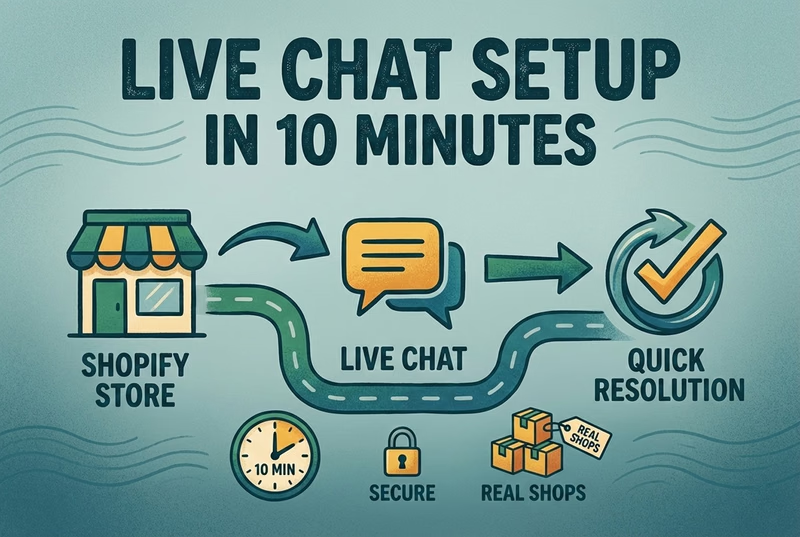
Several teams found that once language detection, routing, and macros were aligned, it became much easier to connect other touchpoints too. QR scans, post-purchase help, and live chat all fed into the same place, which reduced duplication and kept context intact. That kind of setup sits at the heart of how AskDolphin's live chat is typically used, especially when support needs to flex across languages without turning into a mess.
At that point, multilingual support stops feeling like a special project. It becomes part of the everyday workflow, reviewed occasionally, adjusted when something drifts, and otherwise left to run quietly in the background. Which, for most small teams, is exactly where it should be.
If any of this feels familiar, you're not alone. Most of what's in this playbook reflects the same multilingual headaches small teams keep running into, and the ways they gradually smooth them out.
If you want a place where chat, QR entry points, language handling, macros, and human handoff all live together, that's exactly the kind of setup we've built. You can explore it in your own time and see if it fits how you work by starting here: sign up to AskDolphin. No big commitment, just a clearer way to keep support calm and consistent as you grow.