One hundred and twenty customer experience terms defined in plain language, from CSAT and NPS to journeys, touchpoints and AI chat.customer-experience-basics
Last updated
On this page
Welcome to AskDolphin’s customer experience glossary, 120 precise definitions spanning CX, customer service, and AI chat. It covers core concepts and metrics (CSAT, NPS, CES, FCR, AHT), customer journeys and touchpoints, omnichannel support, and conversational AI, structured to align product, support, marketing, and ops.
Clear terms, consistent meanings, so you can make decisions faster and keep “buzzword bingo” off the agenda.
Customer Experience Fundamentals
Customer Experience (CX) Customer experience is the overall perception customers form across all touchpoints, and a strong CX strategy focuses on reducing effort, speeding resolution, and building loyalty through consistent journeys.
Customer Journey Customer journey is the path from awareness to loyalty, and mapping customer journey stages helps find friction and create smoother, conversion-ready experiences.
Touchpoint Touchpoint is any moment a customer interacts with your brand, and optimising high-impact touchpoints like checkout, onboarding, and returns reduces churn.
Customer-Centricity Customer-centricity is aligning strategy and operations around customer needs so decisions improve satisfaction, repeat purchase, and advocacy.
Voice of the Customer (VoC) Voice of the Customer gathers feedback from surveys, reviews, and conversations so teams can prioritise fixes and close the loop.
Omnichannel Experience Omnichannel experience delivers a seamless journey across web, app, email, phone, and messaging so customers never repeat themselves.
Personalization Personalization tailors content, offers, and support using customer context to improve relevance, conversion, and lifetime value.
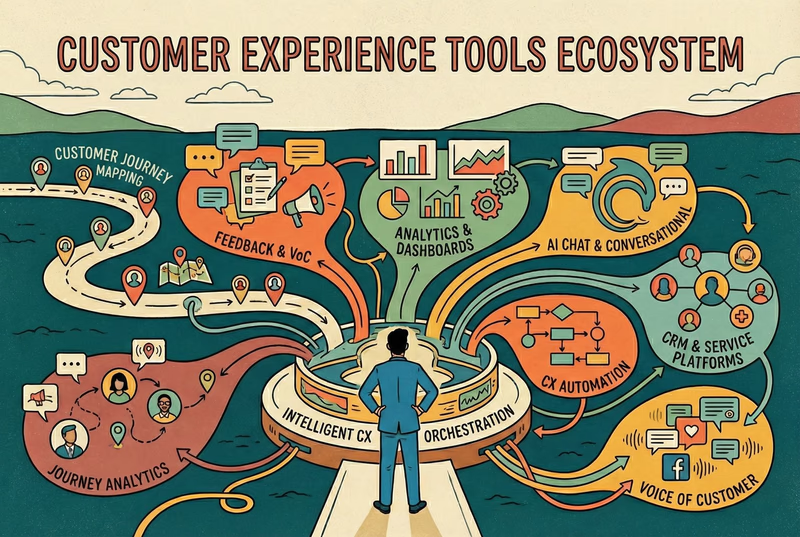
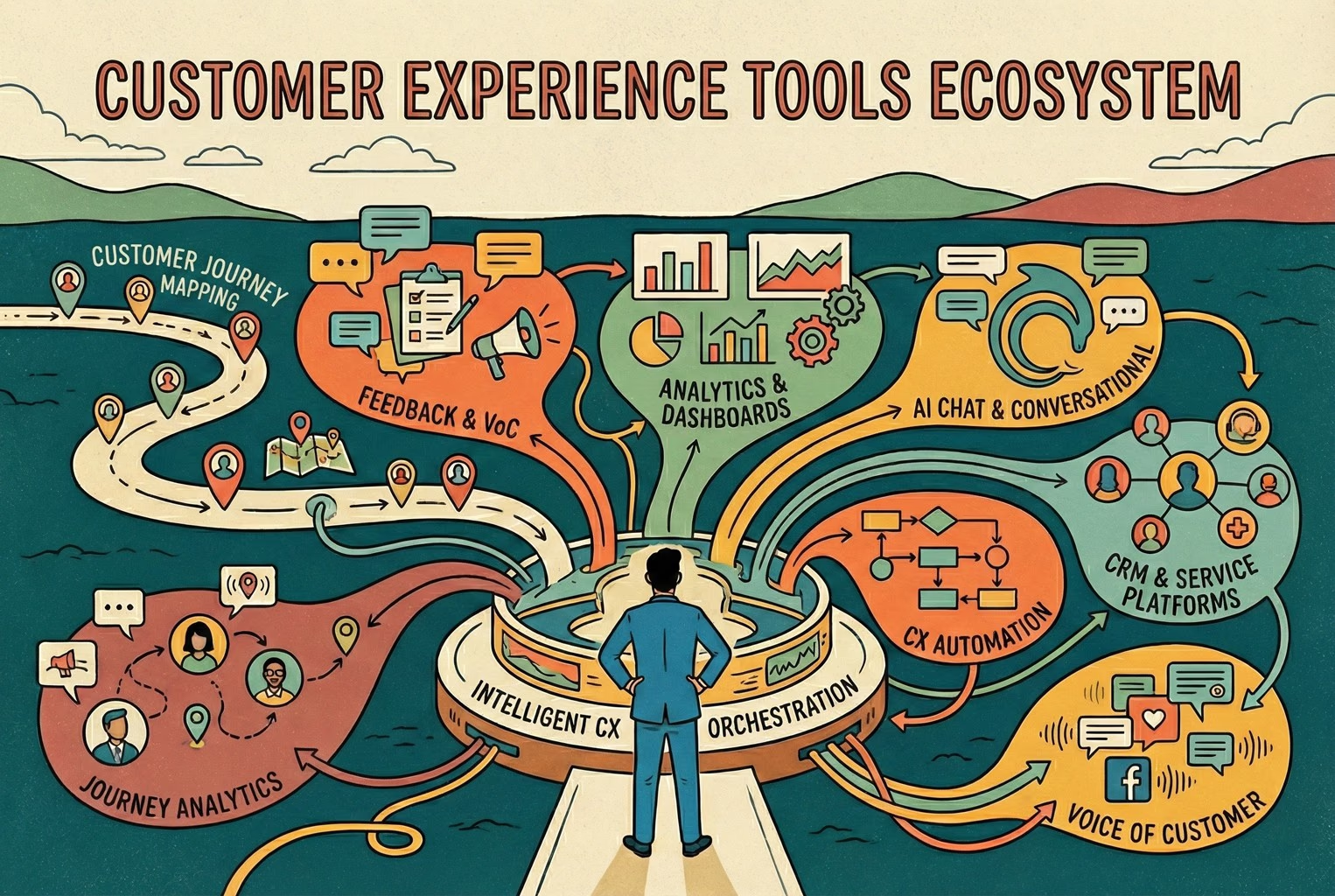
Customer Journey Mapping Customer journey mapping visualises steps, emotions, and pain points to align teams on fixes that lift satisfaction.
Emotional Connection Emotional connection is when customers feel understood and valued, increasing loyalty and referrals.
Customer Expectations Customer expectations are the speed, clarity, and quality customers anticipate; setting and meeting them prevents disappointment.
Customer Service Metrics & Measurement
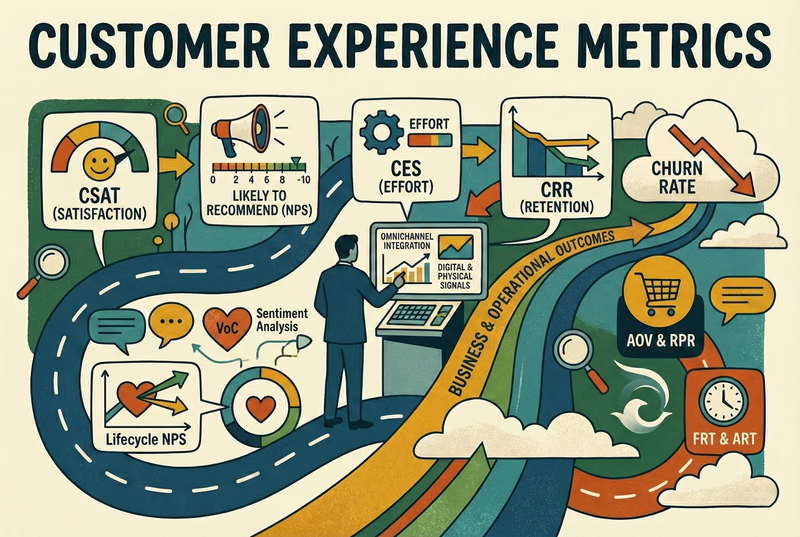
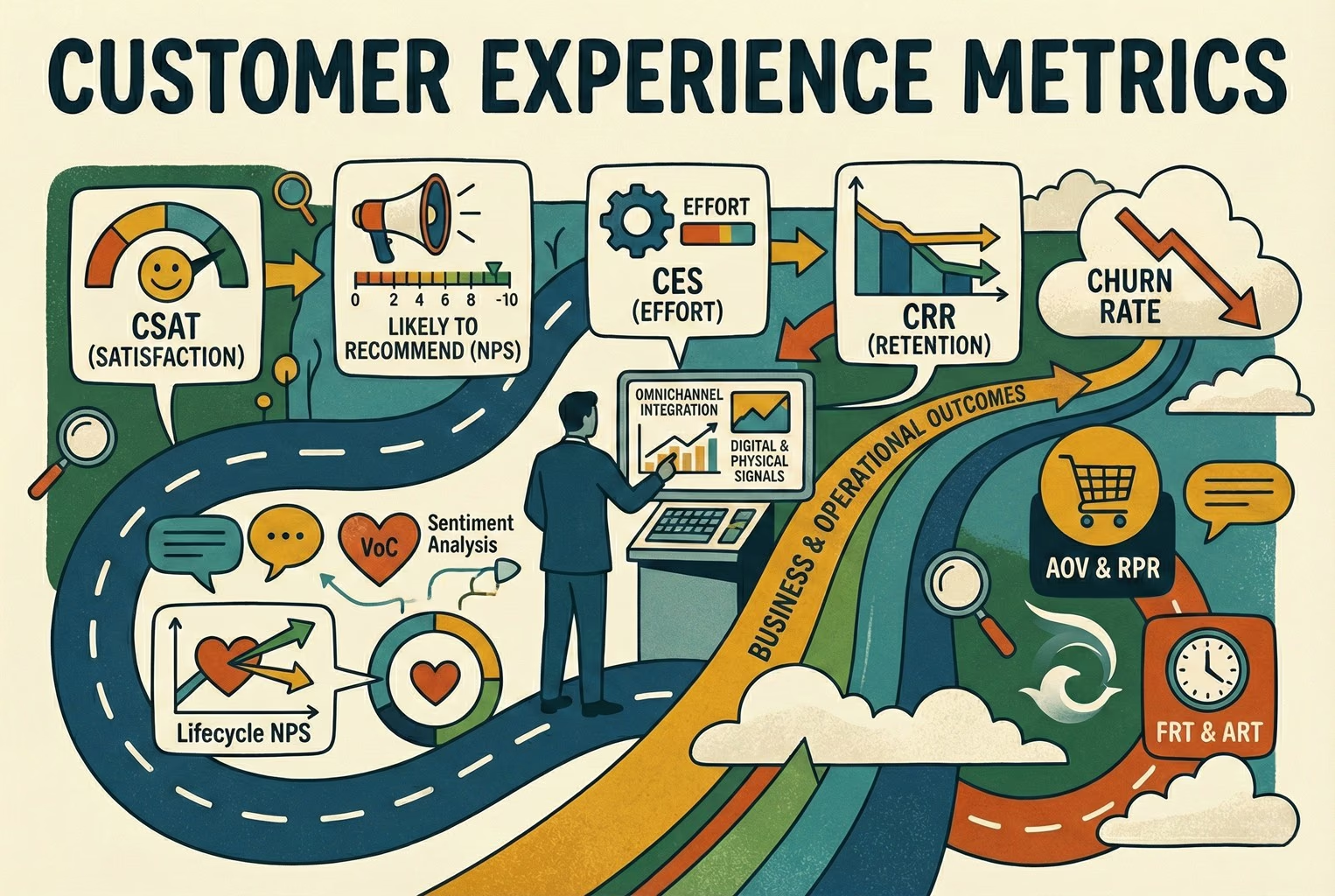
Customer Satisfaction Score (CSAT) CSAT measures satisfaction after interactions; teams often ask how to calculate CSAT and where to set CSAT benchmarks.
Net Promoter Score (NPS) NPS measures loyalty by asking likelihood to recommend; brands track NPS trends and compare NPS vs CSAT for a fuller view.
Customer Effort Score (CES) CES measures how easy it was to resolve an issue; lowering effort is a fast path to better retention.
Churn Rate Churn rate is the share of customers who leave in a period; reducing churn in SaaS often starts with fixing onboarding and value realisation.
Customer Lifetime Value (CLV or LTV) CLV estimates total revenue from a relationship; improving CLV comes from better onboarding, personalization, and retention.
First Contact Resolution (FCR) FCR is the percentage of issues solved in the first interaction; higher FCR reduces costs and boosts satisfaction.
Average Handle Time (AHT) AHT is the average time to resolve an interaction; good teams reduce AHT without hurting empathy or quality.
Service Level Agreement (SLA) SLA defines service targets like response and resolution times so expectations are clear and measurable.
Key Performance Indicator (KPI) KPI is a measurable goal that tracks performance; in service, KPIs often include CSAT, FCR, AHT, and resolution time.
Response Time Response time is how quickly a customer receives a reply after raising a query; faster response time improves trust and conversion.
First Response Time (FRT) FRT is the time from request to the first human or automated reply; lowering FRT correlates with higher satisfaction.
Resolution Time Resolution time is total time to fully resolve an issue; shorter resolution time signals effective processes and knowledge.
Feedback Loop Feedback loop is collecting insights, acting on them, and telling customers what changed to build credibility.
Sentiment Analysis Sentiment analysis detects customer emotion in messages so teams can route urgency and coach tone.
Customer Retention Rate (CRR) CRR is the percentage of customers who remain active over time; improving CRR lowers acquisition pressure.
Renewal Rate Renewal rate is the share of contracts or subscriptions renewed; increasing renewal rate ties to value communicated and realised.
Upsell and Cross-sell Rate Upsell and cross-sell rate tracks expansion within accounts; helpful recommendations raise revenue without spiking effort.
Customer Effort Customer effort is the work customers must do to achieve a goal; lower effort drives loyalty.
Abandonment Rate Abandonment rate is the percentage who leave before completing a task like checkout; reducing abandonment lifts conversion.
Customer Support Channels & Skills
Live Chat Live chat is real-time text support on web or app; fast replies and proactive prompts improve conversion and satisfaction.
Help Desk (HD) / Ticketing System Help desk software tracks requests as tickets to prioritise, assign, and resolve efficiently.
Self-Service Portal / Knowledge Base (KB) Knowledge base is a searchable library of guides and FAQs that reduces time to resolution.
Email Support Email support handles asynchronous issues; clear templates and SLAs keep tone and speed consistent.
Phone Support / Call Centre Phone support addresses complex or urgent cases; good routing and coaching keep AHT and escalations in check.
Social Media Support Social support resolves issues on public platforms to protect reputation and speed assistance.
Messaging Apps (WhatsApp, Messenger, WeChat) Messaging support offers always-on, conversational help where customers already are.
Chatbot (Rule-Based) Rule-based chatbots use scripted flows for FAQs; great for predictable requests and deflection.
Conversational AI Conversational AI understands intent and context to handle varied queries more naturally.
Virtual Assistant (VA) A virtual assistant is a digital agent that helps customers complete tasks like order status or returns.
Voice Bot / Voice AI Voice bots automate spoken requests and route calls based on intent.
Interactive Voice Response (IVR) IVR is an automated phone menu that gathers inputs and directs callers without agent involvement.
Agent Assist Tools (AA) Agent assist surfaces suggestions, summaries, and knowledge in real time to speed accurate replies.
Escalation Process Escalation defines when and how complex issues move to specialists for resolution.
Omnichannel Support Omnichannel support lets customers move between channels without losing context.
Multilingual Support (MLS) Multilingual support serves customers in multiple languages, often with translation and language routing.
24/7 Support 24/7 support provides around-the-clock coverage through regions, shifts, or automation.
Personalization in Support Personalised support uses profile and history to tailor solutions and reduce back-and-forth.
Empathy Empathy recognises feelings and responds with validation and clarity to de-escalate issues.
Active Listening (AL) Active listening focuses fully, reflects understanding, and confirms next steps to avoid miscommunication.
De-escalation Techniques (DET) De-escalation uses calm language, validation, and options to move from conflict to solution.
Tone and Voice (T&V) Tone and voice define style and personality; consistent T&V strengthens brand trust.
AI Chat & Conversational AI
Natural Language Processing (NLP) NLP enables machines to understand and generate language so chatbots can interpret intent and reply clearly.
Machine Learning (ML) ML lets systems learn from data to improve predictions, routing, and suggested answers.
Generative AI (GenAI) Generative AI produces human-like responses and content to scale accurate, on-brand service.
Conversational AI Platform (CAIP) A CAIP provides tools to design, deploy, and manage bots, agents, and workflows.
Intent Recognition (IR) Intent recognition identifies what the customer wants so routing and responses are relevant.
Entity Extraction (EE) Entity extraction pulls details like names, dates, and order IDs to speed resolution.
Context Management (CM) Context management keeps memory across turns so customers don’t repeat themselves.
Dialogue Flow (DF) Dialogue flow structures the conversation to prevent dead ends and guide next steps.
Prompt Engineering (PE) Prompt engineering crafts inputs so GenAI responds accurately and in brand voice.
Training Data (TD) Training data is the corpus that teaches models; quality data reduces error and bias.
Knowledge Base Integration (KBI) KBI connects bots to up-to-date articles and policies to ground answers in facts.
Bot Handover to Human Agent (H2H) H2H transfers with context to an agent when automation isn’t enough.
Multimodal Chatbots (MMB) Multimodal chatbots handle text, voice, and images to improve clarity and access.
Sentiment Detection / Emotion AI (SD/EAI) Emotion AI senses mood/urgency so teams can prioritise and coach tone.
Speech-to-Text (STT) / Text-to-Speech (TTS) STT transcribes speech and TTS reads replies aloud to support voice channels.
Multilingual NLP (MNLP) MNLP enables bots to understand and reply in multiple languages.
AI Summarisation (AIS) AI summarisation condenses long chats for quick handovers and follow-ups.
Smart Routing (SR) Smart routing sends tickets to the right queue or agent based on intent and context.
Predictive Analytics (PA) Predictive analytics forecasts churn, satisfaction dips, or purchase intent so teams can act early.
ChatOps (CO) ChatOps puts tools and automations inside chat so agents trigger workflows without switching tabs.
Agent Assist AI (AAA) Agent assist AI suggests next best actions, retrieves knowledge, and drafts replies.
Bot Analytics (BA) Bot analytics tracks containment, drop-offs, and satisfaction to guide optimisation.
Conversational UX (cUX) Conversational UX designs flows, tone, and recovery so chats feel natural and effective.
Natural Language Generation (NLG) NLG creates coherent responses from structured or unstructured inputs.
Large Language Model (LLM) An LLM is a pre-trained model used for understanding and generation in modern AI chat.
Fine-Tuning AI Models (FT) Fine-tuning adapts a model to brand data and policies for higher accuracy.
Hallucination (AIH) Hallucination is when a model produces incorrect information; retrieval and policy checks reduce it.
AI Ethics and Bias (AIEB) AI ethics and bias focus on fairness, transparency, and accountability in automation.
Data Privacy and GDPR Compliance (GDPR) GDPR compliance ensures lawful, secure handling of EU personal data in support and automation.
Tools & Buying Terms (High Purchase Intent)
AI Chatbot Software (AICS) AI chatbot software provides the platform to build, deploy, and measure chatbots for web, app, and messaging.
Conversational AI Tools (CAIT) Conversational AI tools power advanced agents with NLP, ML, and orchestration.
Customer Support Platform (CSP) A CSP unifies ticketing, chat, and knowledge base with shared context and analytics.
Customer Relationship Management (CRM) CRM manages customer data and interactions so service, sales, and marketing can align.
AI Helpdesk Software (AIHD) AI helpdesk software automates triage, routing, and suggested replies to increase deflection.
Chatbot Builder / No-Code Bot Builder (CBB) CBB lets teams create bots without code using templates and drag-and-drop flows.
AI-Powered Live Chat (AILC) AILC augments agents with suggestions and automation to improve speed and quality.
Virtual Agent as a Service (VAaaS) VAaaS delivers hosted chatbots managed by a provider for faster time-to-value.
Generative AI SaaS Platforms (GenAI SaaS) GenAI SaaS offers subscription AI for dynamic, brand-safe conversations.
Chatbot Templates (CBT) Chatbot templates are pre-built flows for FAQs, returns, and order status.
Chatbot Integrations (CBI) CBI connects bots to CRM, ecommerce, payment, and messaging systems.
Pricing Model (PM) Pricing model defines billing—per agent, per conversation, or flat subscription.
Uptime / SLA Guarantees (SLA) Uptime/SLA promises availability and performance, often with credits for breaches.
Vendor Support & Professional Services (VSPS) VSPS covers implementation, training, and customisation for a successful rollout.
Security & Data Protection (SDP) SDP includes encryption, access controls, auditing, and compliance.
Customisation & Branding (C&B) C&B tailors bot persona, tone, and UI to match brand and audience.
Scalability (SCB) Scalability is the ability to handle growth in users and conversations without degradation.
Multichannel Deployment (MCD) MCD runs bots across web, apps, messaging, and social simultaneously.
Analytics & Reporting Features (ARF) ARF surfaces KPIs such as containment, CSAT, and drop-offs to prove ROI.
Free Trial / Demo (FTD) FTD lets buyers validate fit and performance before committing.
Return on Investment (ROI) ROI measures value versus cost for automation and support improvements.
Advanced / Emerging Concepts
Hyperautomation Hyperautomation combines AI, automation, and orchestration to streamline end-to-end workflows.
Proactive Support / Proactive CX Proactive support anticipates needs and reaches out before customers ask, reducing effort and churn.
Predictive Support Predictive support uses models to forecast issues so teams can intervene early.
AI-Driven Insights AI-driven insights find patterns in conversations and behaviour to inform product and policy.
Behavioural Analytics Behavioural analytics studies how users navigate and act to reveal friction and opportunities.
Real-Time Sentiment Monitoring Real-time monitoring flags frustration or urgency during live interactions for quick coaching or routing.
Micro-Moments Micro-moments are intent-rich instants when customers want immediate answers on the device at hand.
Hyper-Personalization Hyper-personalization uses real-time data and AI to tailor one-to-one experiences.
AI / Human Hybrid Model AI/human hybrid blends automation for routine tasks with human empathy for complex problems.
Explainability in AI (XAI) XAI makes model decisions understandable for users, auditors, and regulators.
Zero-Touch Support Zero-touch support aims for fully automated resolution without agent involvement.
Agentless Support Agentless support relies on bots and self-service at scale, with human backup for edge cases.
AI Governance & Oversight AI governance sets policies, controls, and review processes for safe, compliant AI.
Multimodal Experiences Multimodal experiences blend text, voice, and visuals to improve clarity and accessibility.
Data Annotation & Labelling Annotation and labelling prepare high-quality training data for supervised learning.
Transfer Learning Transfer learning adapts knowledge from one domain to another to reduce training time.
Continuous Learning Continuous learning updates models with new data and feedback for sustained accuracy.
Voice Biometrics / Authentication Voice biometrics verifies identity from speech patterns to reduce friction and fraud.
CX Happens
If you’ve ever nodded through a meeting while quietly Googling “CES vs CSAT,” you’re in excellent company.
Flow Forward
That’s the glossary, read, link, repeat… and may your buzzword bingo cards stay gloriously blank.
Frequently asked questions
What is a customer experience glossary and why use one?
A single source of truth for CX, service and AI chat terminology, so product, support, marketing and operations mean the same thing by journeys, touchpoints and metrics.
Which CX metrics should we start with?
CSAT, NPS and CES, plus the operational ones: response time, first response time, resolution time and first contact resolution.
What is the difference between metrics and KPIs?
Metrics describe performance. KPIs are the small set you actively manage and hold someone accountable for. Every KPI is a metric; most metrics are not KPIs.
Where do AI chatbots add value first?
Deflecting repeat questions, triaging by sentiment and urgency, and assisting agents with drafts and summaries so replies stay fast and consistent.
How fast should a first response be?
There is no universal number. Set a target per channel — chat expectations are tighter than email — write it into an SLA, and review it against what your customers actually accept.
How can CX reduce churn?
Fix onboarding friction, lower the effort it takes to get help, communicate value before renewal, and close the feedback loop so customers see what changed.
How do we choose AI chatbot software?
Prioritise governance, analytics, integrations, uptime and security, then run a task-based pilot on your own real questions before committing.
Most merchants do not need more chat. They need fewer repeat questions after purchase. This article covers what works when merchants add AI chat on Shopify, where it breaks, and how QR support takes pressure off chat and email.
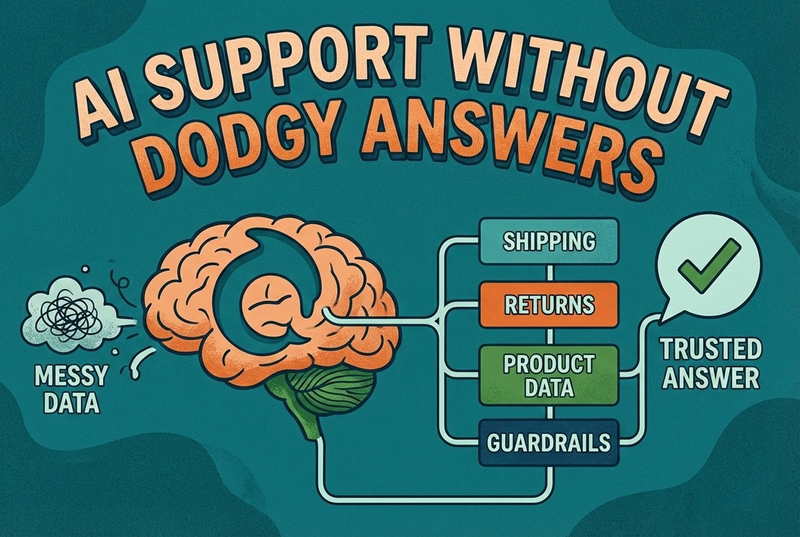
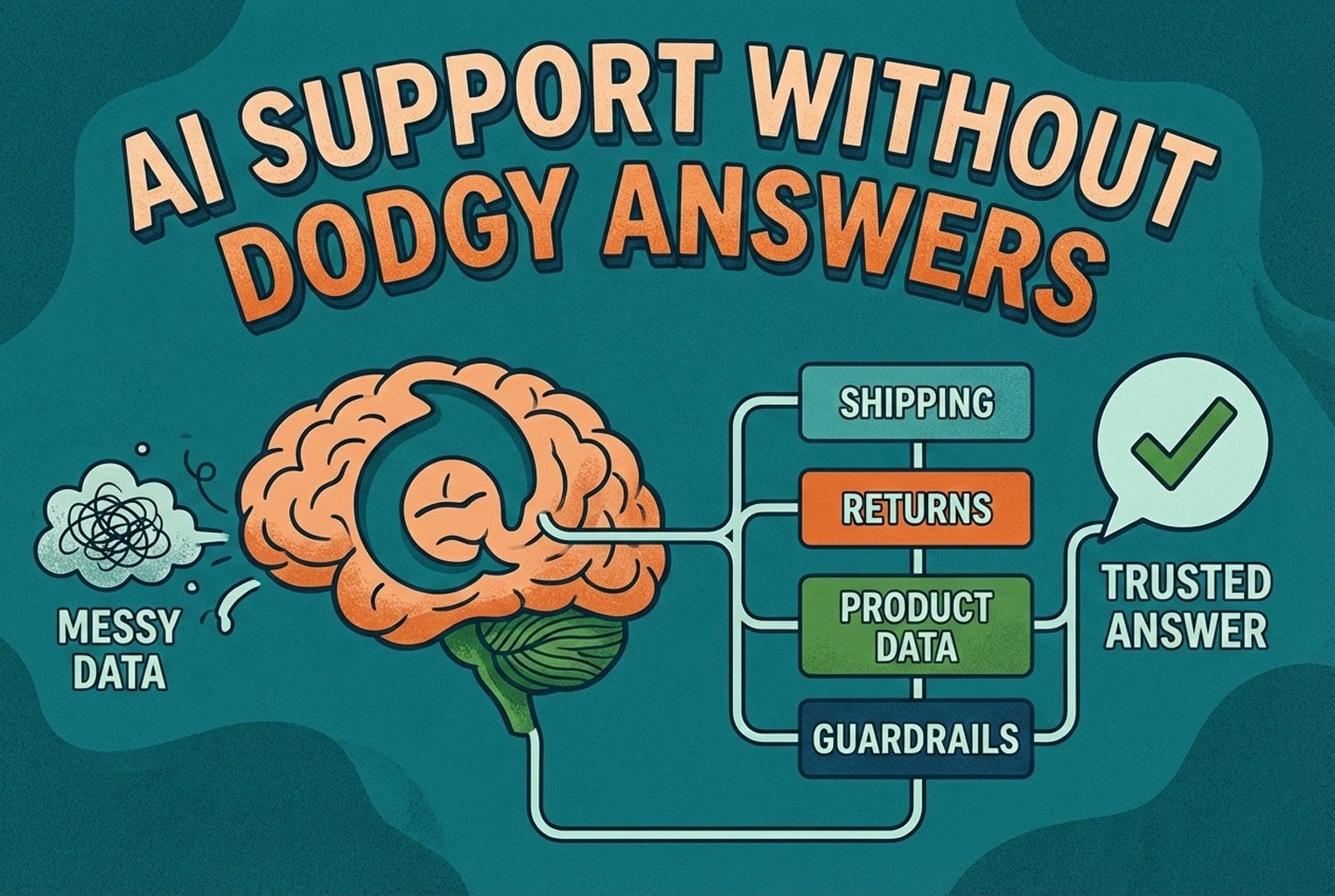
AI support usually fails when the knowledge behind it is messy. This guide shows how ecommerce teams structure shipping, returns, product data, guardrails, and human handoffs so answers stay accurate and policy-safe.
Shoppers rarely abandon because they dislike a product. They leave when delivery, returns, sizing, or compatibility answers are missing. This case study lists 25 sales-blocking questions and how synced knowledge keeps replies accurate.
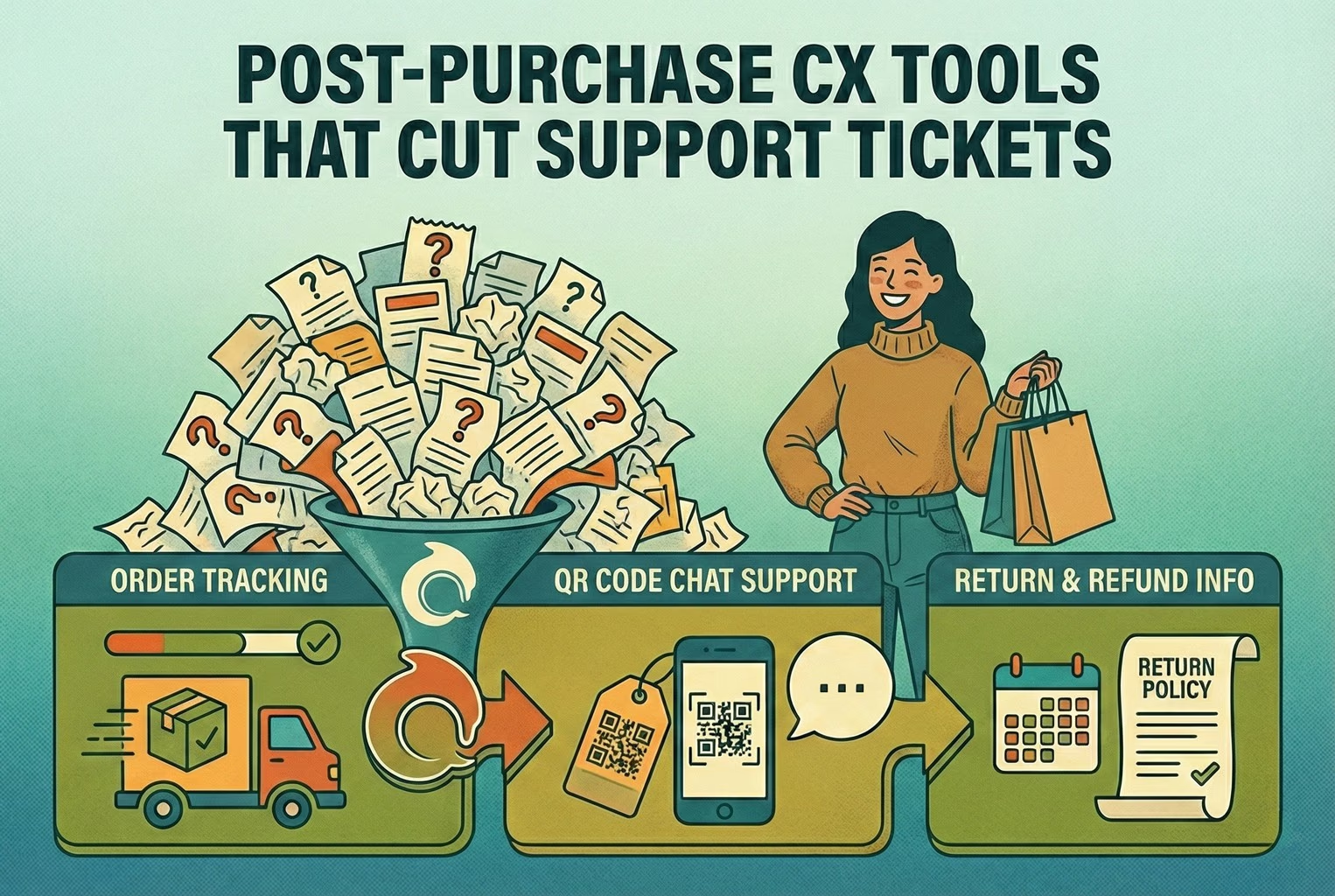
Post-purchase support often becomes most of the inbox: tracking, delays, returns, and refund follow-ups. This playbook shows the simplest tools retail teams use to deflect repeat tickets and keep expectations clear.
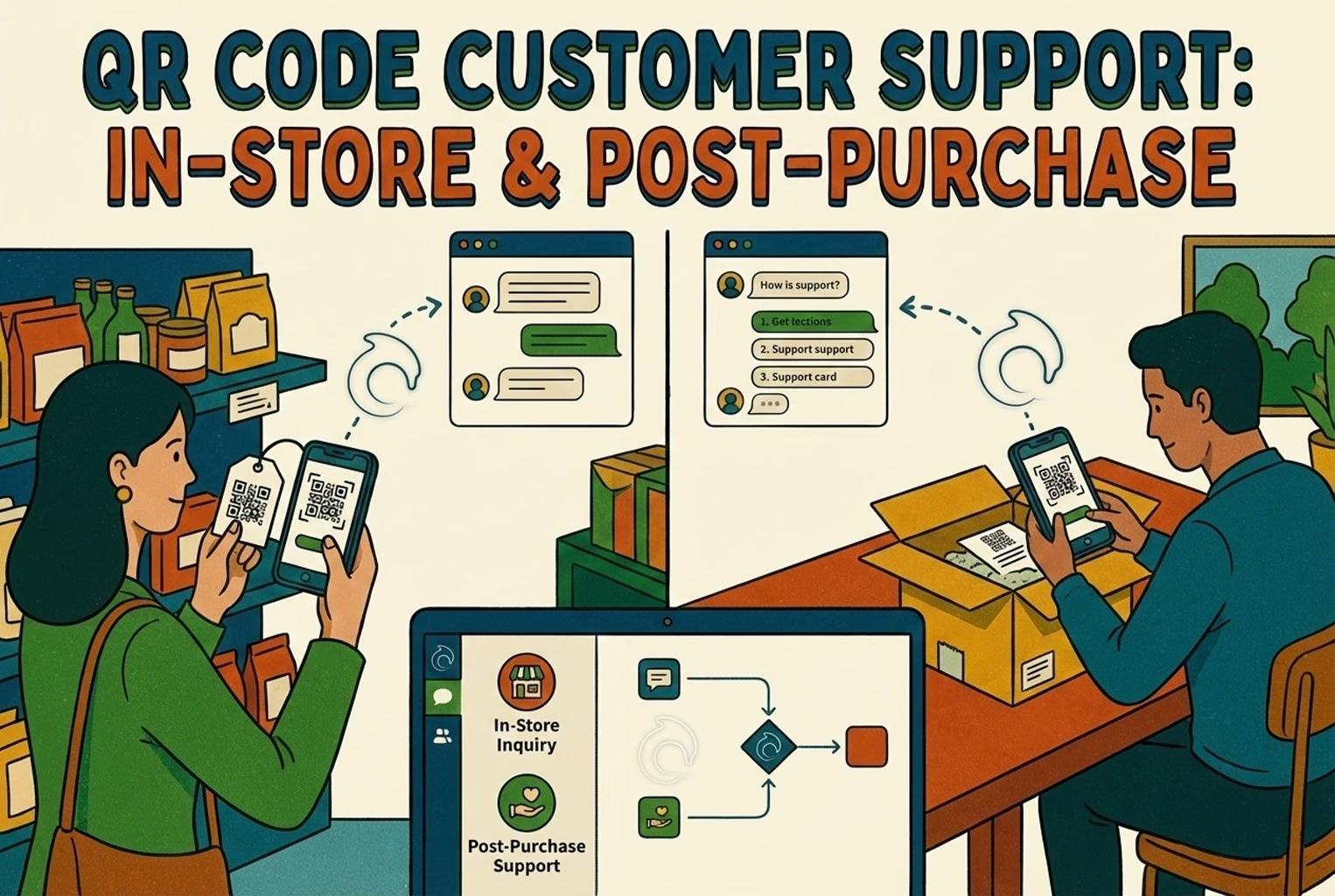
Hard-to-find staff in-store and post-purchase questions flooding email? This playbook shows where to place support QR codes, what scans should open, and how to route chats into one shared inbox with human handover when needed.
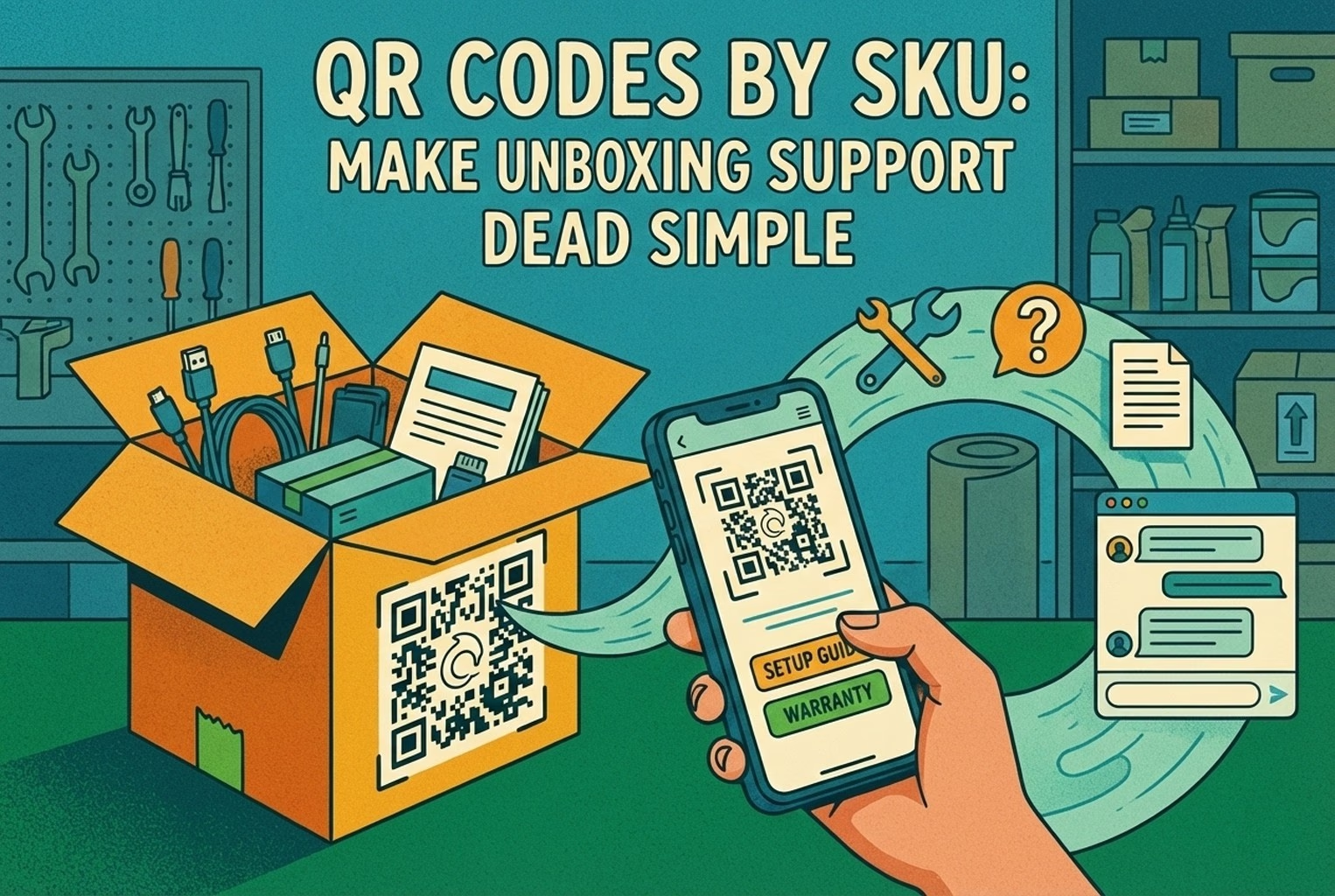
Unboxing support breaks when agents cannot tell which variant a customer holds. This guide shows how SKU-level QR codes on packaging open the right help, with placement tips, static vs dynamic choices, and rollout templates.
Which customer experience metrics are worth measuring, what each one tells you, and how to track them across digital, physical and omnichannel touchpoints.
You do not need a forty-tool CXM stack. This guide maps the practical customer experience tools ecommerce and retail teams use for chat, email, QR support, approved knowledge, and human handover.
A case-study style checklist for merchants who need live chat running fast without creating another inbox headache. See the settings, routing choices, and reply habits that improved response quality in real Shopify stores.
Selling across borders should not turn support into chaos. This playbook shows how retail teams handle multilingual chat and email with translation-safe macros, clear escalation rules, and QA habits that protect quality.
Stop losing the quiet ones.
Install it in a minute. It starts working on your next visitor.