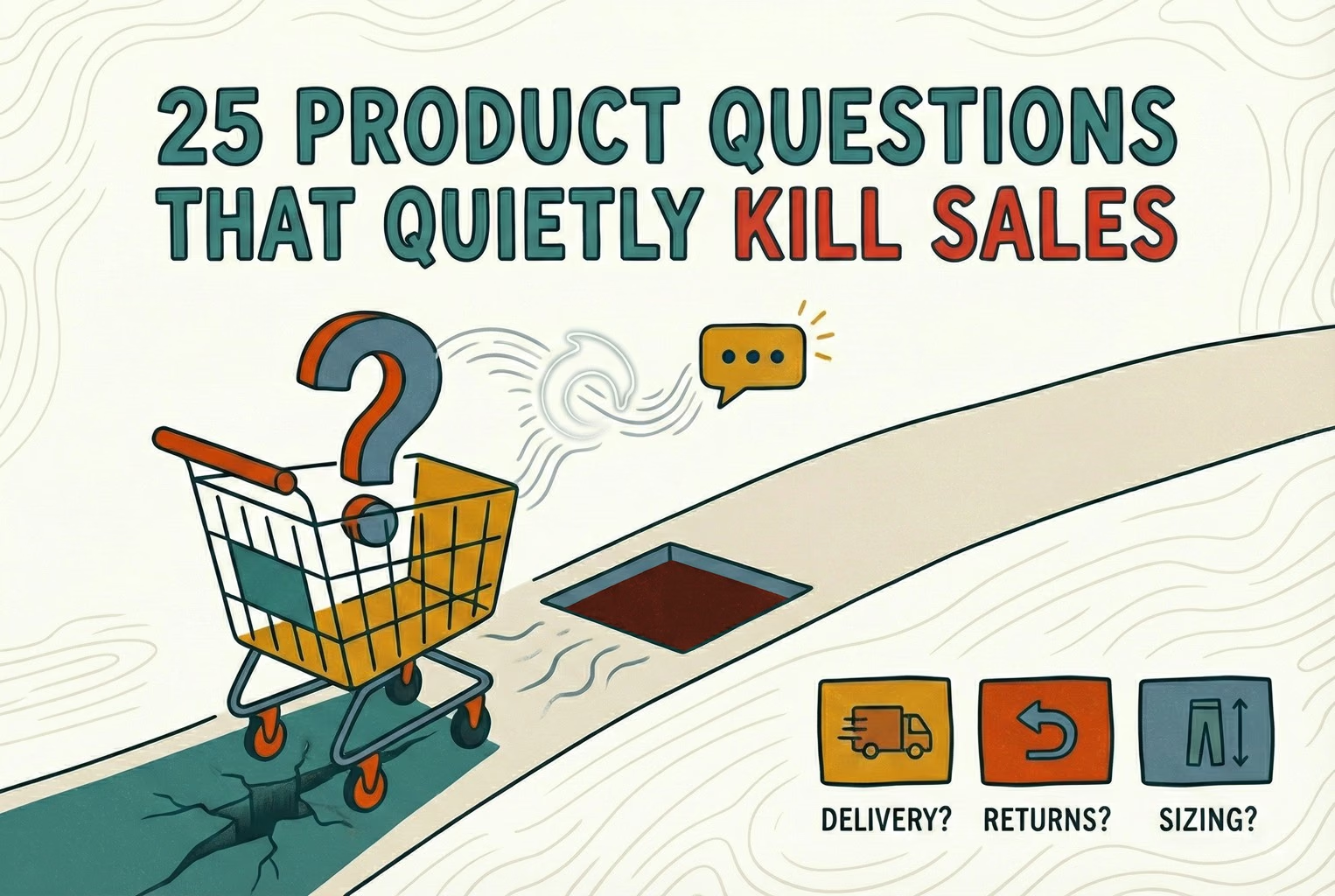
The product questions that cost sales are the simple ones a shopper cannot get answered before paying: when will it arrive, will it fit, can I return it, and will it work with what I already have. This article lists 25 of them in four groups (delivery, returns, fit and compatibility, warranty and care) and shows how to answer each one clearly.
Most people do not abandon because they do not want the product. They abandon because they are not sure.
In plenty of stores, the basket data told the story quite plainly. Traffic was steady. Product views were healthy. Yet conversion dipped right at the point where a simple question popped into someone’s head.
Will it arrive in time?
Will it actually fit?
Can I return it if it’s wrong?
Does it even work with what I already have?
That tiny wobble of doubt is enough. One unanswered question quietly becomes “I’ll think about it”, and just like that, they’re gone.

Key takeaways
Product questions chip away at conversion when the answers are buried, inconsistent, or a bit vague.
Shipping works better when shoppers can see a clear delivery date rather than a loose “2 to 5 days”. This research on why showing a delivery date beats a shipping range matches exactly what happens in a few stores.
Return anxiety is very real. When the policy feels fiddly or risky, customers bottle it right before paying. This return policy UX analysis mirrors the same pattern.
In most shops, the best answers already existed. They were just scattered across product pages and policy pages, so shoppers never saw them at the moment they hesitated.
The smoothest setups treated support like a flow. Quick self-serve first, then a tidy handover to a human when things got nuanced.
The best merchants built answers once and reused them everywhere: product pages, FAQs, chat, and QR entry points.
Accuracy mattered more than speed. Clear escalation triggers for refund disputes, safety concerns, and awkward edge cases stopped things from going pear-shaped.
If you want these questions answered automatically and properly, create an AskDolphin account and connect product knowledge so your AI and chat replies pull from real product data rather than guesswork.

Why product questions kill conversion?
Picture the moment properly. Someone is on a product page. They like it. They have scrolled the images twice. They are almost there, finger hovering over Add to basket. Then the wobble kicks in.
Will this arrive before Friday?
Can I return it if it does not fit?
Is this compatible with my model?
What is it made of?
How do I actually look after it?
It is rarely drama. It is just a doubt!
In plenty of stores, nothing was technically wrong with the product pages. The photos were sharp. Descriptions were decent. But the practical bits were either buried halfway down the page or tucked away in a policy link no one wanted to click. So shoppers started hunting.
And once people start hunting, they drift.
What stood out in this review of e-commerce product page UX is how often basic information is either missing or hard to find. Return access in particular is frequently not surfaced clearly on the product page itself, even though it directly affects buying confidence.
It gets sharper than that. In this breakdown of return policy behaviour, 15 percent of shoppers reported abandoning a purchase in the past quarter purely because the returns policy felt unsatisfactory. That is not pricing. Not product quality. Just policy friction.
Delivery creates the same quiet tension. When a page says “2 to 5 working days”, the customer has to do the maths themselves. Count the days. Factor in weekends. Hope for the best. As explained in why showing a delivery date beats a shipping range, a clear arrival expectation removes that uncertainty. Yet plenty of shops still rely on vague timeframes.

In most cases, conversion did not drop because the product was wrong. It dipped because the reassurance was late.
The 25 product questions (grouped)
Across fashion brands, beauty shops, homeware stores, and electronics retailers, the same questions kept popping up. Different products, same hesitation points. The merchants who handled this well did not reinvent the wheel. They simply captured the repeat questions once and reused them everywhere the customer might stumble.
They turned these into:
product page, FAQ snippets placed right under the buy button
chat quick replies, so the team was not typing the same answer all day
AI instant answers powered by synced product data rather than guesswork
and, for stores with a physical presence, QR destinations on shelf talkers and inside fitting rooms so customers can scan and get clarity without chasing staff
In other words, they treated product questions as conversion assets, not support noise. Here are the 25 that showed up again and again.

Shipping & delivery
This is where hesitation creeps in quickest. Across retail, delivery questions alone were responsible for a surprising amount of abandoned baskets. Not because shipping was slow, but because it was unclear.
Here are the ones that came up repeatedly.
1. When will this arrive?
(Fashion / Beauty / Home / Electronics)
The shops that handled this well avoided vague ranges and gave proper expectations.
Answer example:
“In most areas, delivery takes X to Y working days. If you order before [cut-off time], it usually dispatches the same day. At checkout, you will see the exact options and estimated arrival date for your address.”
Clear arrival expectations matter. As explained in why showing a delivery date beats a shipping range, customers feel more confident when they see when it will land, not just how long dispatch takes.
How accurately merchants kept it:
They pulled ETAs directly from shipping zones and dispatch cut off rules rather than hard coding generic timeframes.
2. Do you deliver to my area or country?
(All categories)
Customers ask this more often than you might expect, especially for niche brands or smaller shops.
Answer example:
“Yes, we currently deliver to [countries or regions]. If you do not see your location available at checkout, message us, and we will confirm the options.”
Where it came from:
Shipping zone lists and clearly defined excluded locations, not guesswork from the support team.

3. How much is the delivery?
(All categories)
Surprises at checkout are where trust goes sideways.
Answer example:
“Delivery is £X, or free over £X, depending on your order total and location. You will see the final price at checkout before payment.”
How it stayed consistent:
The best setups synced directly with the live shipping rate table and free shipping thresholds so chat and FAQ always matched checkout.
4. Can I choose express or next day?
(Fashion / Electronics)
For time-sensitive purchases, this question can make or break the sale.
Answer example:
“Yes. If express delivery is available for your address, you will see it at checkout. Orders placed after [cut off time] ship the next working day.”
Kept accurate by:
Linking responses to carrier services and dispatch cut-off times instead of manually typed promises.
5. Will it arrive by Friday or before an event?
(Fashion / Gifts)
This one usually carries a bit of urgency.
Answer example:
“If you share your postcode or country, I can give you the most realistic arrival estimate. If it is tight, I will recommend the safest delivery option.”
In the strongest setups, hard deadlines triggered a human handover rather than leaving it to automation. When someone is buying for a wedding or birthday, you do not want a generic reply.
6. Can you deliver to a pickup point or safe place?
(Home / Electronics)
Especially common with higher value orders.
Answer example:
“If your carrier supports pickup options in your area, you can select that at checkout or through the tracking link once your order has been dispatched.”
Pulled from:
Carrier capabilities and the live tracking workflow, so the answer reflected what was genuinely available for that customer’s address.
In most cases, delivery was not the problem. Clarity was.
Returns & exchange
If delivery creates hesitation, returns create fear. In several stores, customers were not worried about the product itself. They were worried about being stuck with it. The minute that feeling creeps in, conversion drops.
Here are the return questions that showed up again and again.

7. Can I return this if I change my mind?
(All categories)
The strongest answers were short, calm, and specific.
Answer example:
“Yes, as long as it is returned within [X days], unused and in its original packaging. You can start a return here: [your returns link].”
For UK customers, online orders often come with cancellation rights within 14 days in many cases. The practical details are outlined in this guidance on returns and refunds, so policies need to reflect what genuinely applies.
The merchants who handled this well made sure their product page and returns policy said the same thing. No contradictions. No small print surprises.
8. How long do I have to return it?
(All categories)
When this answer was buried, customers hesitated.
Answer example:
“You have [X days] from delivery to start a return. If it is a gift, message us, and we will sort out the easiest option.”
The cleanest setups pulled this directly from the official returns window rather than relying on memory from the support team.
9. Do you offer exchanges?
(Fashion / Home)
This question usually comes from someone who wants the product, just not in that exact version.
Answer example:
“We can exchange for a different size or colour if it is in stock. If not, we will refund you, and you can reorder the right option.”
The merchants who kept these smooth tied exchanges directly to live stock availability so promises matched reality.
10. Do I have to pay return shipping?
(All categories)
Nothing sours a checkout faster than hidden return costs.
Answer example:
“Return shipping is [free / £X / depends on reason]. If the item is faulty or incorrect, we will cover it.”
Where things were handled well, faulty or damaged claims automatically triggered a structured flow. Order number first. Clear photos. Then the resolution. No back-and-forth chaos.
11. When will I get my refund?
(All categories)
Customers want certainty here, not vague reassurance.
Answer example:
“Once your return arrives, refunds are processed within [X working days]. Your bank may then take [Y days] to show it.”
The most reliable setups aligned this with actual operational processing times and payment provider delays. Not optimistic guesses.
12. Is this a final sale or non-returnable?
(Beauty / Hygiene / Personal items)
Clarity here prevents arguments later.
Answer example:
“This item is [returnable/final sale] due to hygiene reasons. If it arrived damaged or incorrect, let us know. That is different, and we will sort it.”
Where there were safety reactions, medical concerns, or legal threats, the best merchants did not leave it to automation. Those cases moved straight to a human.
For return replies that stay calm and do not escalate tension, many merchants refined their tone using patterns similar to these return templates and macros. Even outside that specific platform, the structure holds up.
In most cases, the difference was not generosity. It was clarity.
Size, fit, materials, and compatibility
This is where uncertainty turns personal. It is no longer about delivery times or policies. It is about whether the thing will actually work for me. That is a different level of hesitation altogether.
Across fashion, beauty, homeware, and electronics, these questions cropped up constantly.
13. Is it true to size?
(Fashion)
When this was missing, returns crept up quietly.
Answer example:
“Most customers find it [true to size / runs small / runs large]. If you are between sizes, we recommend [size up/down].”
The shops that handled this well did not guess. They pulled this from fit notes, return reasons, and customer reviews rather than hoping for the best.
14. Can you help me pick a size?
(Fashion)
This usually came from someone who wanted reassurance before clicking buy.
Answer example:
“Of course. What is your height, usual size, and how do you prefer the fit, snug or relaxed? I will recommend the best match.”
In some stores, event driven purchases such as weddings or holidays automatically triggered a human handover. When nerves are involved, a proper person makes all the difference.
15. What are the exact measurements?
(Fashion / Home)
Vague descriptions like “regular fit” did not cut it.
Answer example:
“Here are the measurements: [bust / waist / hip / length or full dimensions]. If you would like, tell me what you are comparing it to, and I can sense check the fit.”
The most reliable answers were pulled straight from the size chart or product specification table, not retyped manually in chat.
16. What is it made of?
(Fashion / Home)
Material questions often signal concern about comfort or durability.
Answer example:
“Materials: [X% cotton / ceramic / stainless steel, etc.]. In terms of feel, it is [soft / structured / stretchy] and [lightweight / heavier weight].”
The merchants who avoided confusion kept this synced with their materials field and cleaned up supplier descriptions rather than copying jargon word for word.
17. Is it suitable for sensitive skin or allergies?
(Beauty)
This one carries risk, so clarity matters.
Answer example:
“Ingredients are listed here: [link or summary]. If you have known sensitivities, let me know what they are, and I will flag anything relevant. A patch test is always recommended.”
Where reactions, medical concerns, or stronger claims were involved, the better setups moved it to a human straight away.
18. Is this vegan, cruelty-free, or fragrance-free?
(Beauty)
Customers are sharper than ever on this.
Answer example:
“This product is [vegan / cruelty free / fragrance free], confirmed by [certification or official brand statement].”
The brands that handled this well pulled directly from compliance notes and verified claims. No guessing. No over-promising.
19. Will this work with my device or model?
(Electronics)
Compatibility confusion is one of the biggest silent blockers.
Answer example:
“It is compatible with [models or standards]. If you share your model number, or even a quick photo of the label, I can confirm before you buy.”
The cleanest implementations referenced a proper compatibility table with clear exclusions, so customers were not left guessing.
20. What is included in the box?
(Electronics / Home)
Assumptions cause disappointment.
Answer example:
“In the box: [main item plus accessories, cables, manuals]. Optional add-ons: [X].”
The merchants who avoided awkward post-purchase emails synced this with their packaging list and updated it whenever bundles changed.
21. Is it in stock in my colour or size?
(All categories)
Nothing frustrates a customer more than thinking something is available when it is not.
Answer example:
“If you can select the option on the page, it is available. If it shows as sold out, tap ‘notify me,’ and we will message you as soon as it is back.”
This worked best when tied directly to live variant inventory and a proper back in stock workflow rather than manual checks.
Where this section worked properly, the team separated repeatable answers from judgment calls. The approach mirrored what is explained in live chat vs AI. Automation handled the structured, data-driven replies. Humans stepped in where nuance or risk appeared.
That balance stopped overconfident promises and kept trust intact.
Warranty and care instructions
This section rarely gets attention until something goes wrong. Yet in plenty of shops, these quieter questions often decided whether someone felt safe enough to buy. Longevity, protection, and authenticity carry weight, especially with higher value items.
Here is what kept surfacing.
22. How do I care for it or wash it?
(Fashion / Home)
Care instructions are easy to overlook, but they matter.
Answer example:
“Care: [wash temperature / do not tumble dry / wipe clean only, etc.]. If you want it to last, avoid [the one thing that tends to damage it].”
The merchants who avoided confusion pulled this straight from a structured care instructions field and kept it identical across product pages, FAQs, and chat replies. No rewriting. No contradictions.
23. How long is the warranty?
(Electronics / Premium goods)
Warranty questions usually signal one thing. The customer is thinking long term.
Answer example:
“The warranty is [X months or years] from delivery. If something goes wrong, contact us with your order number and a quick photo or short video so we can assess it quickly.”
The most reliable answers were synced with the official warranty policy and clear claim steps, rather than vague reassurance like “we will sort it”.
24. Is it genuine, or how do I verify authenticity?
(Beauty / Premium goods)
This one tends to appear with premium or branded goods.
Answer example:
“We provide [batch code / serial number / verification method]. If you share the code with us, we will confirm it for you.”
Where this worked well, authenticity checks were tied to a proper internal workflow and supplier system, not left to guesswork from the support team.
25. Do you have spare parts or replacements?
(Electronics / Home)
A customer asking about spare parts is usually thinking responsibly, not skeptically.
Answer example:
“Yes, we offer replacements for [list of parts]. Let us know what is missing or damaged, and we will point you to the correct option.”
The stronger setups kept a clear parts catalogue and linked this into support flows so the answer was precise, not improvised.
In most cases, warranty and care were not about preventing returns. They were about reinforcing trust. When customers could see that a product was supported after purchase, hesitation softened.
Common mistakes that quietly bleed sales!
Sending people to the homepage instead of the exact answer path. If your QR or chat button drops customers onto the front door again, you have basically handed them homework.
Writing delivery as “2 to 5 days” with no clear arrival expectation. The difference between speed and certainty comes up a lot in why showing a delivery date beats a shipping range.
Burying the returns policy three clicks deep, right when the customer is deciding whether to buy. This comes up constantly, and it lines up with this product page UX review and this return policy UX analysis.
Dumping specs into one long paragraph instead of a clean, scannable table. People skim. They compare. They do not read essays. The pattern shows up again in this product page UX review.
Letting automation answer awkward edge cases like refund disputes, safety concerns, or goodwill exceptions. That is how things go pear-shaped and end up taking longer than if a human had handled it in the first place.
Having different answers in different places. The product page says one thing, chat says another, and the email template says something else. Customers notice. Even if they do not complain, they lose confidence.
Copy and paste Answer pack
In the better-run shops, these ten replies covered the bulk of pre-purchase friction. They were saved as FAQ blocks, chat quick replies, and AI knowledge snippets, all pulling from the same product data, so nothing contradicted itself.
You can lift these and adjust the brackets.
1) Delivery time
“Delivery is usually X to Y working days. Order before [cut-off time] for same-day dispatch where possible. Checkout shows the final estimated arrival date for your address.”
2) Delivery cost
“Delivery is £X, or free over £X. You will see the exact cost at checkout before payment.”
3) Returns window
“Yes, you can return within X days of delivery, unused and in original packaging. Start your return here: [returns link].”
4) Return shipping
“Return shipping is [free / £X / depends on reason]. If the item is faulty or incorrect, we cover the return.”
5) Refund timing
“Once your return arrives, we process refunds within X working days. Your bank may then take Y days to show it.”
6) Exchange
“We can exchange for another size or colour if it is in stock. If not, we will refund you so you can reorder the right option.”
7) True to size
“Most customers find it [true to size / runs small / runs large]. If you are between sizes, we recommend [size up or down].”
8) Materials
“It is made from [materials]. In terms of feel, it is [soft / structured / stretchy] and [lightweight / heavier weight].”
9) Compatibility check
“It is compatible with [models or standards]. If you share your model number, or a quick photo of the label, I will confirm before you buy.”
10) What is in the box
“In the box: [main item and accessories]. Optional add-ons: [X].”
If you would rather start from a working account than a blank page, you can create an AskDolphin account and adapt these to your own tone and product data.
How to keep answers accurate so you do not promise the wrong thing?
The biggest issue is not missing answers. It was mismatched ones.
The product page said one thing. Chat said another. The email template said something slightly different again. No one meant to mislead anyone. It just drifted over time.
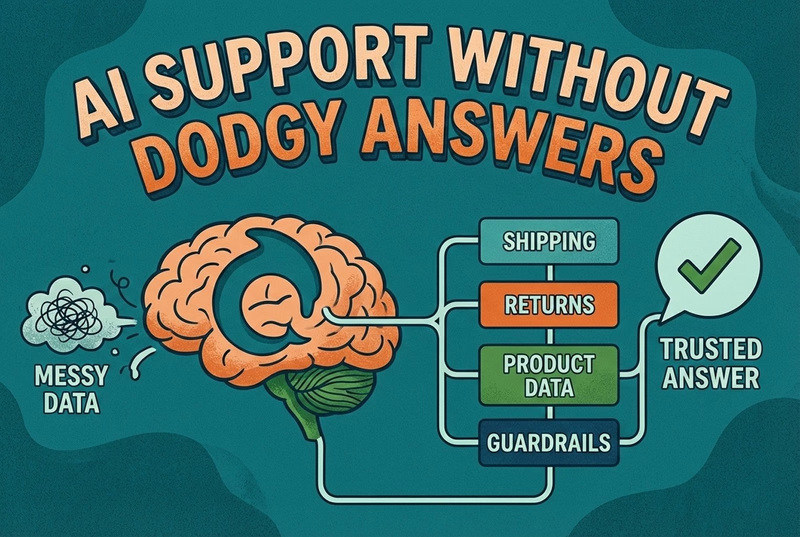
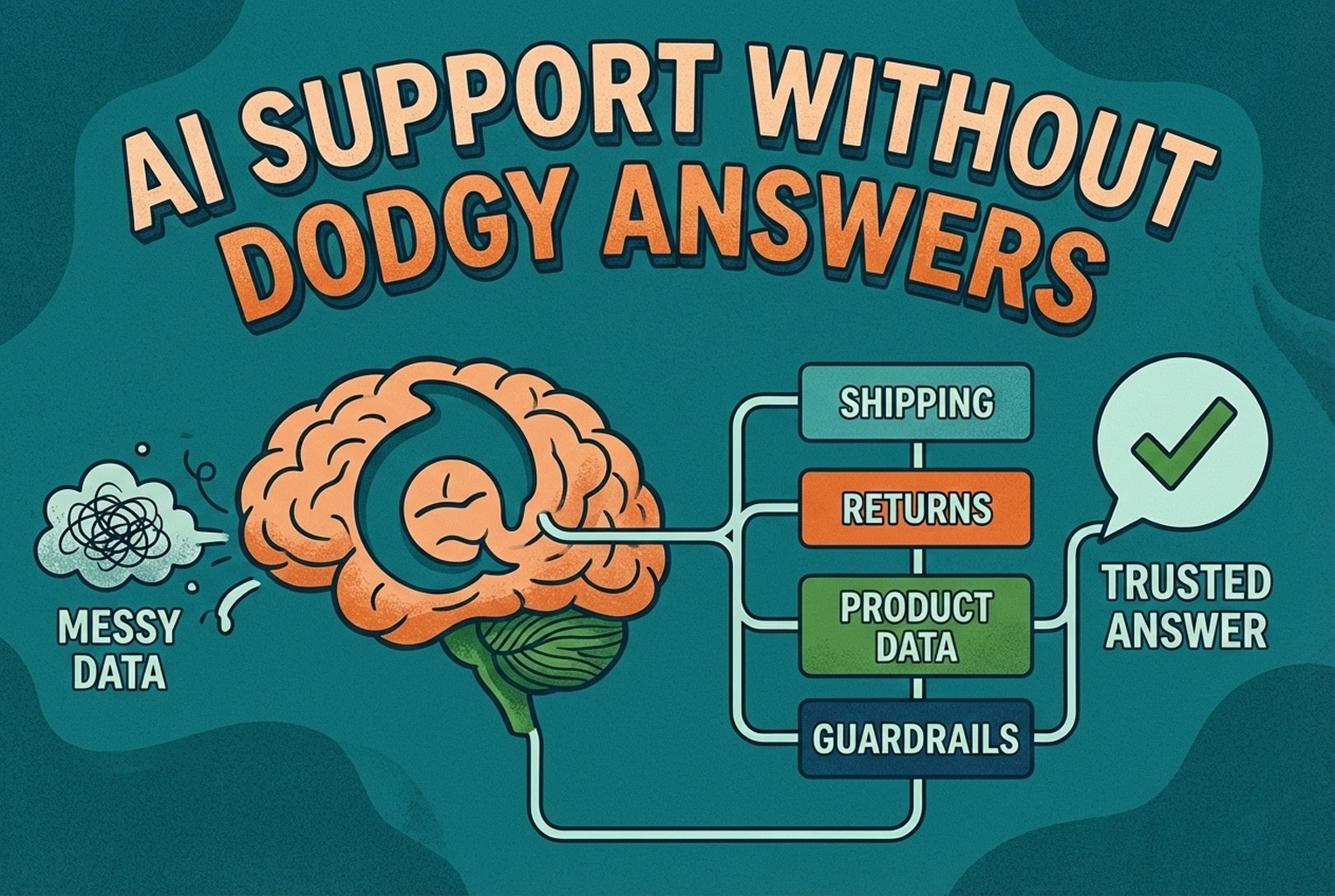
The shops that avoided that mess had one clear habit. Everything is pulled from a single source of truth.
Pull from product pages and policies
Where it worked properly, both AI and the support team relied on structured fields, not memory. That meant answers were generated from:
product title and live variant options
real-time inventory
a clean dimensions or specification table
materials or ingredient fields
delivery rules, including zones, dispatch cut-off times, and carrier options
official returns and warranty pages
Nothing was improvised.
One thing that stood out in this review of e-commerce product page UX is how much shoppers rely on scannable specification tables. People do not read dense paragraphs. They scan, compare, and then decide. When specs are tidy and structured, they become usable data, not just content. The merchants who treated product information like structured data rather than decorative copy found that accuracy stopped being a daily battle. It simply flowed through every channel consistently.
Escalation triggers
Hand over before it gets risky. One pattern was obvious across calmer support teams. They did not let automation wander into grey areas. They were clear about when a human needed to step in.
These situations moved immediately out of AI and into a real conversation:
refund disputes or chargebacks
“It arrived broken,” claims that required judgment and evidence
safety or medical concerns, such as skincare reactions or electrical faults
legal threats or formal complaints
anything that required a policy exception or goodwill decision
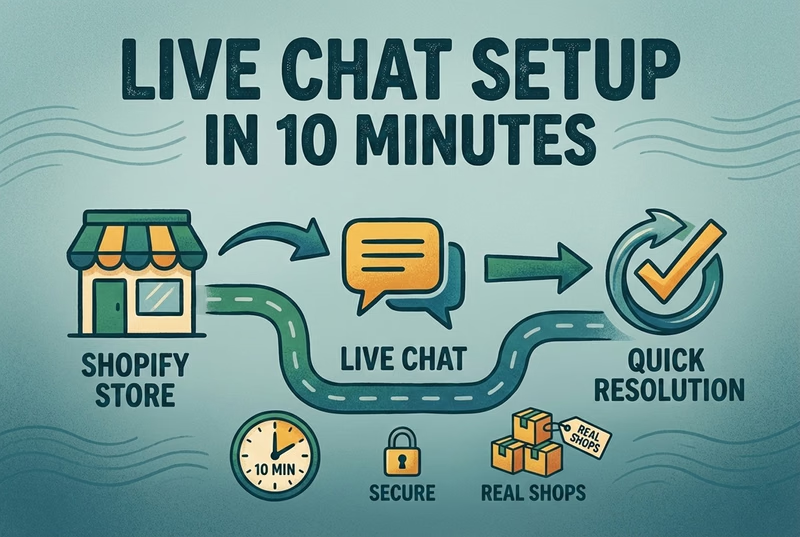
When automation tried to handle these alone, tone slipped, and tension rose. When a human took over early, things usually settled quickly. The teams that got this balance right followed the same rhythm outlined in the live chat setup checklist. AI handled repeatable, structured questions. Humans handled nuance, emotion, and risk.
That line in the sand is what kept support calm rather than chaotic.

Fast implementation
No faff, just what worked. The merchants who fixed this did not rebuild their whole tech stack. They made small, practical adjustments in the places where hesitation actually happened.
First, they moved answers closer to the decision. Delivery, returns, and sizing sat directly on the product page, not hidden in the footer. When someone paused, the reassurance was right there.
Then they created a simple FAQ hub. Not a bloated knowledge base. Just one tidy page that mirrored their strongest answers, so nothing contradicted itself.
Next came chat. The better setups added these answers as quick replies and paired them with a clear “talk to a person” option. Automation handled the repeatables. Humans stepped in when nuance appeared. The balance described in live chat vs AI showed up again and again in the calmer teams.
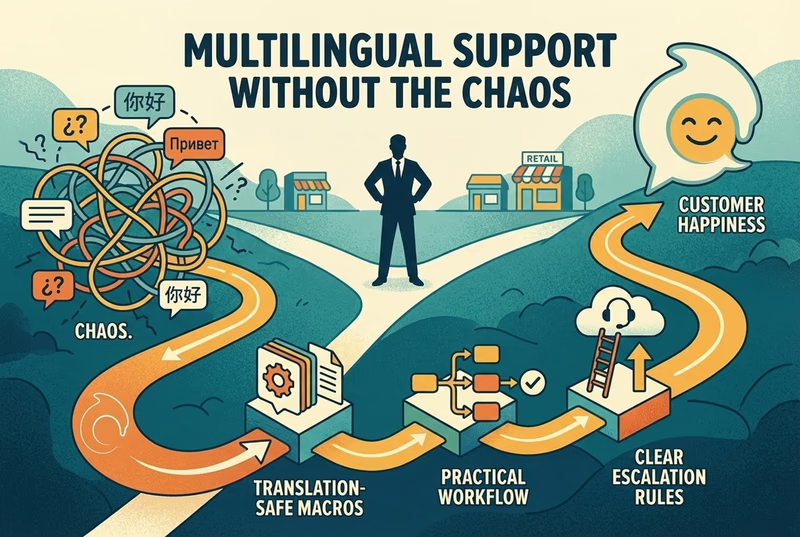
The real shift happened when product data was connected properly. Once the catalogue was synced, answers pulled live variant and stock context instead of generic text. That is where tools like Shopify live chat with product sync became practical rather than cosmetic, especially when paired with multilingual workflows similar to what is covered in multilingual customer support workflows.
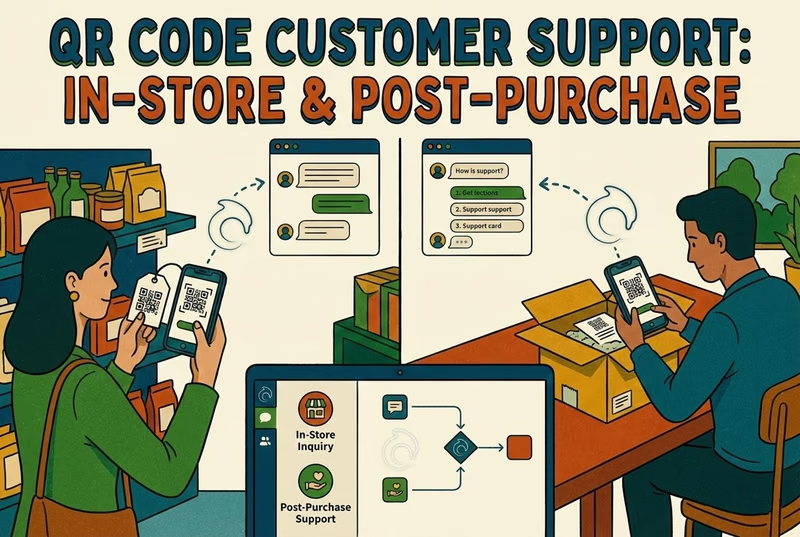
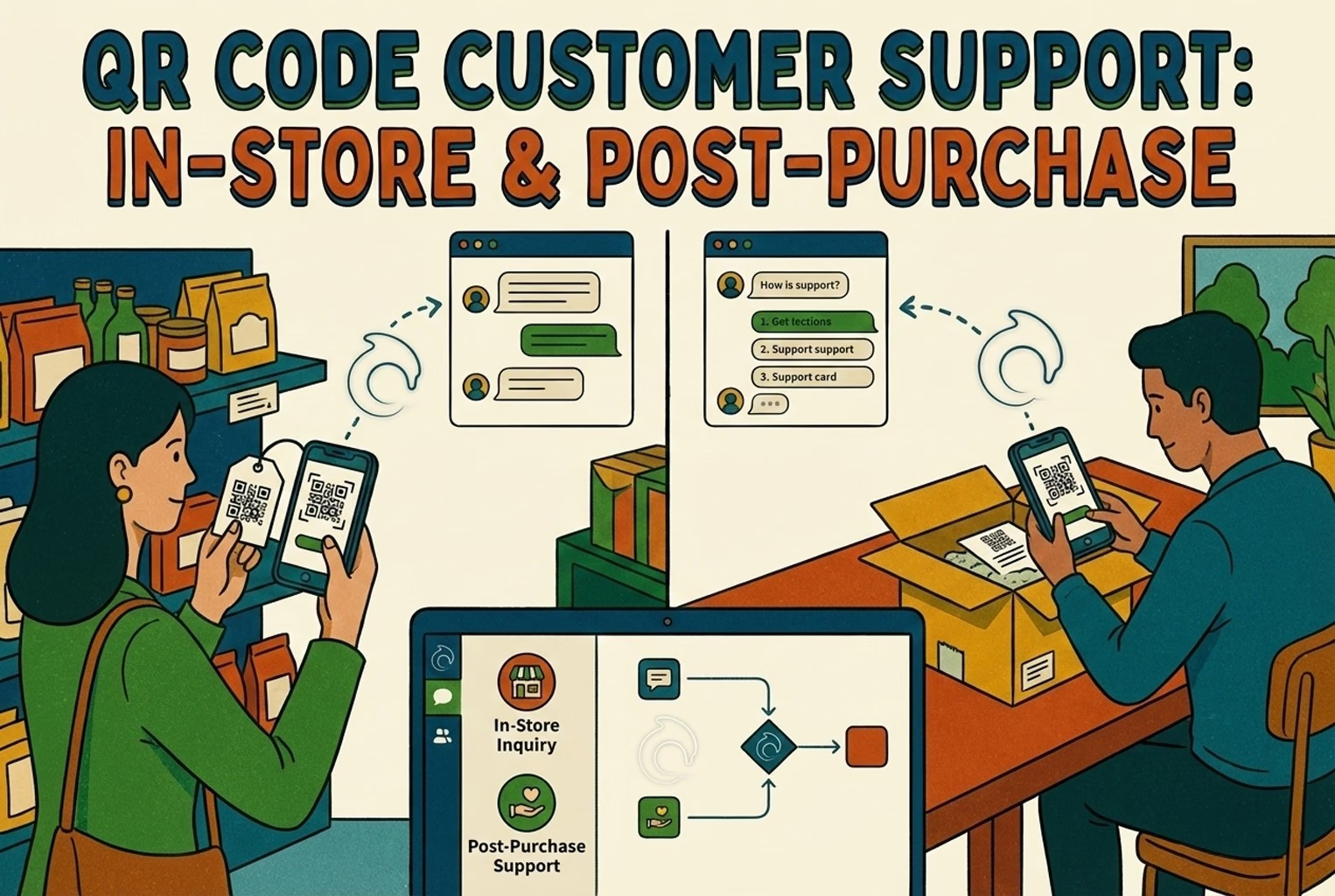
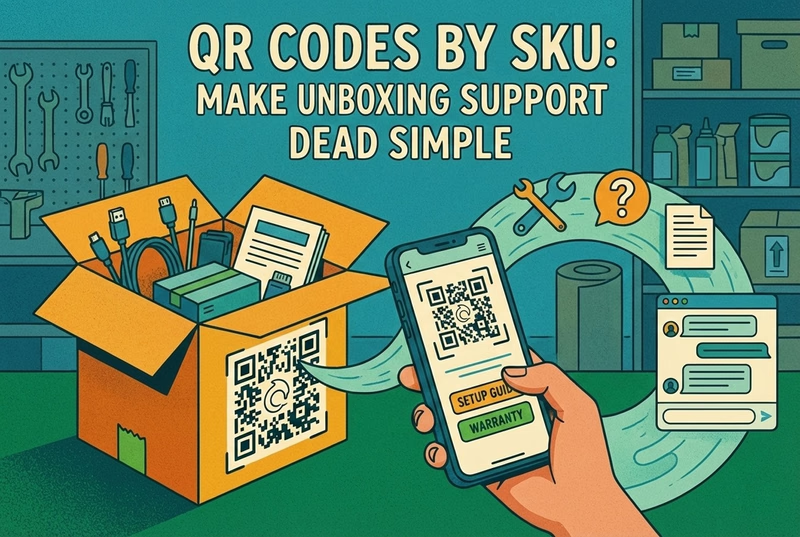
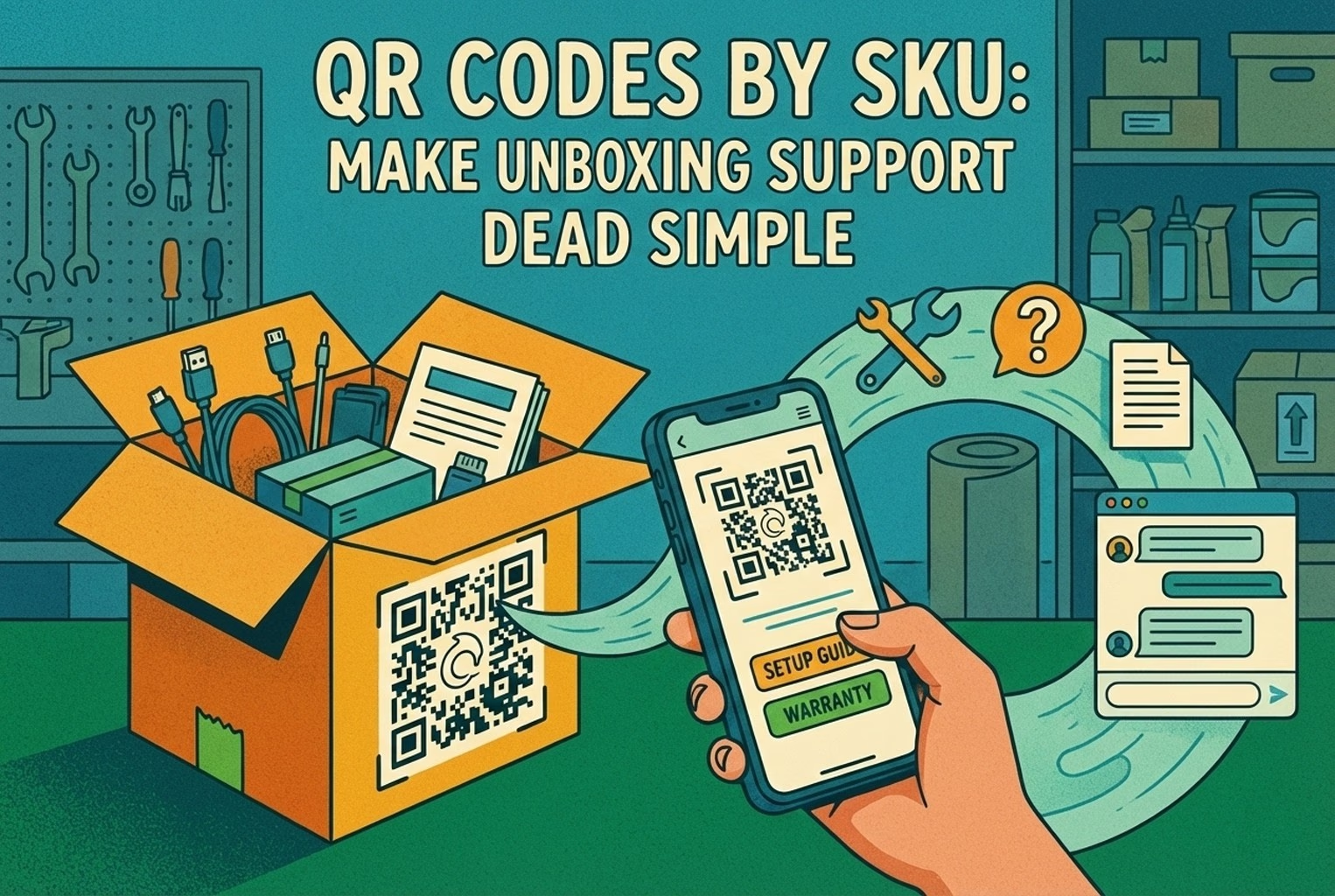
For retailers with physical shops, QR entry points quietly filled the gap between browsing and asking for help. Shelf talkers. Fitting rooms. Even printed on receipts. Many started with QR code customer support and later refined it into more precise flows like SKU level QR support on packaging.
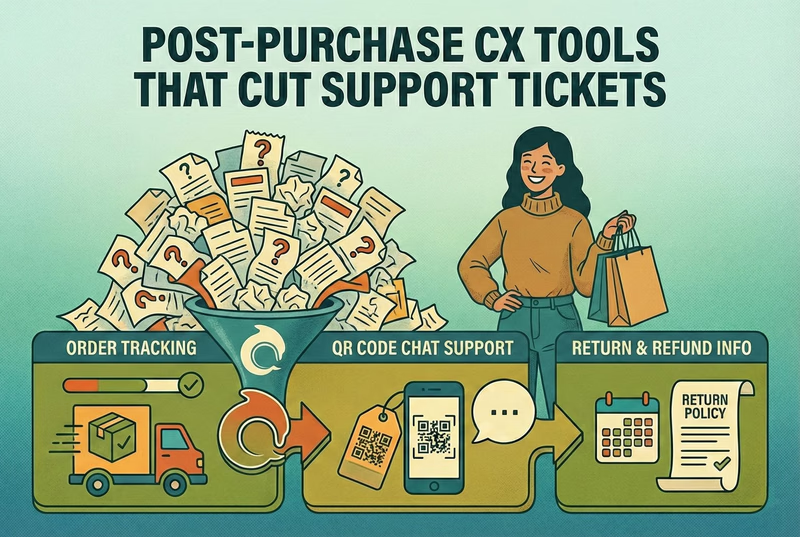
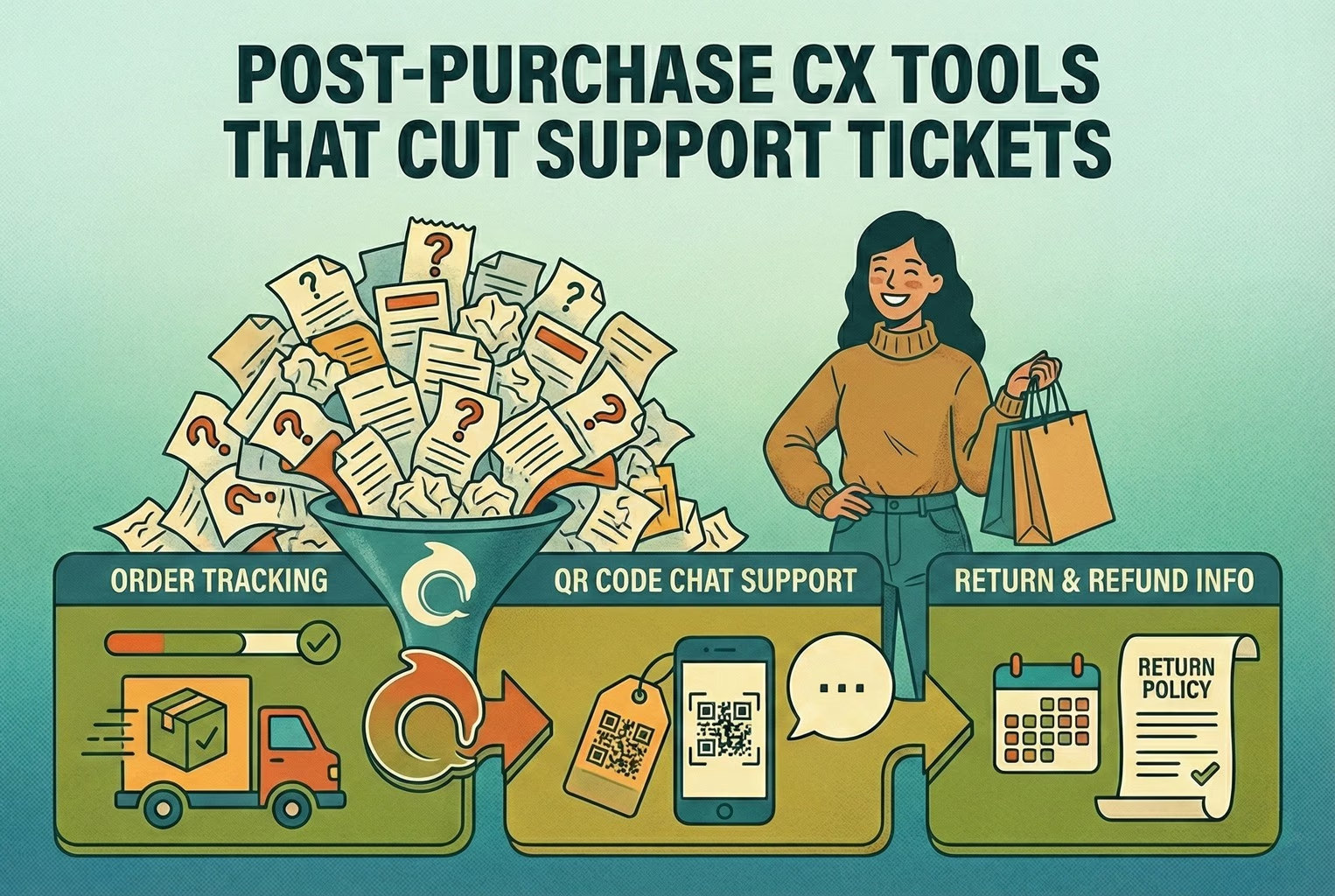
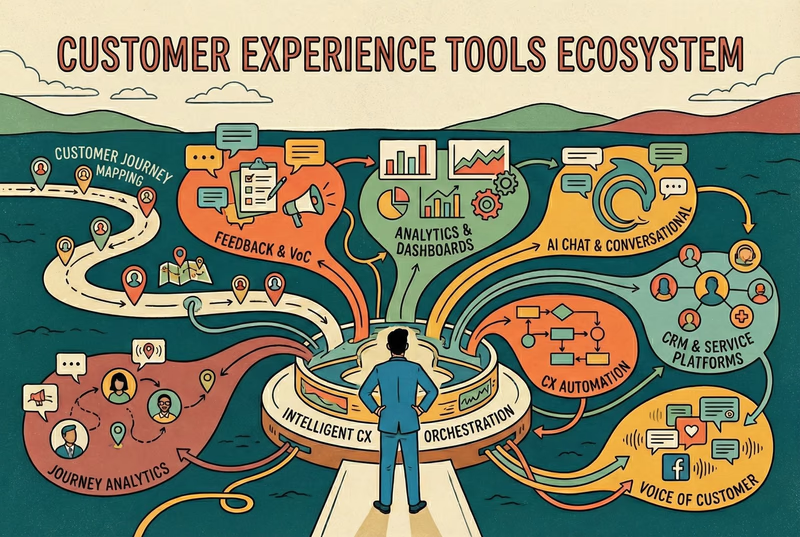
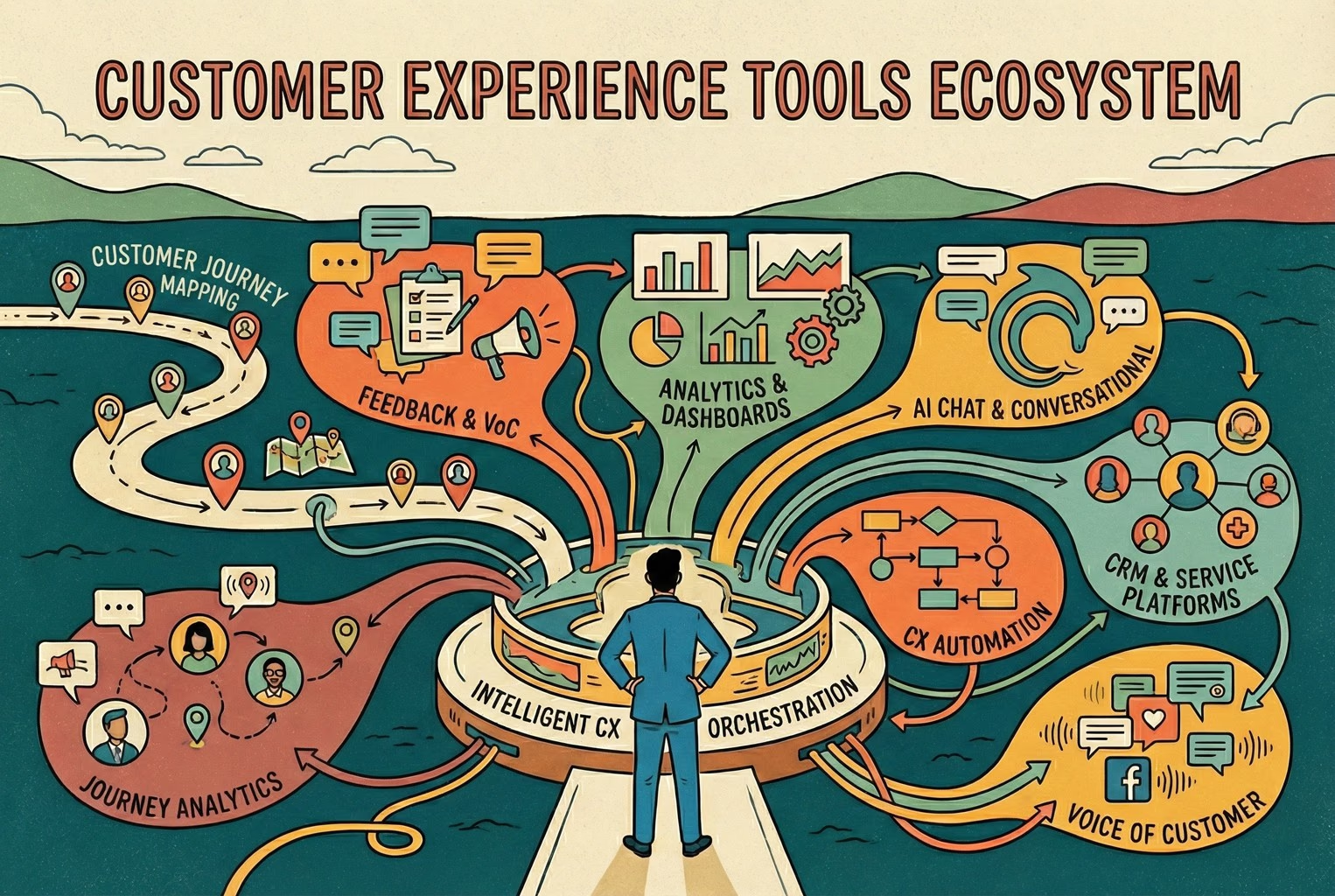
When stepping back to look at the bigger picture, the leanest stacks tended to follow the thinking in the CX platform minimum stack, supported by practical tools outlined in post-purchase CX tools.
Nothing flashy. Just fewer unanswered questions at the exact moment they mattered.
Stop losing sales to simple questions!
In most shops, nothing dramatic was broken. It was just small unanswered questions quietly chipping away at conversion. When those answers became visible, consistent, and properly synced to real product data, hesitation dropped.
If you want shoppers to stop bouncing over basic doubts, here is what the better-performing merchants did next:
Install AskDolphin so chat and AI pull from live product data
Sync your products so sizing, stock, and delivery answers stay accurate
Add chat and QR entry points wherever hesitation tends to appear
It is not about adding more tools. It is about removing uncertainty at the exact moment it shows up.