What Are Customer Experience Metrics?
Customer Experience (CX) is the complete range of cognitive (thoughts), affective (feelings), sensory (perceptions), and behavioural (actions) responses customers have throughout their journey, from pre-purchase to consumption to post-purchase.
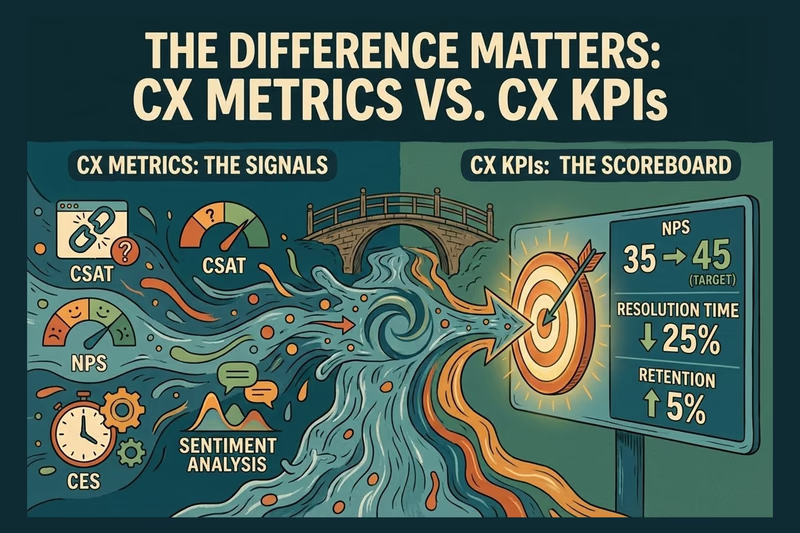
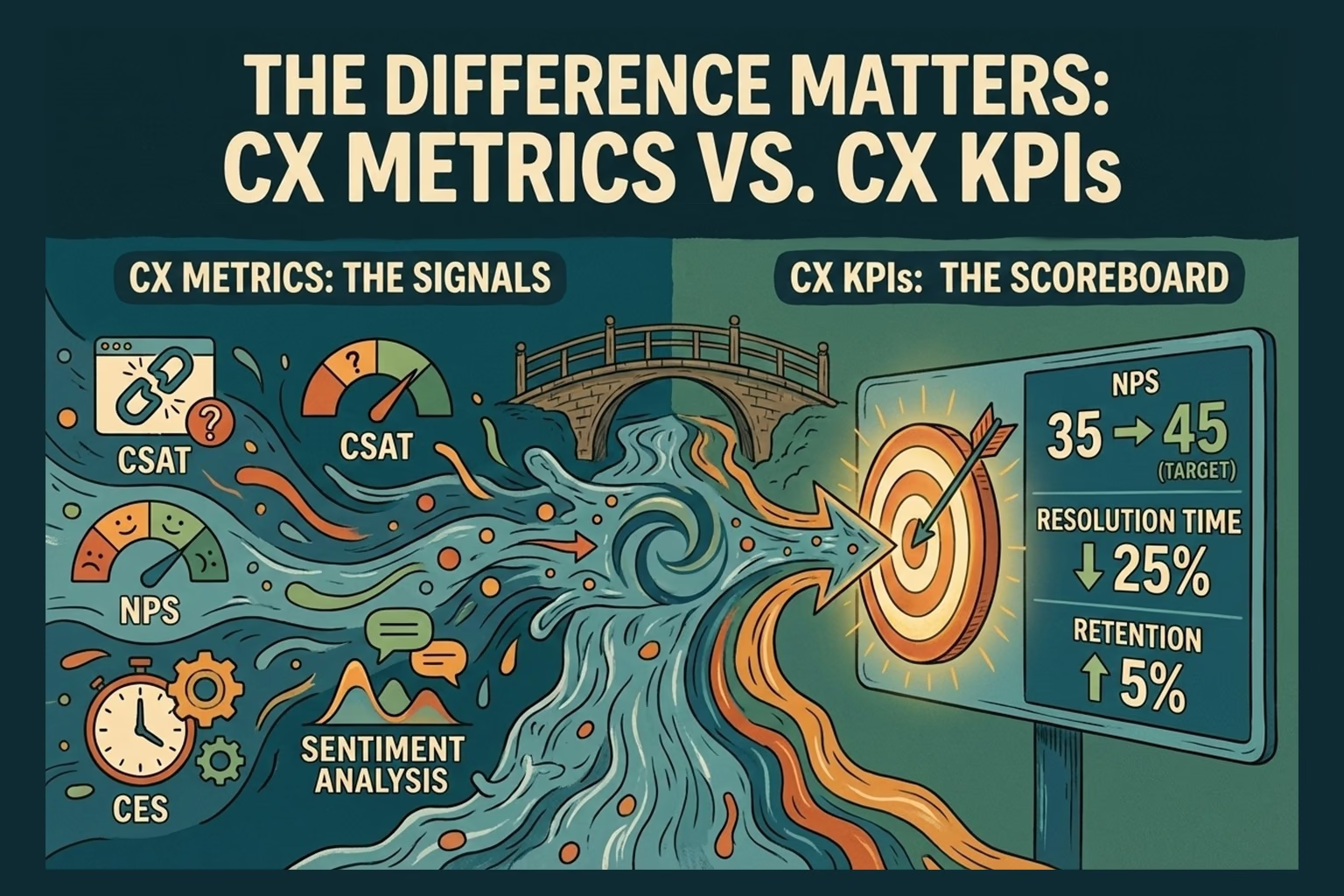
Customer experience metrics (CX metrics) translate these responses into measurable signals that quantify satisfaction, effort, loyalty, and sentiment across touchpoints. By continuously listening to and interpreting these signals, businesses can understand what matters most, compare performance over time, identify friction points, and prioritise improvements that refine strategies, optimise journeys, and create experiences that resonate across digital and physical (omnichannel) environments.
Because CX is multidimensional, no single score tells the whole story. Strong programmes track a portfolio of metrics across journeys and channels to reveal both performance and perception.
Why CX Metrics Are Important
Build Trust and Stronger Engagement
CX metrics reveal whether customers feel valued, supported, and understood. By listening and acting on these signals, companies can reduce friction, make journeys easier, and deliver interactions that feel human. This builds trust, strengthens engagement, and lays the foundation for long-term loyalty.
Drive Growth and Loyalty
Satisfied customers spend more, stay longer, and recommend brands to others. Research from Harvard Business Review shows that emotionally connected customers are more than twice as valuable as highly satisfied ones. Improvements in metrics like CSAT, CES, and NPS directly translate into higher retention, stronger advocacy, and increased revenue.
Differentiate Through Experience
Brands that consistently deliver seamless, personalised, and emotionally resonant experiences stand apart. CX metrics ensure companies know where they excel and where they need to evolve to create experiences that customers remember and return for.
Provide Early Warnings
Metrics act as an early detection system. Rising effort scores, falling satisfaction, or negative sentiment can highlight problems before they damage loyalty. Monitoring CX metrics allows businesses to catch issues early, respond faster, and protect reputation.
Align the Organisation
CX metrics give every department, from marketing to operations, product to support, a shared language of customer impact. This breaks silos and ensures all teams are aligned around the same north star: creating value for customers.
Create a Continuous Learning System
With baselines, benchmarks, and trends, CX metrics enable organisations to learn continuously. They spotlight what’s working, reveal friction points, and guide testing. Over time, companies evolve into customer-centric engines of innovation and improvement.
Key CX Metrics (with Abbreviations + Quick Formulas)
Here are the most widely used CX metrics, with abbreviations, formulas, and focus areas. For definitions of each, see our customer experience glossary.
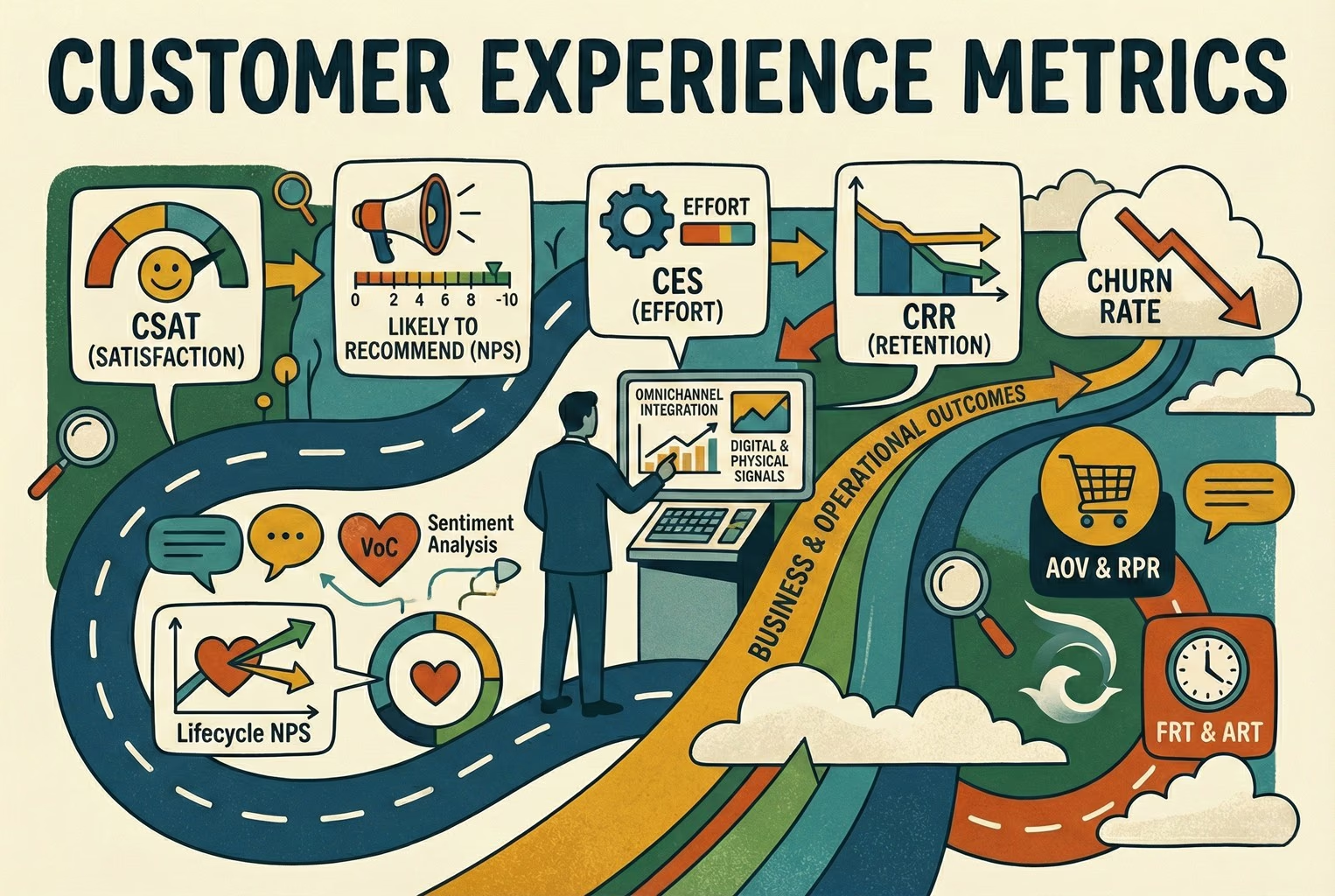
Customer Satisfaction (CSAT): (Satisfied ÷ Total responses) × 100 → Measures satisfaction with a specific interaction.
Net Promoter Score (NPS): % Promoters (9–10) – % Detractors (0–6) → Indicates customer loyalty and advocacy.
Customer Effort Score (CES): Avg. effort rating (1 = easy to 7 = hard) → Shows ease of achieving a goal.
Customer Retention Rate (CRR): ((End customers – New customers) ÷ Start customers) × 100 → Retention over time.
Churn Rate (CHR): (Lost customers ÷ Start customers) × 100 → Measures attrition.
Repeat Purchase Rate (RPR): (Repeat customers ÷ Total customers) × 100 → Indicates purchase frequency.
Customer Lifetime Value (CLV): Avg. spend × Frequency × Duration → Long-term customer value.
Average Order Value (AOV): Revenue ÷ Orders → Typical spend per transaction.
First Response Time (FRT): Avg. time to first reply → Responsiveness of support.
Average Resolution Time (ART): Avg. time to resolve → Efficiency of problem-solving.
First Contact Resolution (FCR): (Solved on first contact ÷ Total issues) × 100 → Service quality.
Customer Journey Analytics (CJA): End-to-end KPIs → Measures holistic journey performance.
Voice of the Customer (VoC): Surveys, reviews, interviews → Captures expectations and pain points.
Customer Sentiment Analysis (CSA): AI/NLP assigning sentiment scores → Captures emotional tone.
How to Measure CX Metrics (Omnichannel Approach)
Robust CX measurement combines quantitative surveys with qualitative signals.
Digital Channels (Websites, Apps, Ecommerce)
CSAT & CES: Surveys at checkout, onboarding, or after support.
Lifecycle NPS: Surveys at set intervals.
Behavioural analytics: Funnels, click paths, abandonment rates, heatmaps.
Performance: Core Web Vitals, error rates, uptime.
Social media listening: Brand mentions on X, LinkedIn, TikTok, Instagram.
Reviews: Google, Trustpilot, G2, app stores.
Forums & communities: Reddit, Discord, user groups.
Always-on forms: Embedded feedback widgets.
AI-driven sentiment analysis of chat logs, reviews, and social posts.
Physical Channels (Stores, Branches, Service Desks, Events)
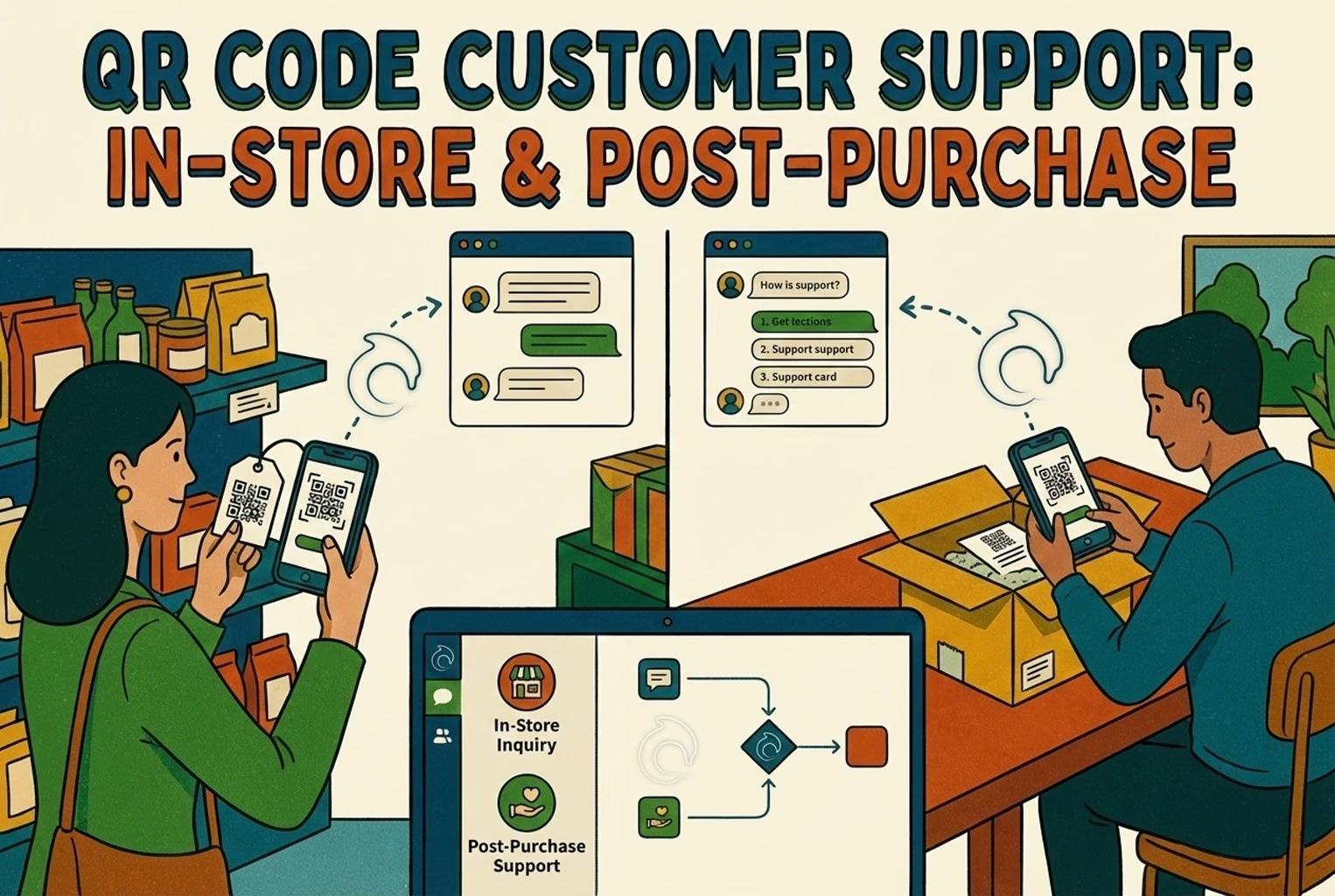
On-site kiosks, QR codes, or tablets for surveys.
Post-visit SMS/email feedback.
VoC forms & suggestion boxes.
Queue times, dwell times, service resolution speed.
Mystery shopping & audits.
Observation & ethnography.
Employee feedback from frontline staff.
Intercept interviews with customers in-store.
Omnichannel Integration
Unify profiles across channels.
Normalise scales (0–100) for comparability.
Centralise surveys, reviews, and social mentions.
Attribute online actions (e.g., booking) to offline outcomes (e.g., wait times).
Visualise in CX dashboards.
How to Use CX Metrics to Improve Experiences
You don’t improve a score. You improve the experience that drives it.
The CX Improvement Loop
Measure → Diagnose → Design → Test → Implement → Monitor & Collect Feedback → Repeat
Measure & Segment → Collect across touchpoints; segment by persona, geography, lifecycle stage, and value tier.
Diagnose Root Causes → Map service blueprints, apply 5 Whys.
Design Fixes (EARS Framework) → Eliminate, Automate, Reduce, Simplify.
Test & Pilot → A/B testing and small pilots.
Implement & Enable → Staff training, workflow updates.
Monitor & Feedback → Surveys, reviews, employee input, trend tracking.
Repeat → Continuous iteration.
CX Happens
If a customer waits too long on hold, they won’t hang up, they’ll record your hold music, remix it on TikTok, and your aunt will share it back to you on WhatsApp.
That’s how fast customer experience spreads.
Flow Forward
Customer Experience Metrics are not just numbers. They’re stories told in data.
They show how customers feel, act, and connect with your brand.
When you listen, analyse, and act on these signals, your organisation becomes more human, one responsive moment at a time.