AI support usually fails when the knowledge behind it is messy. This guide shows how ecommerce teams structure shipping, returns, product data, guardrails, and human handoffs so answers stay accurate and policy-safe.ai-customer-support
Last updated
On this page
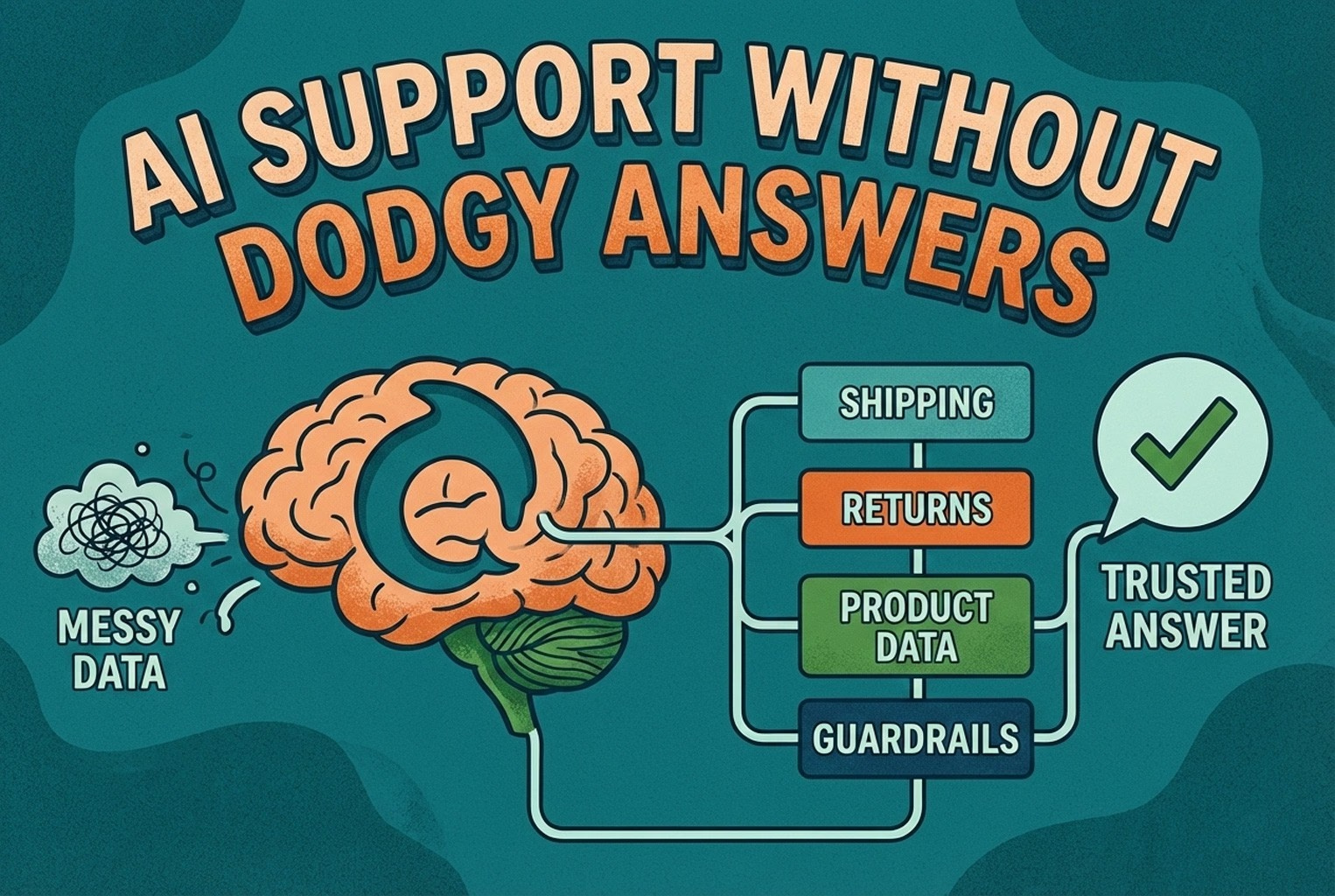
AI support gives wrong answers when it has to guess. Keep it accurate by grounding it in approved shipping, returns and product information, setting clear guardrails, and handing the conversation to a person when it is not sure.
If you have ever watched your AI reply confidently and thought, "That is not quite right," you are not being paranoid. It happens in real stores.
Most wrong answers are not caused by "bad AI". They happen because the AI is guessing. Policies are scattered. Product data is half updated. The customer's question is missing one key detail.
AI fills the gap. And that is where trust quietly slips.
Key Takeaways
AI goes wrong when it is not grounded in real shipping, returns, and product data.
One clear source of truth across four areas keeps answers consistent.
Guardrails outperform "more training" every time.
One sharp, clarifying question beats three vague responses.
Handoff is a feature, not a failure.
Weekly QA prevents small mistakes from becoming expensive ones.
If you want the broader view of how small teams stop chat from turning chaotic, this piece on AI chat without the headache is a useful companion read.
Why AI Gives Wrong Answers
AI is a brilliant writer and a terrible mind reader.
When it does not know something, it often produces a plausible-sounding answer anyway. That behaviour is well documented in discussions around grounding and retrieval approaches, such as Microsoft's practical breakdown on mitigating hallucinations in large language models.
Across ecommerce support, three patterns showed up again and again.
1. The truth lives in five different places
Returns on one page. Delivery cut-offs in a spreadsheet. Warranty rules inside someone's inbox. Product specs partly updated.
AI cannot stitch that together reliably unless it is fed one consistent set of rules.
The stores that cleaned this up saw accuracy improve almost immediately.
2. Customer questions are incomplete
"Will it arrive on Friday"
Friday where?
"Can I return this"
Opened? Faulty? Change of mind?
When the AI answers without context, it is guessing. The better setups configured Dolphin AI to ask one short clarifying question when needed instead of padding out a confident reply. That small discipline made conversations calmer.
These require stricter wording and quicker escalation. The merchants who defined clear handoff triggers avoided the majority of awkward follow-ups.
The Four Data Sources That Keep AI Honest
In the stores where AI feels steady rather than risky, four data areas are always structured properly. Think of this less as "training" and more as basic operational hygiene.
Shipping
Delivery confusion quietly chips away at trust. Checkout research regularly shows that vague delivery information and hidden policies drive abandonment, as highlighted in findings published by Baymard Institute.
The stores that reduced delivery complaints had clearly defined:
Shipping zones
Methods per region
Cost rules
Dispatch cut-offs
Peak period expectations
Collection options
What worked in practice was simple. A clean table the AI could quote. Country. Method. Typical delivery range. Cost. Exceptions.
Interestingly, merchants who had already addressed common pre-purchase doubts using insights from product questions that quietly kill sales found their AI responses improved automatically. Clarity upstream reduced confusion downstream.
Returns
Returns must sound the same everywhere. Help centre. Chat. Email replies. QR flows. Staff training.
Inconsistent wording caused more friction than strict policies ever did. The strongest stores clearly structured:
Eligibility conditions
Return window logic
Fees
Refund timelines
Exchange processes
Faulty versus change-of-mind handling
UK and EU merchants also ensured their wording aligned with baseline guidance around distance selling rules, such as cancellation periods explained on GOV.UK returns guidance and delivery expectations covered in the online and distance selling guidance.
Consistency prevented screenshots.
Many merchants reinforced tone alignment by tightening internal macros similar to those outlined in return email templates and macros. The AI then echoed the same structure as the team.
Product Details
This is where confidently wrong becomes expensive. Variant-level specs matter. Compatibility matters. What is included in the box matters.
Electronics stores tend to see fewer escalations after syncing structured product data directly into chat flows using setups like AI chat with synced product data. When product information from Shopify was available in support context and variants were clearly mapped, the AI stopped promising what was unavailable. It simply quoted what existed.
Warranty and Care
Warranty language written like marketing copy creates ambiguity in chat.
The merchants who simplified warranty summaries into short, structured rules saw the biggest improvement. Coverage. Exclusions. Required evidence. Timelines.
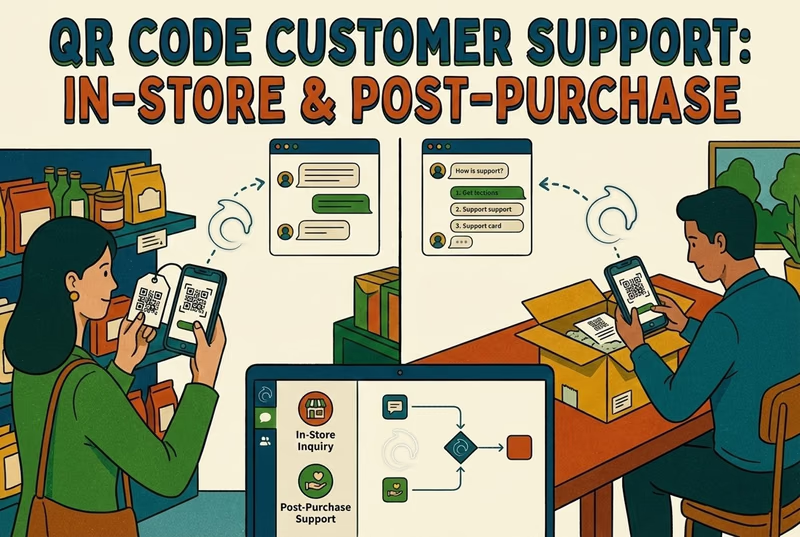
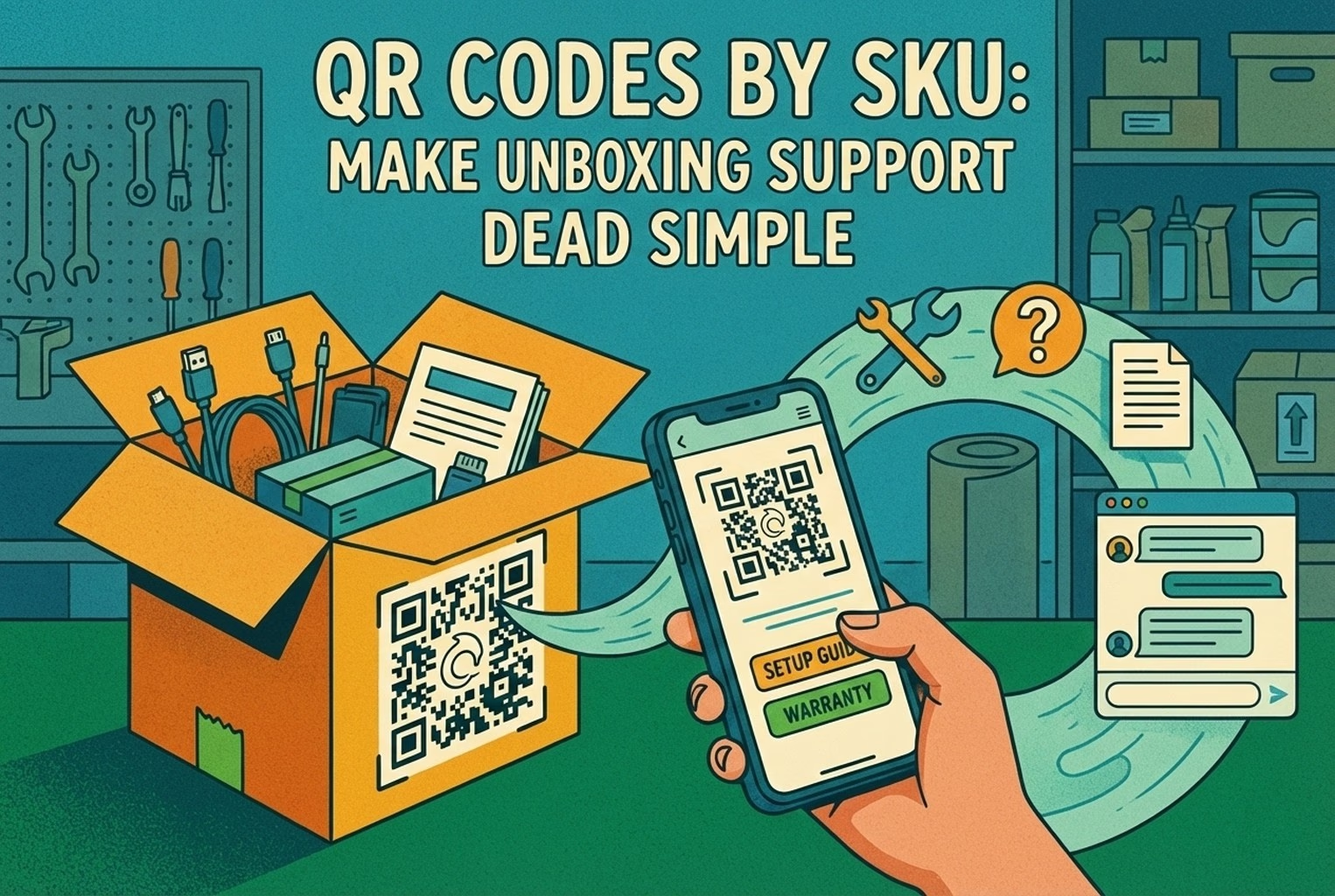
Some brands extended this into packaging by implementing product-specific QR journeys similar to those described in SKU-level QR code support setups. Customers scanned. Landed inside the correct product thread. Context already loaded.
Less back and forth. Fewer misfires.
Three Retail Setups That Keep AI Grounded
These were not theories. They were practical placements that reduced repeat questions.
Boutique clothing
QR codes placed on fitting room mirrors and receipt footers directed customers to size help and exchange flows.
The landing screen was simple. Find my size. Exchange. Care instructions. Talk to us.
Staff received tagged conversations with the product context already attached. One clarifying question followed. No waffle.
If the location was missing, ask for it. If the order number was missing, request it. If the product variant was unclear, confirm it.
If clarity did not emerge after one follow-up, escalate. Merchants structured this logic alongside workflows inspired by the live chat setup checklist.
Short. Direct. No ping pong.
Handoff Rules That Protect You
The stores where AI felt safe defined clear boundaries. Escalate when:
AI handled speed. Humans handled judgment. That balance built confidence internally as well as externally.
QA Without Overcomplicating It
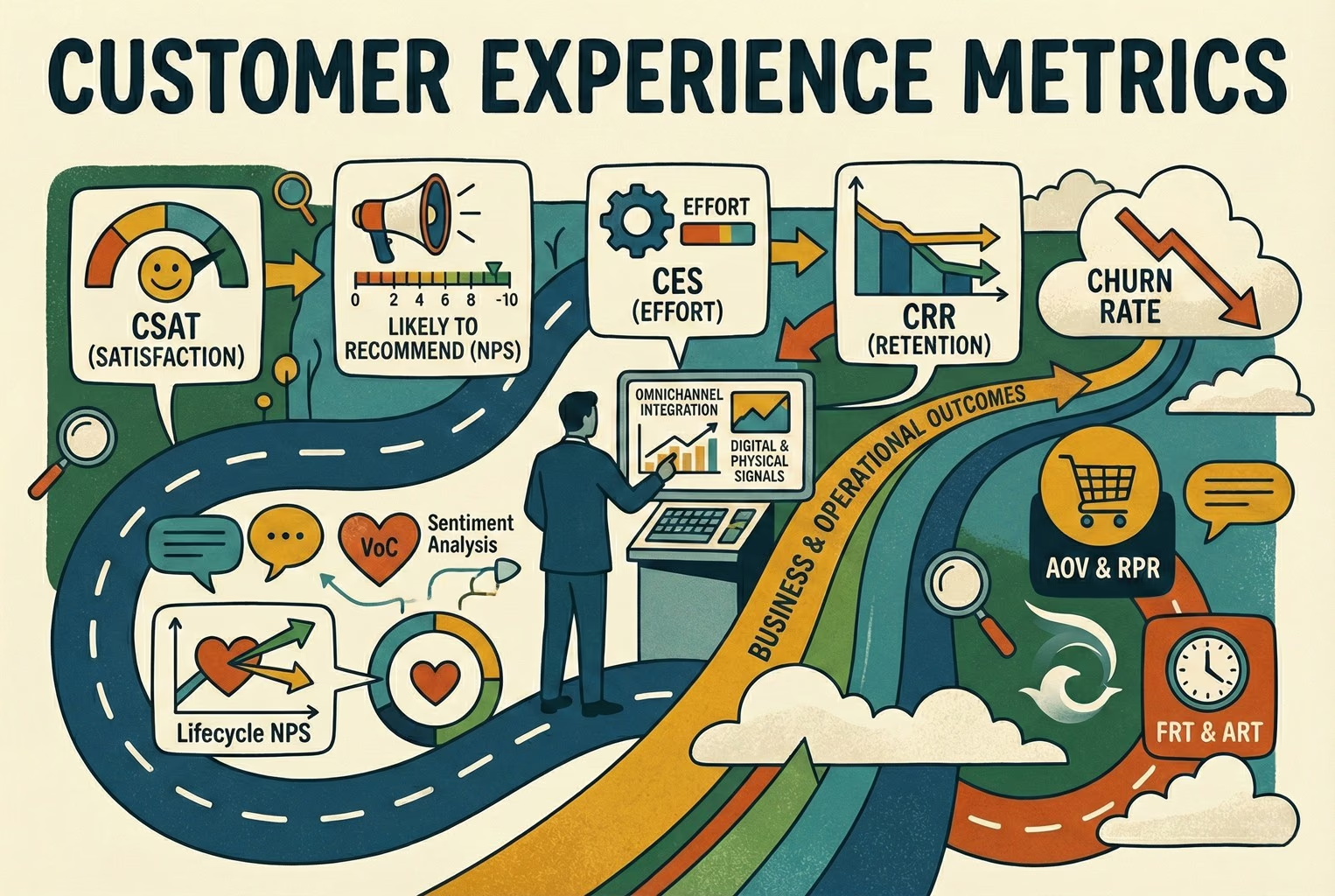
No lab coats required. Before launch, strong teams ran fifteen test questions covering shipping, returns, compatibility and warranty. After launch, they reviewed twenty conversations weekly. If an answer felt off, they corrected the source data rather than tweaking the output. Performance was tracked sensibly using ideas similar to those in CX metrics vs CX KPIs and broader customer experience metrics. Small adjustments prevented recurring friction.
Common Mistakes That Keep Coming Up
QR codes that dump shoppers onto the homepage.
AI approving refunds without oversight.
Different answers across email and chat.
No visible path to a human when things become sensitive.
Translating messy replies instead of fixing the original wording.
When those were corrected, AI stopped feeling risky.
Copy and Paste Guardrail Kit: Do and Don't Table
Area
AI can
AI must not
Shipping
Quote ranges and ask for the location
Promise dates
Returns
Explain eligibility
Approve exceptions
Product info
Quote specs
Guess compatibility
Warranty
Outline claim steps
Diagnose faults
Sensitive topics
Gather details, then hand over to a person
Answer or advise without a human
Short Macros
Delivery "Share your postcode, and I will give the most realistic delivery window."
Returns "Please send your order number and confirm whether the item is unopened, opened, or faulty."
Handoff "I am going to bring a team member in, so we do not get this wrong."
Final Thought
AI support does not fall apart because the model is reckless. It falls apart when the information underneath it is messy.
The retailers who got this right simplified everything.
One source of truth. Clear guardrails. Defined handoffs. Weekly hygiene checks.
Once those foundations are solid, AI stops feeling risky and starts behaving like a reliable extra team member who can answer faster when grounded in approved knowledge, with human handover when needed.
If you want to see what that looks like in your own store, you can create an AskDolphin account and connect approved product knowledge for grounded answers.
No complicated setup. Just real data powering real answers.
Frequently asked questions
How do I stop AI from giving wrong answers in customer support?
Most wrong answers happen because the AI is guessing. The fix is not "better prompts". It is grounding the AI in structured data. That means syncing real product specs, clear shipping rules, consistent returns wording, and warranty summaries. Merchants who centralised these inside one source of truth, often using structured setups like AI chat grounded in approved store Data Sources, saw accuracy improve quickly. When the data is clean, the answers are clean.
Why does AI hallucinate in e-commerce support?
AI hallucinates when it lacks context but still tries to be helpful. If delivery policies are vague or product compatibility is unclear, the model fills the gap with something that sounds plausible. Grounding techniques such as retrieval-based responses, explained in Microsoft's overview of mitigating hallucinations, reduce that behaviour significantly. In retail terms, it simply means feeding it structured, verified information.
What data should I feed my AI support system?
Four areas matter most: shipping rules, returns policies, product specifications, and warranty and care instructions. Anything not covered clearly in those areas becomes a risk zone. If shoppers regularly ask it before buying, the AI should be able to quote it directly.
Should AI be allowed to approve refunds or delivery promises?
In practice, the safest stores did not allow AI to approve refunds, exceptions, or exact delivery dates. Money decisions and time-critical promises were escalated to humans. The hybrid approach discussed in live chat vs AI chatbot consistently performs better than full automation. AI handles clarity. Humans handle judgment.
When should AI hand off to a human agent?
Strong handoff triggers include refund disputes, angry or threatening tone, safety concerns, legal language, and policy gaps. If the AI is unsure after one clarifying question, escalation is safer than improvisation. Merchants who structured this alongside the live chat setup checklist avoided most escalation chaos.
How many clarifying questions should AI ask?
One. The best performing setups allowed a single clear follow-up question. If context was still missing, the chat transferred to a human. Long clarification loops increase frustration and make the AI look confused. Short, direct, decisive responses feel more competent.
Can AI reduce pre-purchase support tickets?
Yes, when the information is consistent. Stores that tightened up product page clarity after reviewing product questions that quietly kill sales saw fewer repetitive delivery and returns queries in chat. When AI then echoed the same structured messaging, the drop in support volume was noticeable. Clarity upstream reduces tickets downstream.
Is AI customer support safe for UK and EU stores?
It can be, provided your policy language aligns with regulatory expectations. UK guidance around cancellation periods and delivery timelines is set out on GOV.UK. If AI quotes wording that matches your compliant policy, it strengthens consistency rather than creating risk. The danger appears when policy wording is outdated or inconsistent.
How do I test AI before going live?
The merchants who avoided issues ran a simple test script before launch: five shipping questions, five return scenarios, three product compatibility checks, and two warranty questions. Each response was reviewed for accuracy, tone, and escalation logic. Then they repeated this review weekly. Tracking improvements using frameworks similar to CX metrics vs CX KPIs helped them spot weak spots early.
Does AI support improve customer experience or damage it?
It depends entirely on guardrails. When AI is grounded in structured data, aligned with your policies and backed by clean escalation rules, it reduces friction and response times. When it is left to guess, it damages trust. The merchants who connected AI guardrails into a wider customer experience strategy saw stronger outcomes across the board. It was never about replacing humans. It was about removing repetitive uncertainty.
Most merchants do not need more chat. They need fewer repeat questions after purchase. This article covers what works when merchants add AI chat on Shopify, where it breaks, and how QR support takes pressure off chat and email.
Growing stores often face the same tension: live chat feels endless, and AI feels risky when money and trust are involved. This piece explains where each option helps, where handover matters, and why a hybrid inbox setup usually wins.
Shoppers rarely abandon because they dislike a product. They leave when delivery, returns, sizing, or compatibility answers are missing. This case study lists 25 sales-blocking questions and how synced knowledge keeps replies accurate.
Post-purchase support often becomes most of the inbox: tracking, delays, returns, and refund follow-ups. This playbook shows the simplest tools retail teams use to deflect repeat tickets and keep expectations clear.
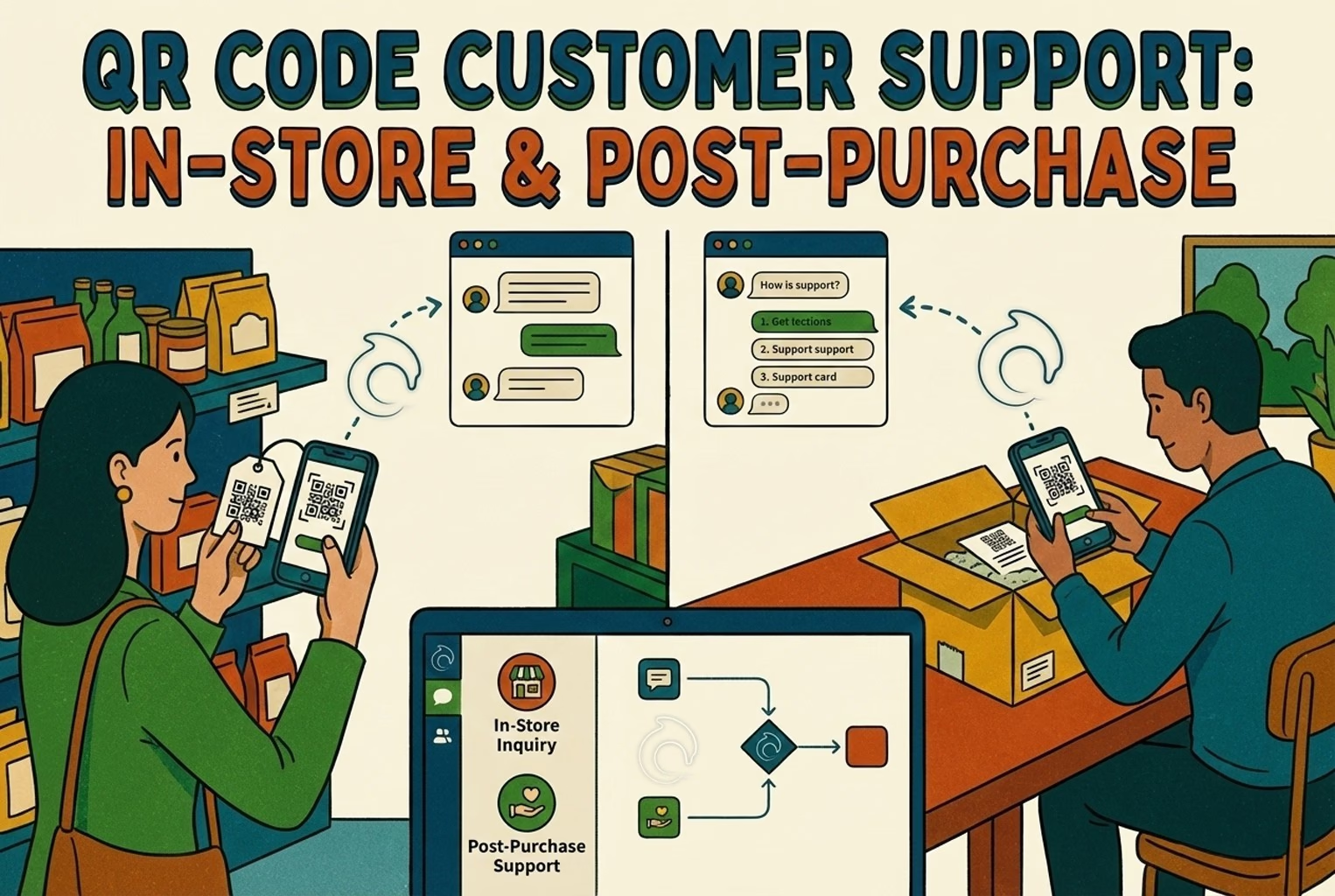
Hard-to-find staff in-store and post-purchase questions flooding email? This playbook shows where to place support QR codes, what scans should open, and how to route chats into one shared inbox with human handover when needed.
Unboxing support breaks when agents cannot tell which variant a customer holds. This guide shows how SKU-level QR codes on packaging open the right help, with placement tips, static vs dynamic choices, and rollout templates.
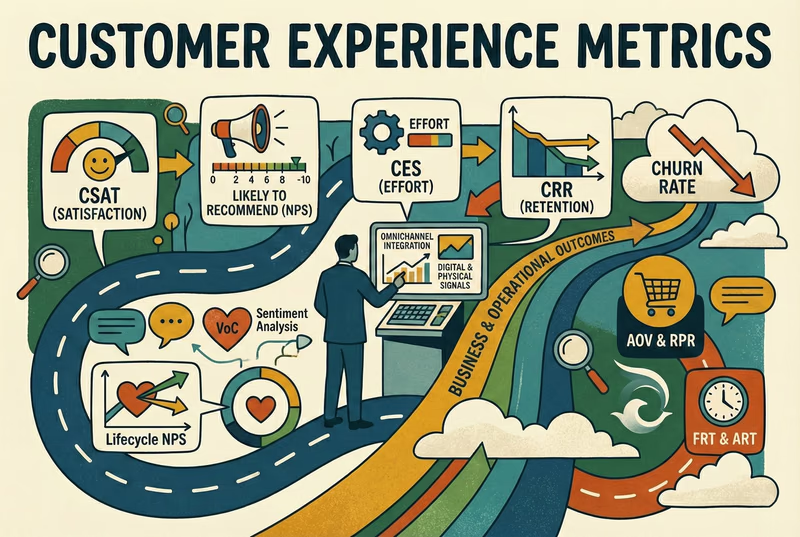
Which customer experience metrics are worth measuring, what each one tells you, and how to track them across digital, physical and omnichannel touchpoints.
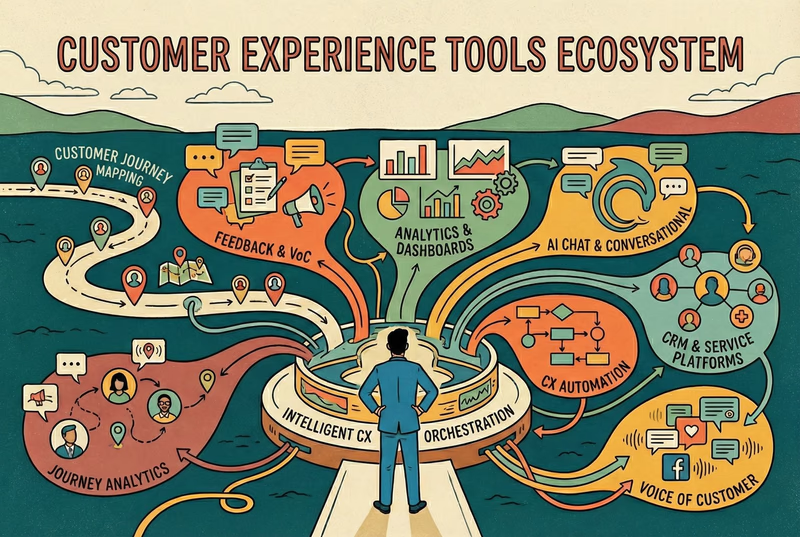
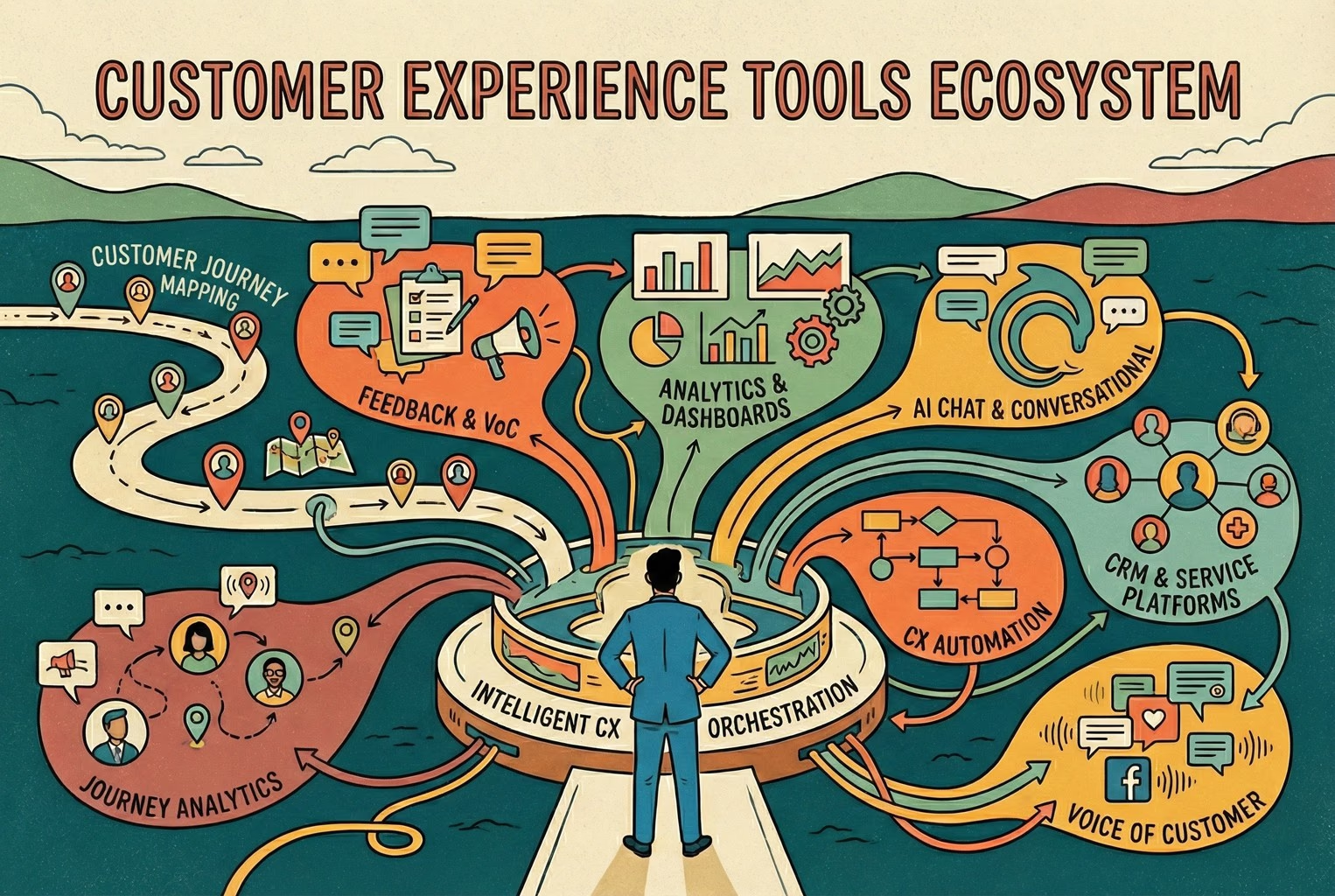
You do not need a forty-tool CXM stack. This guide maps the practical customer experience tools ecommerce and retail teams use for chat, email, QR support, approved knowledge, and human handover.
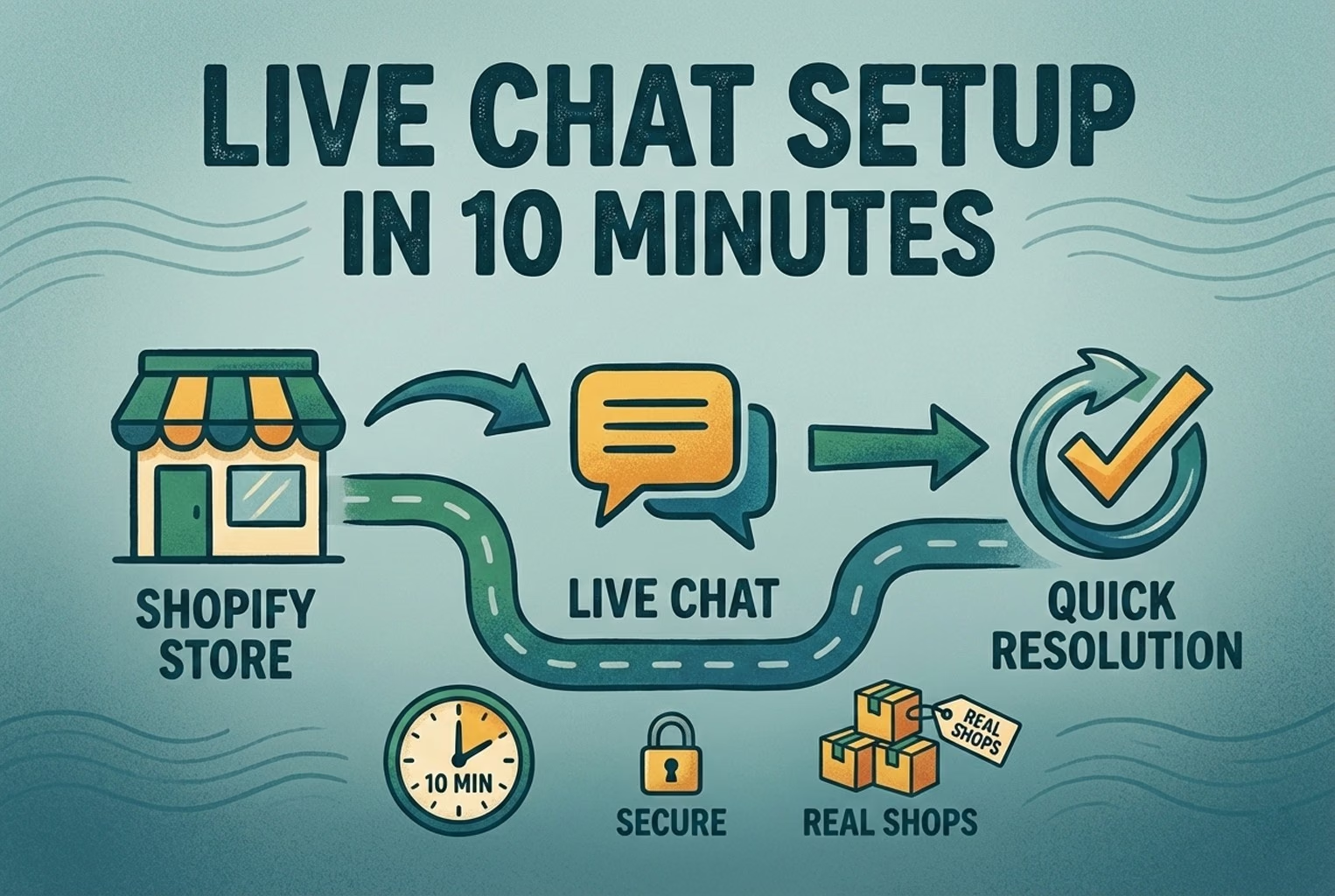
A case-study style checklist for merchants who need live chat running fast without creating another inbox headache. See the settings, routing choices, and reply habits that improved response quality in real Shopify stores.
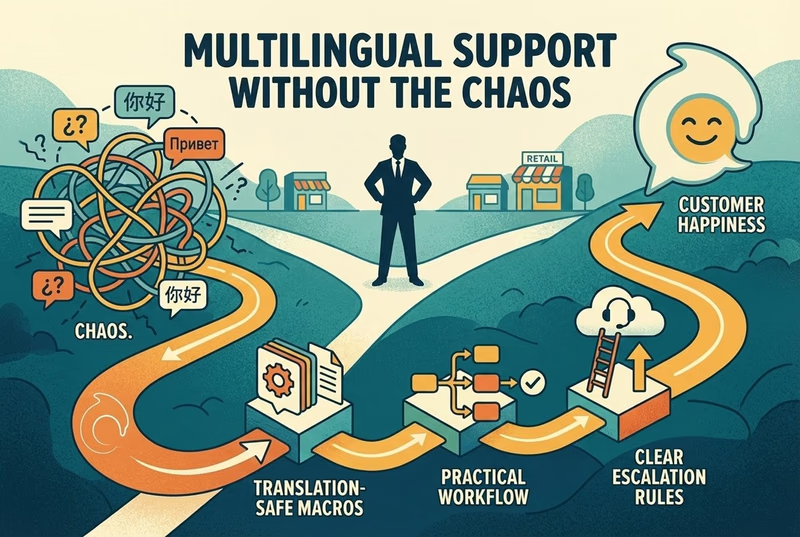
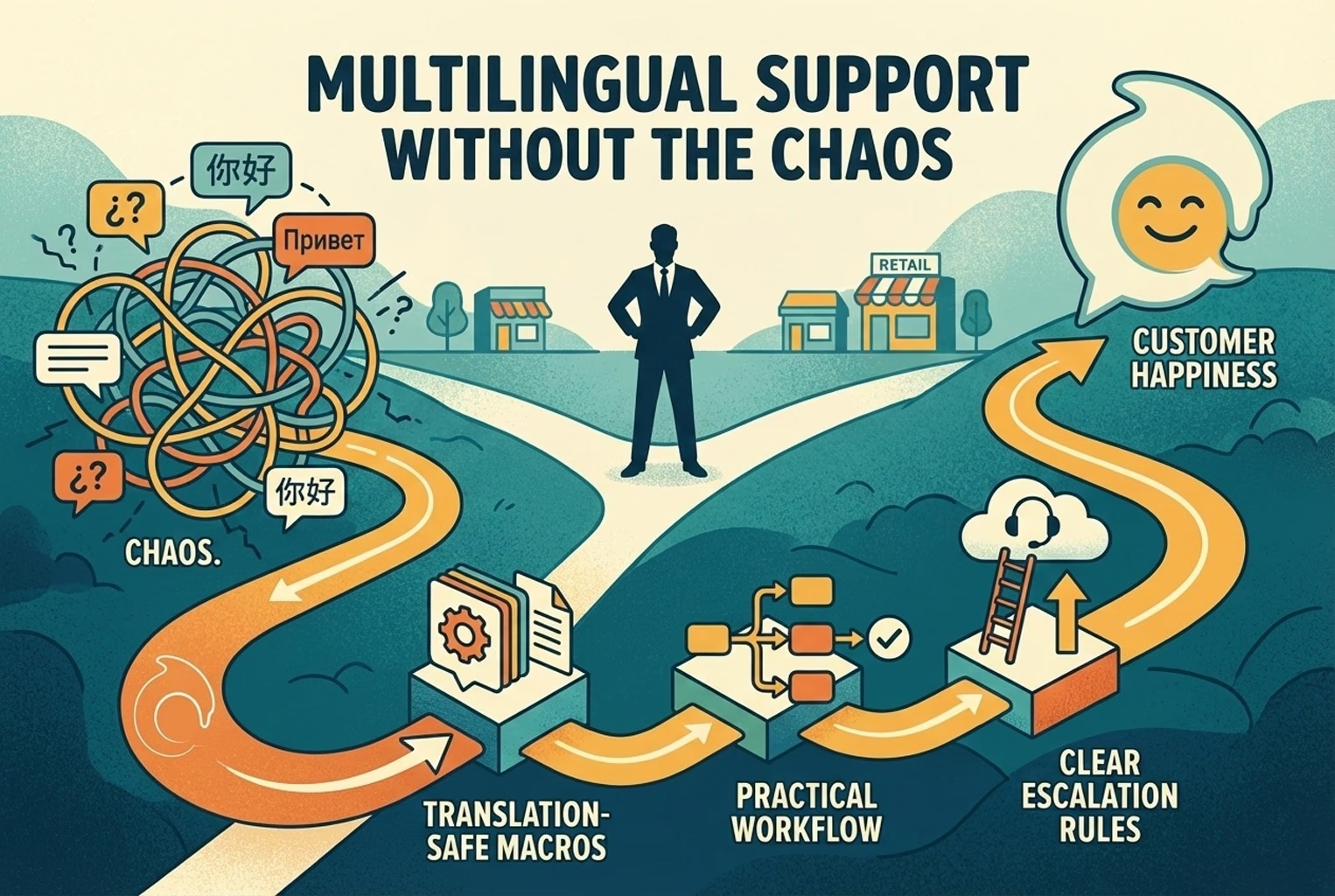
Selling across borders should not turn support into chaos. This playbook shows how retail teams handle multilingual chat and email with translation-safe macros, clear escalation rules, and QA habits that protect quality.
Stop losing the quiet ones.
Install it in a minute. It starts working on your next visitor.