Dolphin AIAnswer from approved knowledge with human control.AI Sales AssistantNewRecognize intent and suggest approved actions.Commerce ActionsNewHelp customers complete supported Shopify actions.Human ControlControl approvals, handover, and sensitive actions.
Intelligence and Knowledge
Session Replay & AnalyticsNewReplay journeys and understand visitor behaviour.AI Insights & ReportsNewTurn customer activity into clear recommendations.Data SourcesConnect websites, products, FAQs, and knowledge.Help CenterOne content base for self-service and AI answers.
Product intro
AskDolphin PlatformConnect conversations, AI, knowledge, and insights.
By business
Ecommerce & ShopifySupport shoppers before and after every purchase.Retail & OmnichannelConnect support with stores, products, and QR.AgenciesManage client enquiries, email, and websites.Service BusinessesPresent services, capture leads, answer questions.Freelancers & IndividualsManage client email and enquiries with AI.Small & Growing TeamsBring conversations and teamwork into one place.
By goal
Customer SupportAnswer questions across chat, email, and QR.Sales & ConversionEngage intent and guide customers to action.Website IntelligenceFind friction through sessions and behaviour.Shared EmailUse AI-assisted email without needing a website.In-store & QR SupportGive customers help in physical locations.Post-purchase SupportSupport orders and customers after purchase.
Solutions intro
View all solutionsFind the right workflow for your business.
Dolphin AIAnswer from approved knowledge with human control.AI Sales AssistantNewRecognize intent and suggest approved actions.Commerce ActionsNewHelp customers complete supported Shopify actions.Human ControlControl approvals, handover, and sensitive actions.
Intelligence and Knowledge
Session Replay & AnalyticsNewReplay journeys and understand visitor behaviour.AI Insights & ReportsNewTurn customer activity into clear recommendations.Data SourcesConnect websites, products, FAQs, and knowledge.Help CenterOne content base for self-service and AI answers.
Product intro
AskDolphin PlatformConnect conversations, AI, knowledge, and insights.
By business
Ecommerce & ShopifySupport shoppers before and after every purchase.Retail & OmnichannelConnect support with stores, products, and QR.AgenciesManage client enquiries, email, and websites.Service BusinessesPresent services, capture leads, answer questions.Freelancers & IndividualsManage client email and enquiries with AI.Small & Growing TeamsBring conversations and teamwork into one place.
By goal
Customer SupportAnswer questions across chat, email, and QR.Sales & ConversionEngage intent and guide customers to action.Website IntelligenceFind friction through sessions and behaviour.Shared EmailUse AI-assisted email without needing a website.In-store & QR SupportGive customers help in physical locations.Post-purchase SupportSupport orders and customers after purchase.
Solutions intro
View all solutionsFind the right workflow for your business.
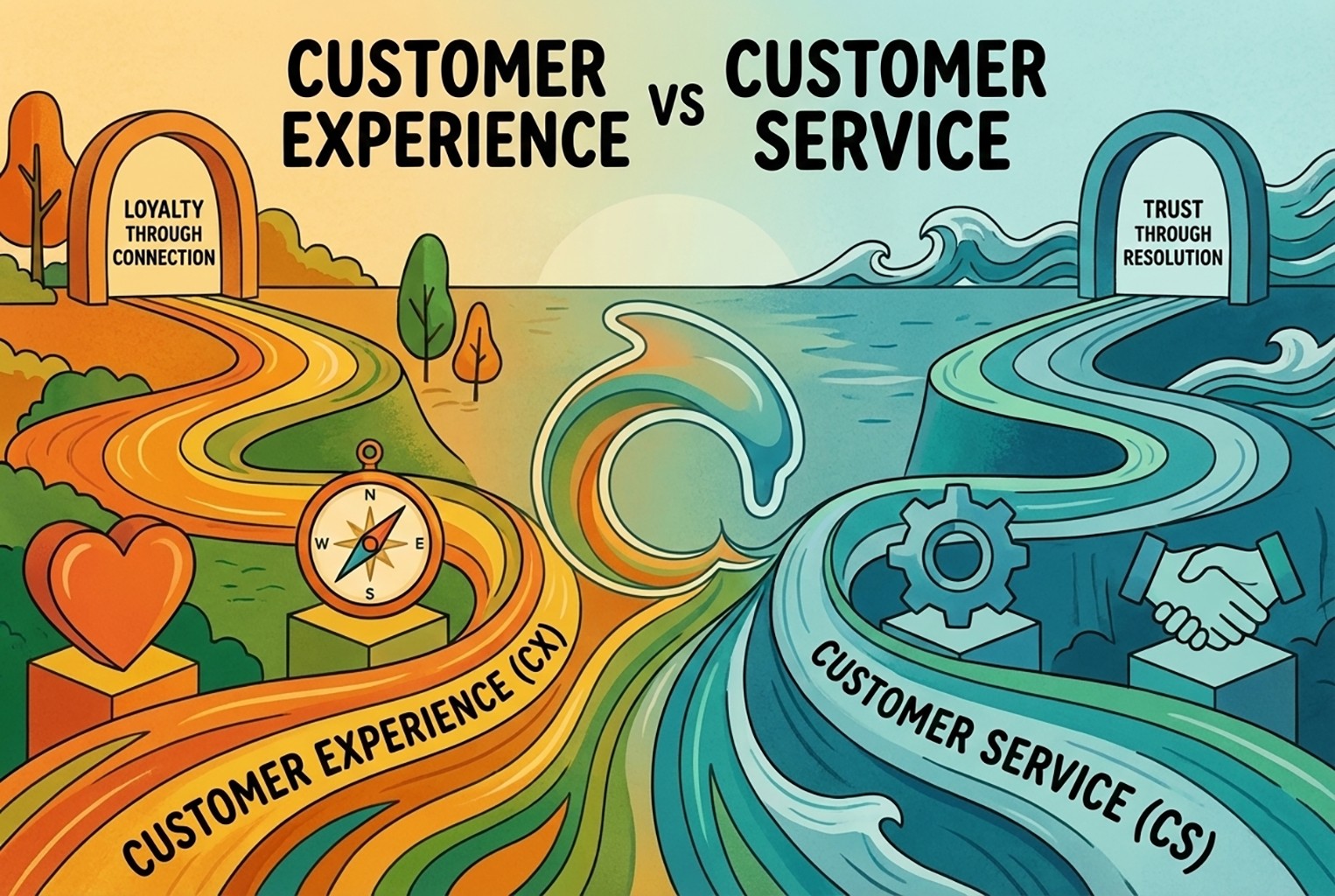
Customer Service vs Customer Experience: Distinct Yet Intertwined Paths to Customer Loyalty
AskDolphinPublished6min read
Service is what happens when something goes wrong. Experience is everything around it. Where the two differ, and why both decide whether people come back.customer-experience-basics
Last updated
On this page
Why the Difference Matters
Customers expect understanding more than apologies. They judge brands not by speed alone but by empathy and coherence across every touchpoint.
Customer service is the help you offer in the moment. Customer experience is how that moment and every other one feels.
What Is Customer Service?
Customer Service is how your brand shows up when it matters most, the operational expression of care through people and technology.
Today's customer service is not just reactive:
Proactive alerts: Notify customers before issues arise.
Guided onboarding: Personalise first experiences.
AI assistants: Deliver clear, empathetic answers in chat.
Customer Service translates CX intent into real-world impact, it's the voice and heart of your brand in motion.
What Is Customer Experience (CX)?
Customer Experience (CX) is the emotional and functional journey customers have with your brand — from first impression to advocacy.
It's about designing empathy into every layer:
Consistency: Every channel feels familiar and trustworthy.
Empathy: Understanding the needs behind behaviour.
Personalisation: Powered by customer journey analytics.
Feedback loops: Continuous learning through NPS and CES.
CX vs Customer Service: The Key Differences
Customer Experience (CX) and Customer Service (CS) share a purpose, to care, but operate at different layers. CX designs how the relationship should feel; CS delivers assistance in those key moments, both inbound and outbound.
1) Scope & Timing
Customer Service: Encompasses all assistance interactions both reactive (when customers reach out) and proactive (when you reach out first: alerts, renewal reminders, onboarding support).
Customer Experience: Encompasses the entire relationship across all stages — awareness, engagement, use, renewal, and advocacy.
Service isn't a single stage, it's a recurring capability that expresses care wherever help is needed.
2) Level of Control
CS: You have direct control: tone, response time, policy, resolution.
CX: You influence but don't fully control perception, it's shaped by every interaction, internal and external.
CX is about designing influence, not dictating emotion.
Customer Service: Owned by support operations, responsible for response quality, process, and timeliness.
Customer Experience: A shared discipline across marketing, product, design, sales, and support because every function shapes how customers feel.
Ownership in CX isn't departmental; it's cultural.
5) Time Horizon
CS: Focuses on moment outcomes, solving needs in real time.
CX: Focuses on relationship outcomes, building emotional continuity over time.
Customer Service resolves. Customer Experience evolves.
6) Modality (Humans & Technology)
Both are human-led and tech-empowered. The difference isn't who delivers it, it's how it's designed and where it lives.
Example: A proactive service message about a delay reassures the customer today. CX ensures that future journeys anticipate and prevent similar friction.
AskDolphin Takeaway:
CS = Assistance in the moments that matter. CX = The design of every moment that matters.
Align both, and you turn fixes into trust and moments into momentum.
How CX and Customer Service Work Together
Customer Experience and Customer Service are distinct, yet inseparable. CX defines the emotional architecture; service brings it to life in every interaction. Together, they form the backbone of loyalty.
1. CX Sets the Stage, Service Delivers the Moment
CX defines the intent and emotional tone of the journey. Service executes that intent reactively or proactively through people and technology.
Example: A proactive email that rebooks a delayed flight automatically is service execution. The foresight to design that moment empathetically? That's CX.
2. They Share the Same Data Ecosystem
Every conversation is a data point.
Service collects real-world feedback.
CX interprets it into insight and improvement.
AI tools bridge them in real time, carrying context between conversations and keeping tone consistent.
This loop turns insight into empathy at scale.
3. Shared Goals, Distinct Roles
Focus
Customer Service Teams
CX Teams
Goal
Trust through resolution
Loyalty through emotional connection
Approach
Operational, responsive + proactive
Strategic, proactive
Metrics
CSAT, FCR, AHT
NPS, CES, Retention, Sentiment
Ownership
Support & CX Ops
Cross-functional
Time horizon
Moment outcomes, solved in real time
Relationship outcomes, built over time
4. Where CX Ends, Service Extends
Even the best-designed experience benefits from reinforcement that feels human. Customer Experience isn't just process; it's empathy built into design. Customer Service extends that empathy through action, guiding, responding, and caring in real time.
CX defines the emotional blueprint, how care and clarity live in your systems.
Service enacts that blueprint, through people and AI working with shared empathy.
When connected, care feels consistent, regardless of channel.
Every customer remembers:
How easy it was to interact (a CX outcome).
How they felt during and after (a Service outcome).
When those align, brands create effortless empathy, an experience that feels intelligently designed and genuinely human.
5. The Orchestration Flywheel
Phase
Action
Outcome
Listen
Gather data from service touchpoints
Identify friction points
Analyse
CX maps root causes
Prioritise improvements
Design
Implement changes
Reduce future service load
Enable
Train teams & systems
Deliver proactive, personalised care
Measure & Refine
Blend CX + CS metrics
A living cycle of learning that keeps empathy scalable.
Over time, this flywheel gathers momentum:
Service interactions become a live sensor network for CX.
CX design reduces avoidable demand for service.
Shared data keeps both sides improving in unison.
That's orchestration in practice: continuous empathy powered by continuous learning.
6. The Business Impact of Orchestration
When empathy and intelligence flow both ways, customers feel consistency, the purest form of trust.
7. From Silos to Symphonies
CX and CS are not opposites:
CX designs empathy into systems and stories.
Service expresses that empathy in real time.
"When experience and service play in sync, customers don't see technology, they feel humanity."
That's orchestration: human empathy, guided by intelligence, delivered through every channel.
The Role of AI and Automation in Unifying Both
AI doesn't replace care; it amplifies it. By automating predictable tasks, it frees humans to do what only humans can: listen, adapt, and empathise.
AI supports CX and CS by:
Predicting needs through behavioural data.
Detecting sentiment and adjusting tone in real time.
Providing context to every interaction.
Delivering continuity across channels.
CX Happens
You unsubscribe from a newsletter. Then you get another email thanking you for staying.
The next day, the brand apologises with a note that says: "That was awkward. We promise this is the last email, unless you miss us."
That's great CX: turning a small mistake into a moment of humanity.
Flow Forward
CX and CS aren't departments, they are shared intentions. When they flow together, customers don't just get help, they feel understood.
At AskDolphin, we help brands connect data to emotion, creating experiences that flow naturally between design and action.
Flow Forward: CX and CS are distinct in role but united in heart, two currents of the same ocean of empathy.
Frequently asked questions
What's the main difference between CX and customer service?
Customer experience is the whole journey and how it is perceived. Customer service is the focused assistance inside that journey. Service resolves a moment; CX shapes the relationship around it.
Can you have great service but poor CX?
Yes. Quick, polite support cannot undo friction elsewhere in the experience. A confusing returns process or an unclear policy still shapes what the customer remembers.
Is customer service part of customer experience?
They overlap. Service executes CX intent, and CX designs the conditions that make good service possible.
Which metrics belong to each?
Customer service is measured at the interaction: CSAT, first contact resolution and average handle time. Customer experience is measured at the relationship: NPS, CES, retention and customer lifetime value.
How can AI improve both?
By carrying context between conversations, keeping tone consistent, and handling the predictable questions so people can spend their time on the ones that need judgement.
How do proactive service and CX connect?
Reaching out before the customer has to ask removes the reason for the contact, which is what CX design is trying to achieve in the first place.
How do you build a unified CX and service strategy?
Shared KPIs, one set of customer data both teams can see, and a culture where every function owns part of the relationship.
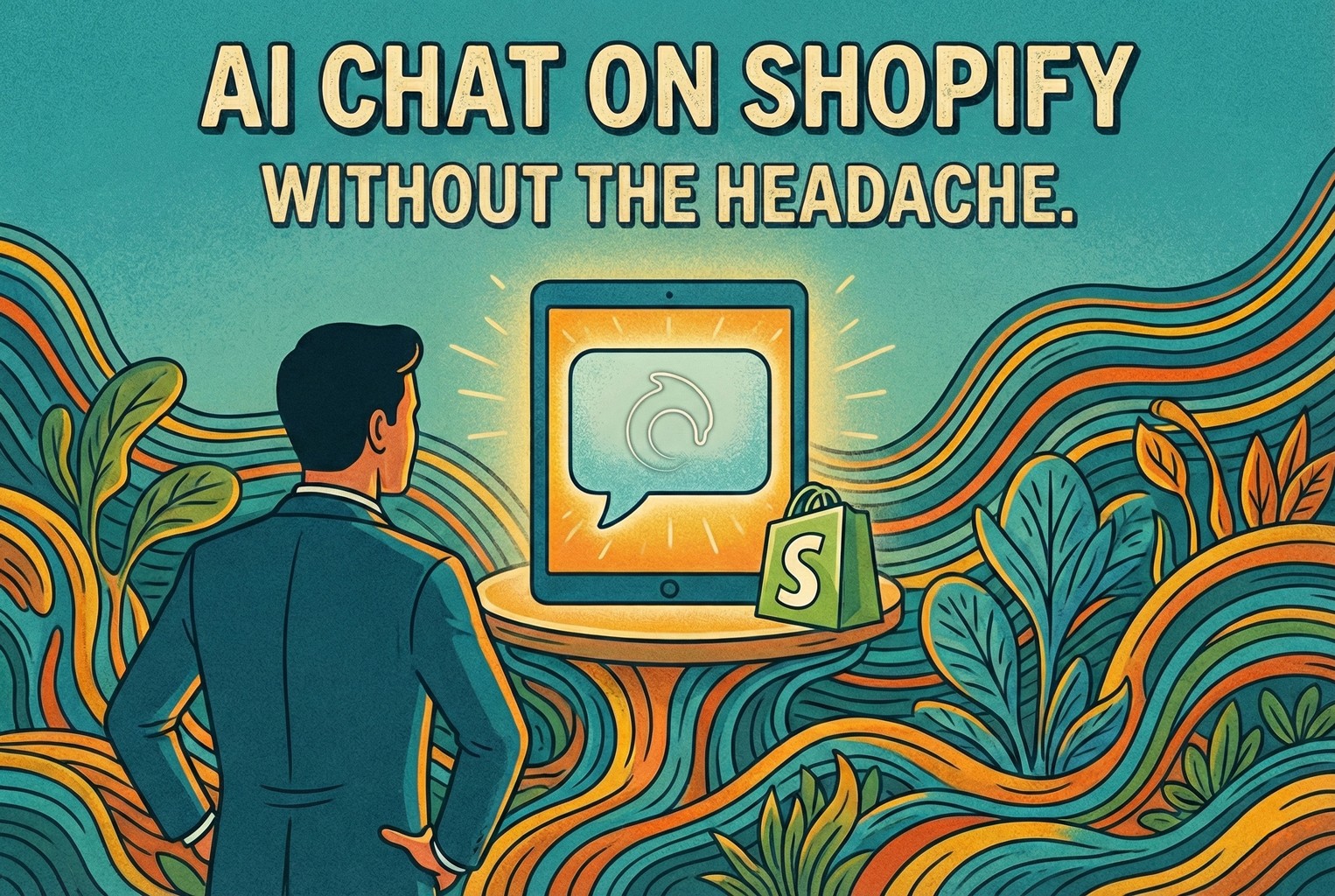
Most merchants do not need more chat. They need fewer repeat questions after purchase. This article covers what works when merchants add AI chat on Shopify, where it breaks, and how QR support takes pressure off chat and email.
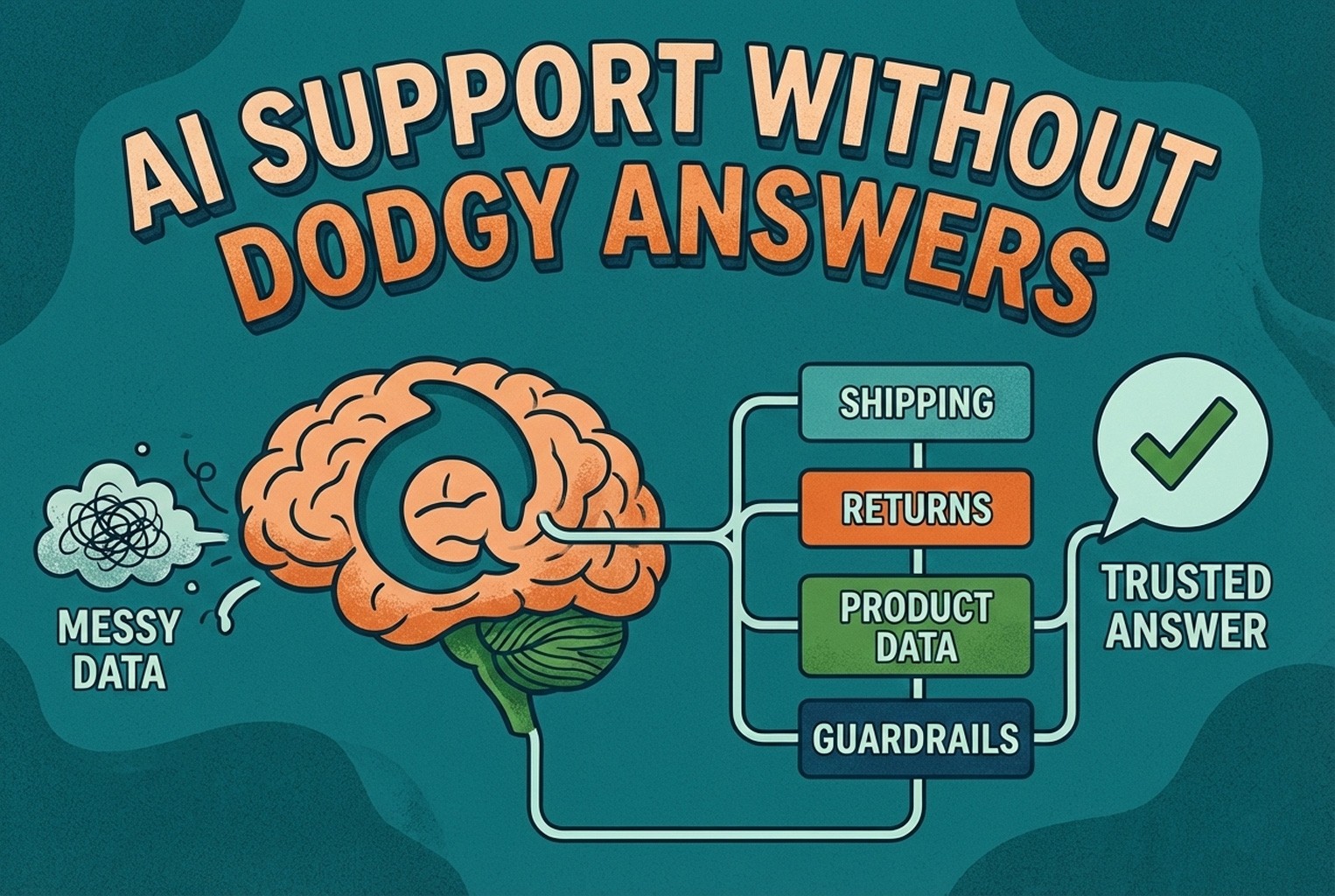
AI support usually fails when the knowledge behind it is messy. This guide shows how ecommerce teams structure shipping, returns, product data, guardrails, and human handoffs so answers stay accurate and policy-safe.
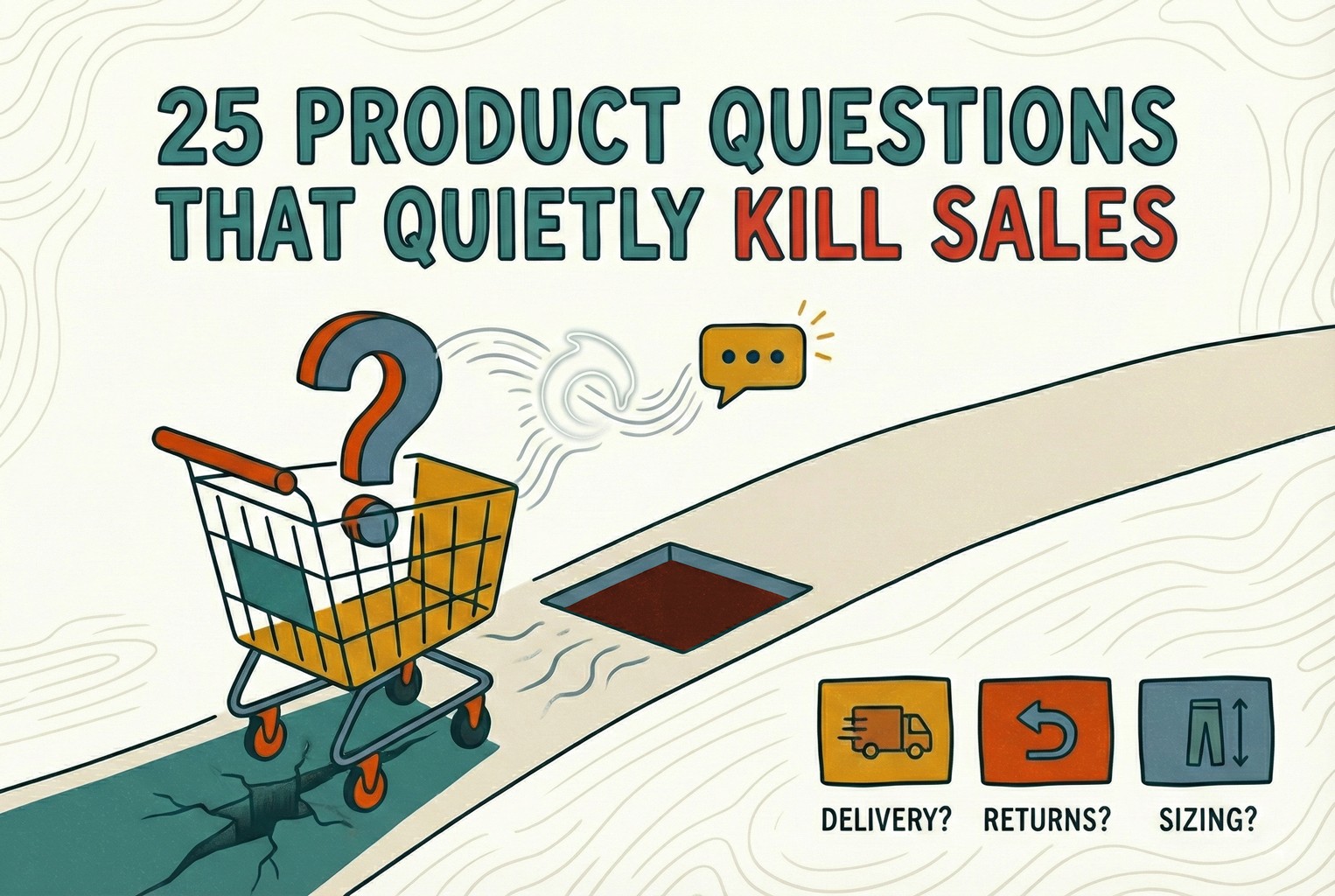
Shoppers rarely abandon because they dislike a product. They leave when delivery, returns, sizing, or compatibility answers are missing. This case study lists 25 sales-blocking questions and how synced knowledge keeps replies accurate.
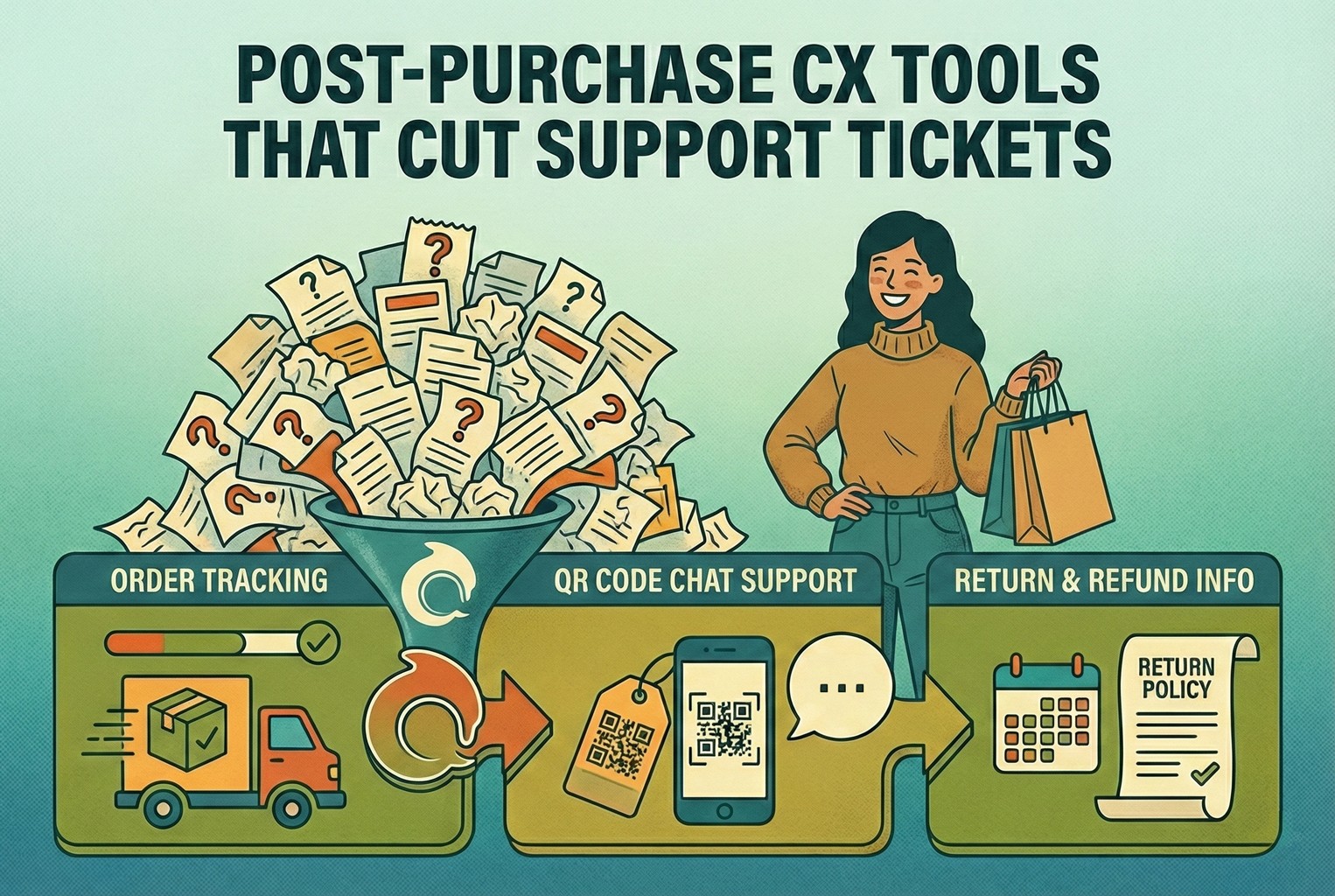
Post-purchase support often becomes most of the inbox: tracking, delays, returns, and refund follow-ups. This playbook shows the simplest tools retail teams use to deflect repeat tickets and keep expectations clear.
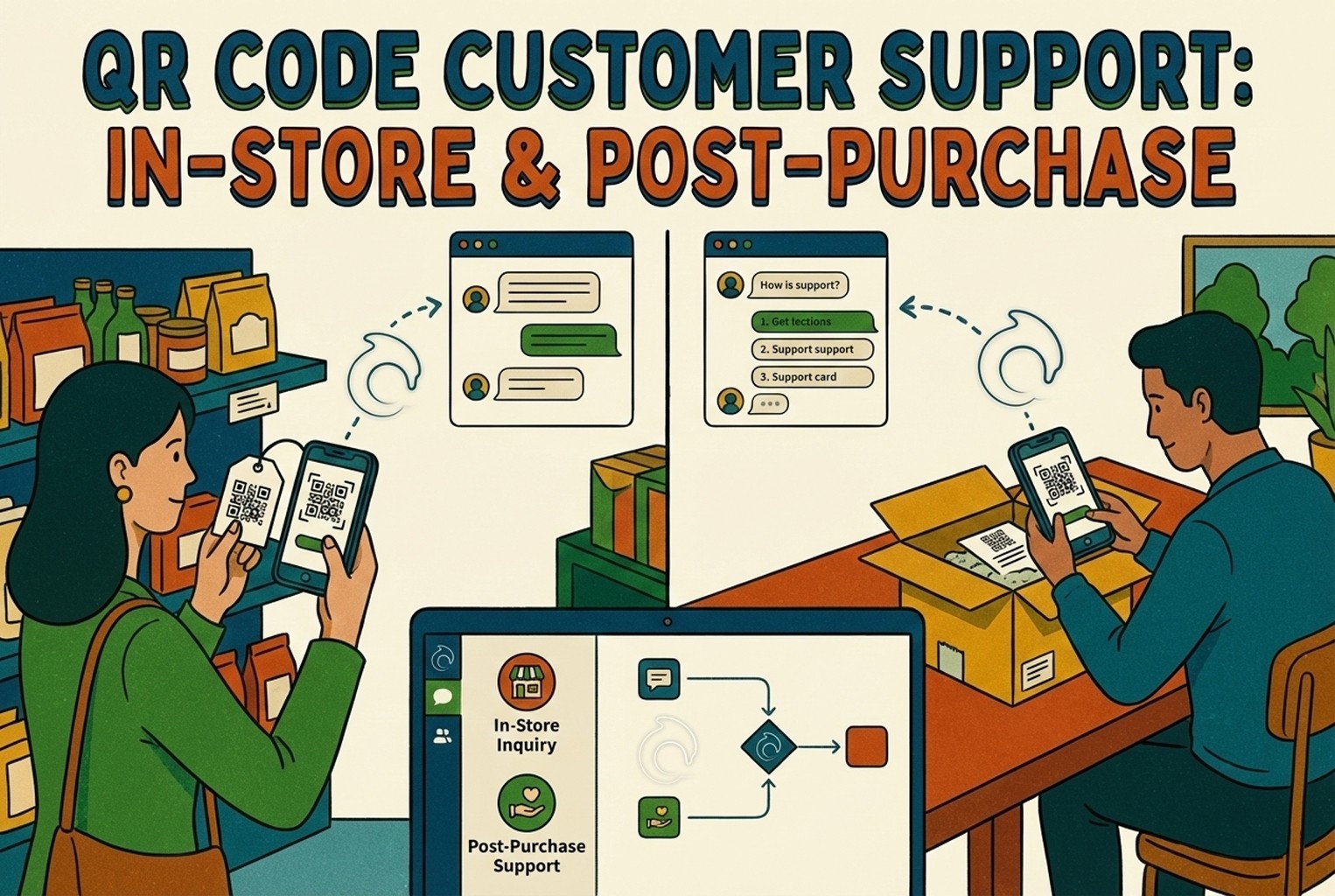
Hard-to-find staff in-store and post-purchase questions flooding email? This playbook shows where to place support QR codes, what scans should open, and how to route chats into one shared inbox with human handover when needed.
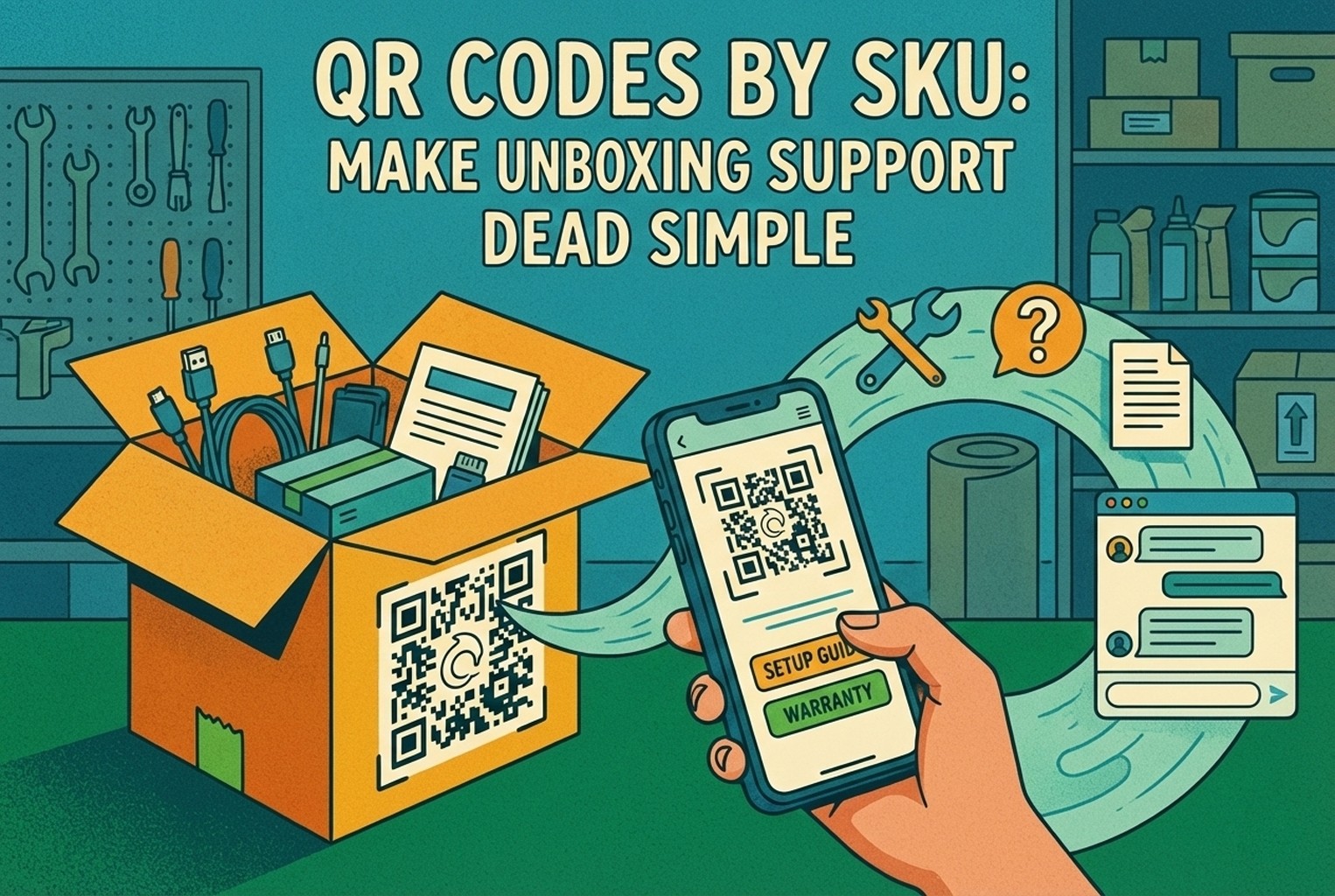
Unboxing support breaks when agents cannot tell which variant a customer holds. This guide shows how SKU-level QR codes on packaging open the right help, with placement tips, static vs dynamic choices, and rollout templates.
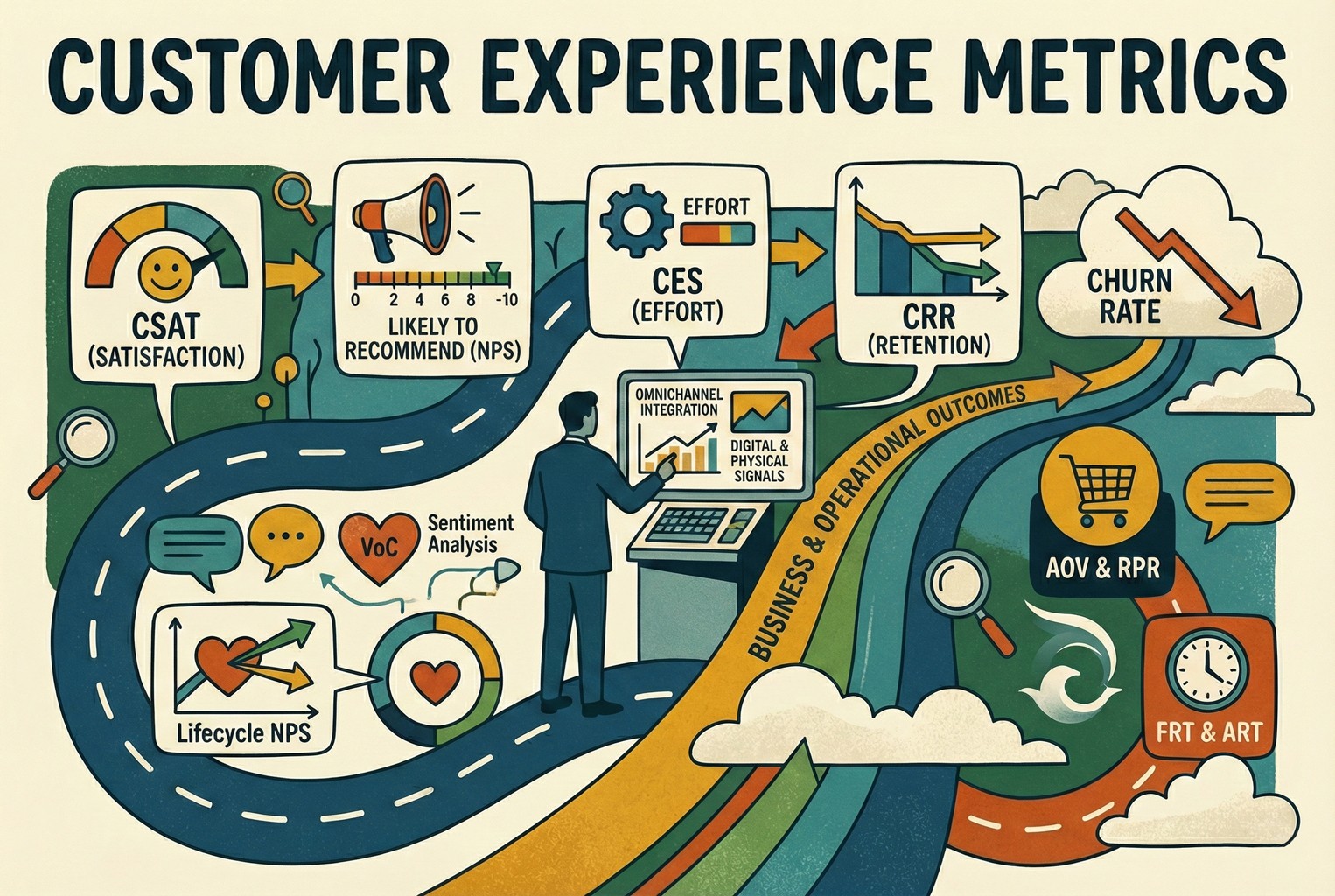
Which customer experience metrics are worth measuring, what each one tells you, and how to track them across digital, physical and omnichannel touchpoints.
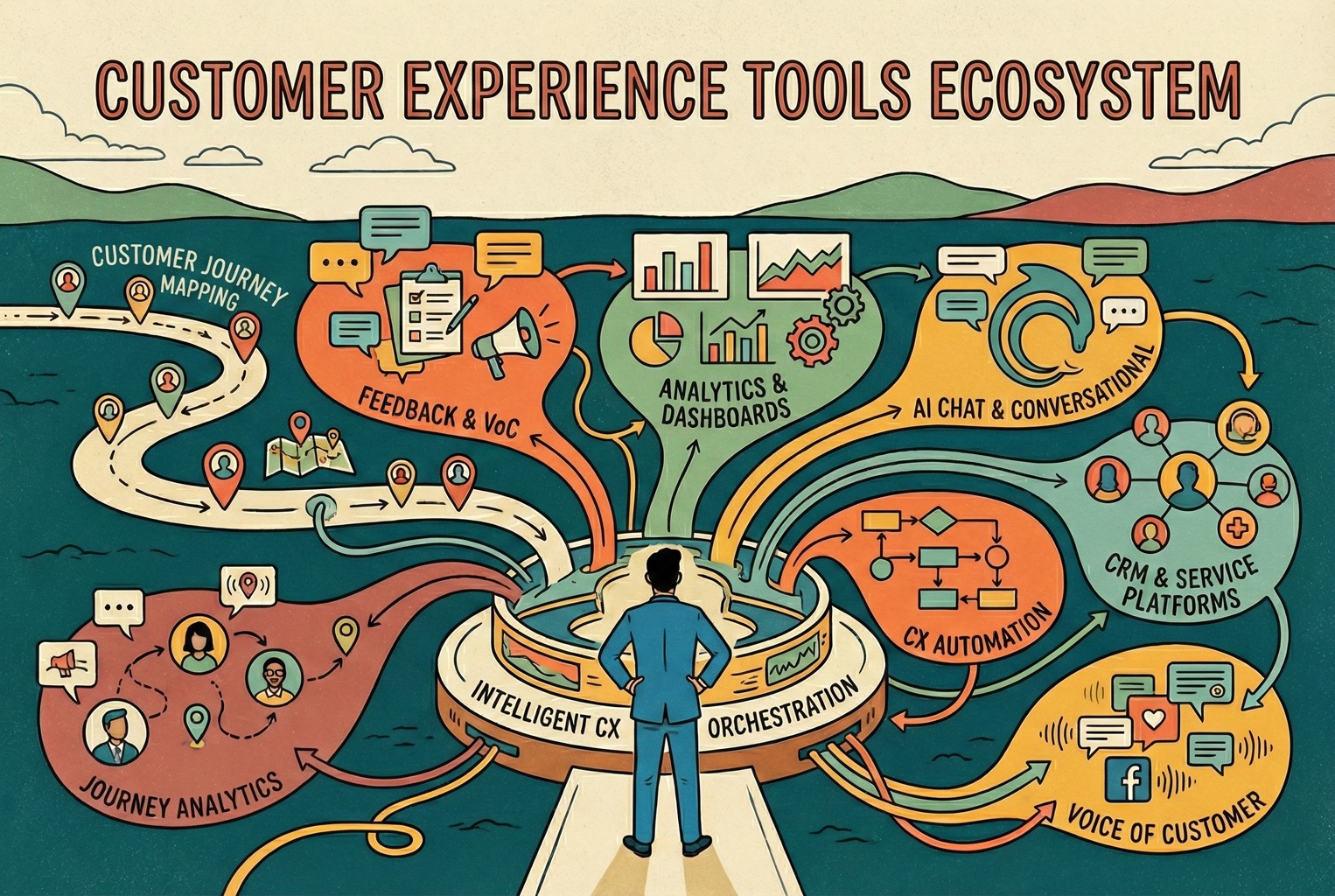
You do not need a forty-tool CXM stack. This guide maps the practical customer experience tools ecommerce and retail teams use for chat, email, QR support, approved knowledge, and human handover.
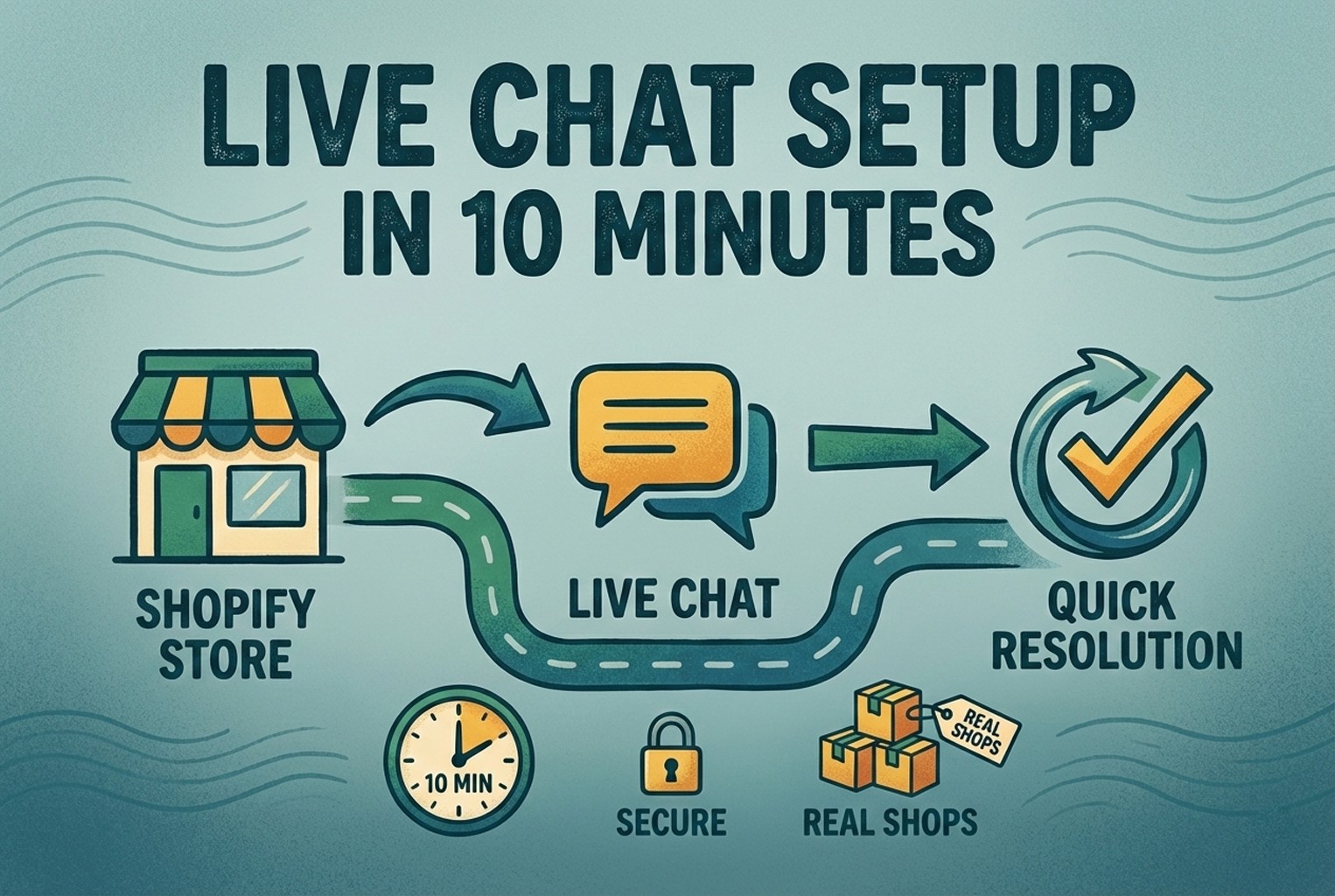
A case-study style checklist for merchants who need live chat running fast without creating another inbox headache. See the settings, routing choices, and reply habits that improved response quality in real Shopify stores.
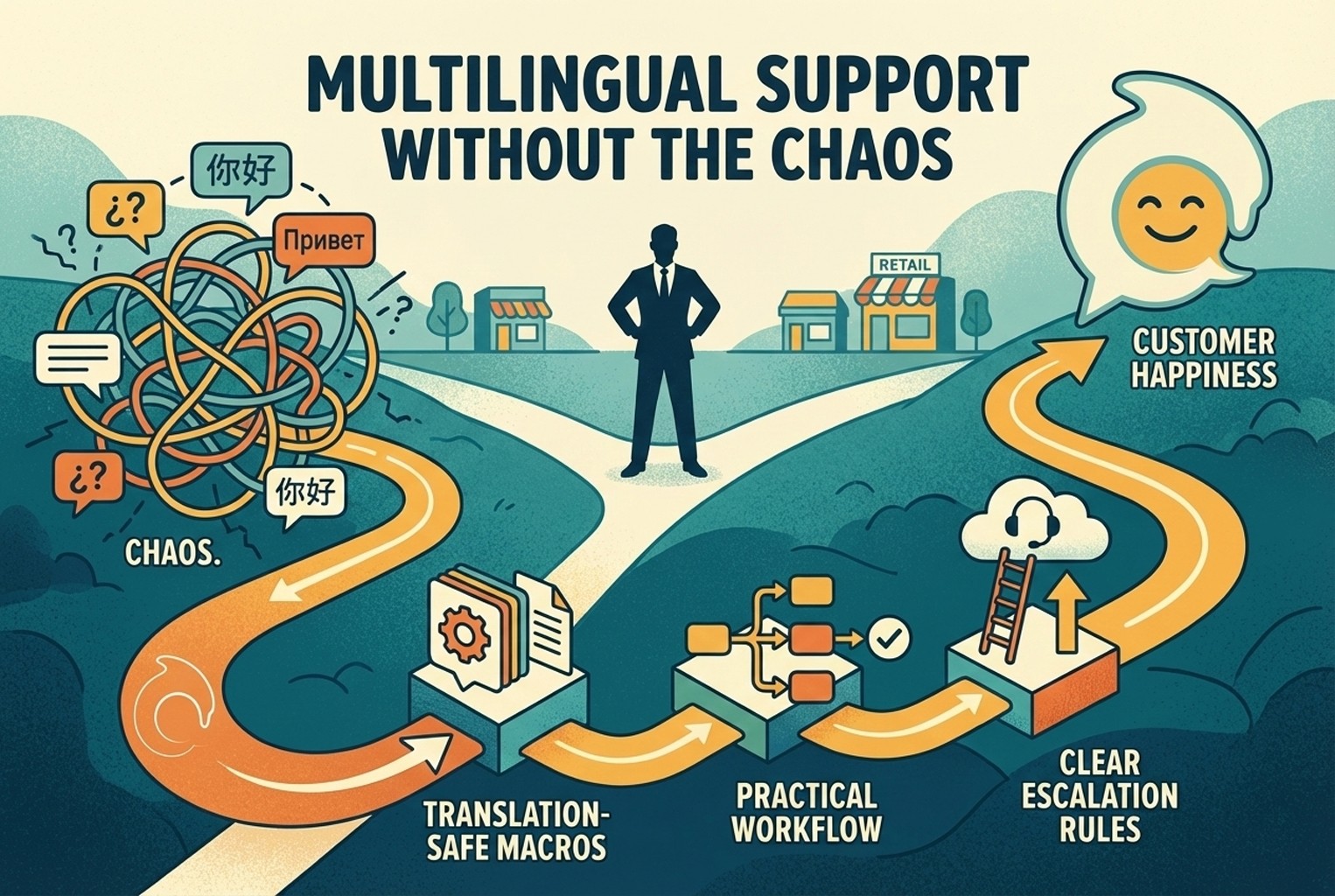
Selling across borders should not turn support into chaos. This playbook shows how retail teams handle multilingual chat and email with translation-safe macros, clear escalation rules, and QA habits that protect quality.
Stop losing the quiet ones.
Install it in a minute. It starts working on your next visitor.