What is a customer?
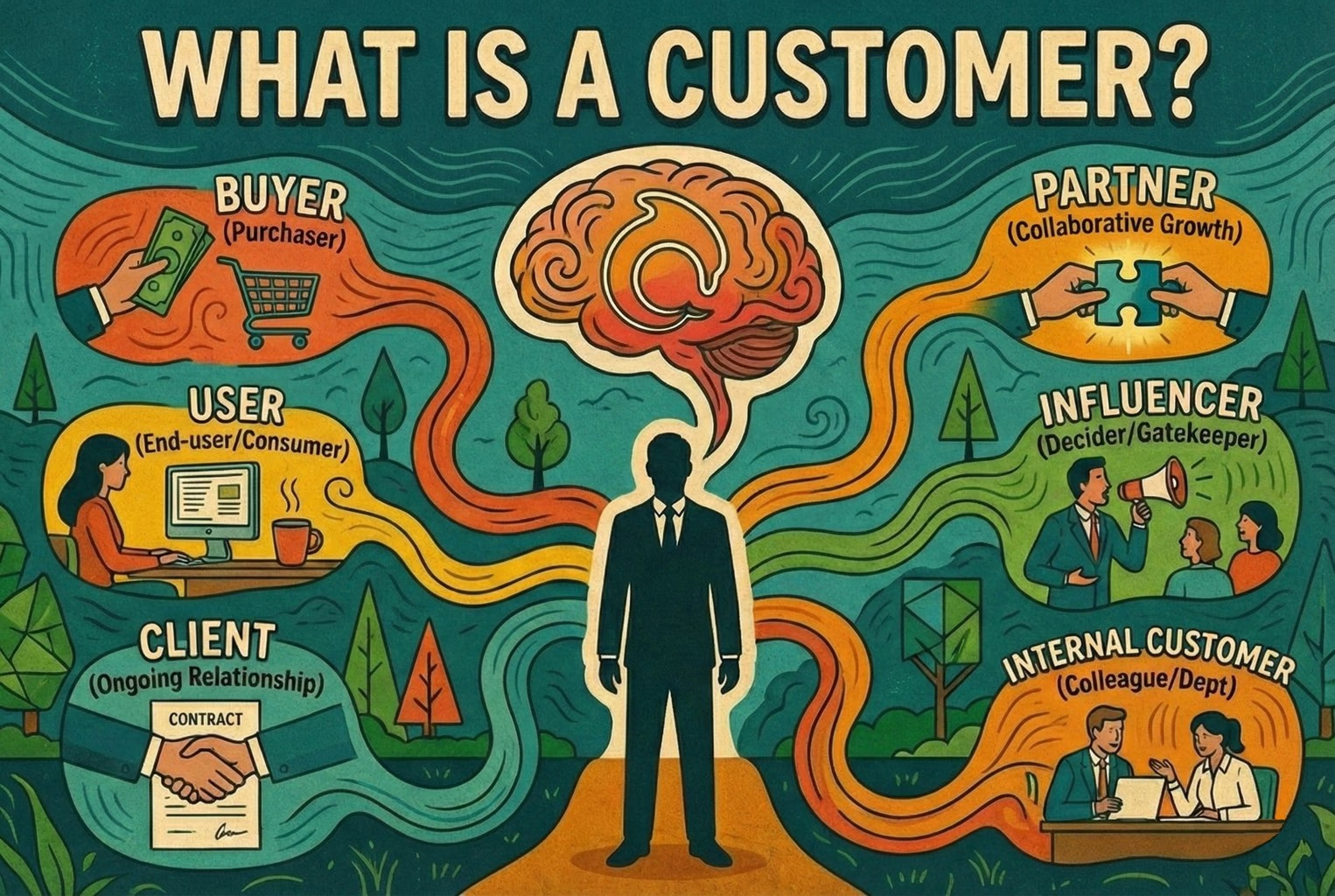
At its simplest, a customer is any person or organisation that pays, chooses, or is served by your product or service. But in practice, “customer” can mean many different roles:
Buyer (purchaser): Approves, selects, or pays for the product.
User (end-user/consumer): Actually consumes or interacts with the product.
Client: Maintains an ongoing, formalised relationship (common in professional services).
Influencer/decider/gatekeeper: Roles inside a buying committee (common in B2B).
Internal customer: Colleagues or departments served inside the organisation.
Why definitions matter
Confusing customer with consumer leads to poor design. (e.g., onboarding designed for the buyer but not the user).
Metrics like churn, NPS®, or adoption can get distorted if roles aren’t distinguished.
Types of customers
There’s no single universal list. The most useful approach is to look at customers through multiple lenses:
By relationship stage, Prospects → First-time → Repeat → Loyal → Advocate → Former/Win-back
By market type, B2C: individuals and households. B2B: firms and buying centres (roles: initiator, user, influencer, decider, buyer, gatekeeper). B2G/NGO: public procurement, NGOs.
By value/risk, High-value/whales, Growth potential, At-risk (likely churn), High cost-to-serve
By behaviour, Price-sensitive, Quality-seeking, Convenience-driven, Variety-seeking, Habitual/repeat, Explorers/early testers
By adoption mindset, Innovators, Early adopters, Early majority, Late majority, Laggards
By engagement level: Silent/passive, Reactive. Participating (reviews, feedback), Co-creating (betas, advisory boards) and Advocates (brand champions)
Tip: Create a Customer Typology Card that combines 2–3 lenses (e.g., “B2B • Early majority • High-value • Co-creating”). Use it across marketing, product, and support teams.
Customer segmentation (STP)
Segmentation groups customers into clusters so you can deliver tailored value. The STP model is classic but still essential
Segment: Define clusters (needs, behaviours, firmographics, jobs-to-be-done).
Target: Select attractive segments based on market size, profitability, and fit.
Position: Craft differentiated value propositions and proof points.
Segmentation checklist
Blend quantitative data (CLV, product usage, funnel analytics) with qualitative research (interviews, ethnography, jobs-to-be-done).
Focus on need states and journeys, not static demographics.
Re-segment periodically (behaviours shift with pricing, product, or market changes).
Connect segmentation directly to roadmaps, messaging, and service playbooks.
Innovation adoption (Diffusion of Innovations)
Everett Rogers’ framework explains how customers adopt new products:
Innovators (2.5%) risk-tolerant experimenters.
Early adopters (13.5%) opinion leaders; shape norms.
Early majority (34%) pragmatic, deliberate, need proof.
Late majority (34%) sceptical, adopt once proven and affordable.
Laggards (16%) resistant, tradition-bound.
Tip: The gap between early adopters and early majority is critical. Without proof (case studies, ROI calculators, integration evidence), products stall in niche markets.
Deliver an Adoption Proof Pack: customer testimonials, ROI metrics, IT/security compliance evidence.
The customer lifecycle
A customer relationship unfolds in stages. Designing for the full lifecycle drives retention and growth:
Awareness discovering a problem and your brand.
Consideration: Comparing solutions.
Acquisition/conversion: contracting.
Onboarding/Activation: time-to-value, habit formation.
Usage/Adoption: outcomes, support, community.
Retention/renewals: satisfaction, risk management.
Expansion/upsell: cross-sell, referrals.
Win-back/Exit: Learn from churn, offboarding gracefully.
Mapping those stages against the places customers actually reach you is the practical next step, covered in how to build a customer journey map and the touchpoints that matter most.
Metrics to track per stage:
Awareness → reach, search demand
Consideration → engagement, demo requests
Acquisition → conversion, CAC, payback
Onboarding → activation rate, time-to-value
Adoption → product usage depth/frequency
Retention → churn, renewal rate, NRR
Expansion → ARPU, expansion MRR, referral rate
Advocacy → reviews, UGC, NPS
Customer Experience (CX)
CX is the totality of perceptions and emotions customers have across interactions with your brand, spanning product, service, brand, pricing, and people. For a fuller treatment, see what customer experience means for retail and ecommerce teams.
Principles of CX design
Base decisions on research and journey mapping.
Focus on moments that matter (high emotion + high value).
Balance functional outcomes (speed, ease) with emotional outcomes (trust, care).
Build a continuous loop: Measure → Diagnose → Design → Test → Implement → Monitor → Repeat.
Customer Service (CS)
Customer service: Assistance and problem-solving when customers need help.
Excellence toolkit
Clear service standards (speed, empathy, ownership).
Knowledge-centred support & strong self-service.
Focus on first-contact resolution.
Recovery playbooks: apologise → fix → follow-up.
Service analytics: handle time, backlog health, deflection rate.
CX vs Customer Service
CX is the end-to-end journey.
Service is the help moments within that journey.
Scope: CX is broader; service is narrower.
Ownership: CX is cross-functional; service belongs to a single function.
Metrics: CX = loyalty, CLV; service = resolution, speed, sentiment.
Tip: Great service is necessary but not sufficient for great CX. The distinction is worked through in detail in customer service vs customer experience.
Customer advocacy
Advocacy is when customers actively recommend and defend your brand.
How to build it
Deliver consistently on core promises.
Involve customers (betas, councils, case studies).
Provide easy referral tools and recognition programs.
Act visibly on feedback.
Customer satisfaction (CSAT)
CSAT: captures whether expectations were met. Alone it is not enough, so use it alongside:
NPS®: loyalty indicator.
CES: ease of doing business.
Outcome metrics: retention, renewals, expansion.
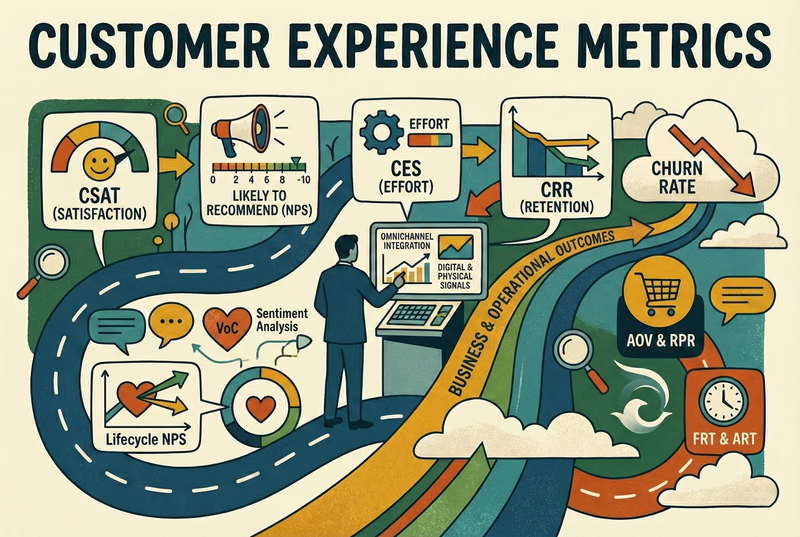
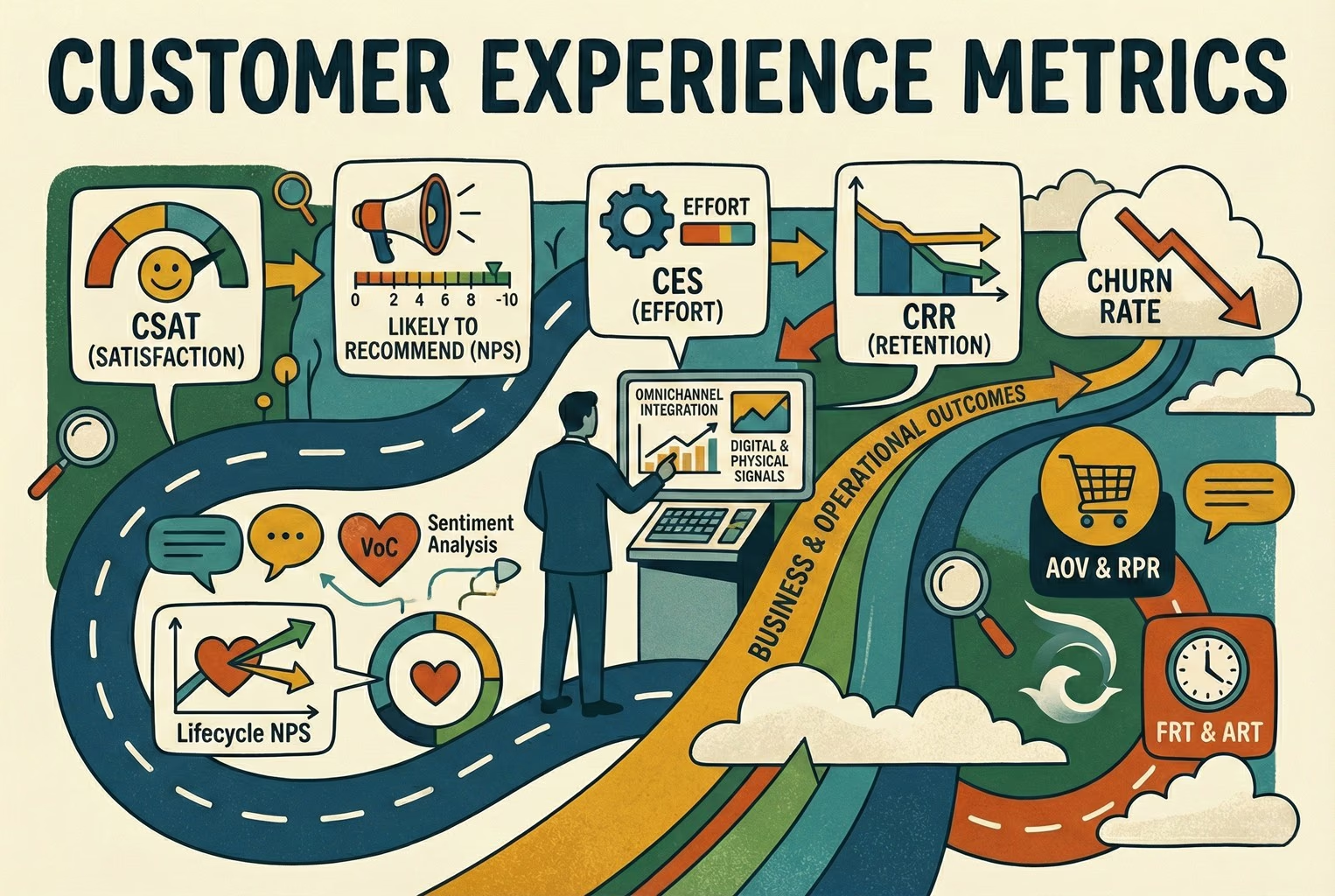
Tip: Always segment CSAT/NPS by journey stage and customer type; averages hide insights. How each of these is defined and calculated is covered in the customer experience metrics guide.
Customer engagement
Engagement: Depth, frequency, and quality of customer involvement.
Signals: usage metrics (DAU/WAU/MAU), reviews, referrals, UGC.
Levers: habit loops, communities, personalised nudges, milestones.
Tip: Build engagement loops that reinforce product value.
Consumer behaviour
Buying decisions follow a process
Need recognition → Information search → Evaluation → Purchase → Post-purchase → Word-of-mouth.
Influences
Psychological (perceptions, motivations).
Social (peers, family, reference groups).
Cultural (values, traditions).
Situational (context, environment).
In B2B: committees, procurement, ROI, risk.
Building Your Customer Operating System
A customer is not just a buyer — it’s a set of roles, needs, and behaviours that span the entire lifecycle. To manage this complexity, organisations need a Customer Operating System: a structured way of aligning teams around the customer.
That system is built on a few core disciplines: define your customer clearly (buyer, user, influencer, advocate); map the journeys that matter most across awareness to win-back; measure each stage with the right metrics, separating the metrics you track from the KPIs you commit to; design experiences and “moments that matter” to create emotional and functional value; operate service consistently with standards, playbooks, and self-service; develop engagement and advocacy programmes that turn satisfaction into growth; and review and re-segment regularly, because customers change and so must your strategy.
To make this actionable, equip your teams with practical tools: an audience persona (customer persona) to align on who you serve; a Lifecycle Measurement Map to connect journeys to owners and KPIs; an Adoption Proof Pack (case studies, ROI, compliance) to cross the “chasm”; and a Service Playbook that ensures consistent, empathetic resolution.
Key takeaways
Customers are best understood as an umbrella concept, spanning buyers, users, clients, and influencers and they can be segmented by stage, value, behaviour, or adoption mindset. Segmentation (STP) and lifecycle mapping are the foundation for targeting and positioning. Adoption follows a predictable curve from innovators to laggards, while customer experience spans the entire journey and service represents one key part of it. Advocacy and engagement act as growth multipliers, and consumer behaviour is shaped by psychology, culture, social context, and risk.
In short: Companies that systematise how they understand and deliver value to customers with both human empathy and data-driven rigour will earn loyalty, advocacy, and long-term advantage. If you are new to the vocabulary, the CX glossary defines the terms used throughout this article.