What Is Customer Experience Management?
Customer Experience Management is the discipline of designing, monitoring, and improving interactions across the customer lifecycle.
It moves beyond customer service (reactive) or marketing (transactional) into a holistic practice of shaping perceptions, emotions, and journeys.
Key characteristics of CXM:
Holistic orchestration, ensuring consistency across channels and time
Human-centred design, understanding needs, behaviours, and emotions
Continuous iteration, improving through measurement and feedback
Cross-functional alignment, embedding customer priorities across departments
Why CXM Matters More Than Ever
Every business delivers a customer experience. The only question is whether it happens by accident or by design.
In today’s world of constant choice, customers don’t compare you only to direct competitors, they compare you to the best experience they’ve ever had.
That is why Customer Experience Management (CXM) has emerged as a strategic discipline. CXM is about designing, managing, and improving experiences across the entire journey so they feel seamless, consistent, and meaningful.
At AskDolphin, we describe CXM as the art of flow: every interaction connects smoothly to the next, forming a continuous relationship of trust and resonance.
CXM vs CRM: What’s the Difference?
A frequent question: how does Customer Experience Management (CXM) differ from Customer Relationship Management (CRM)?
CRM: Data and Transactions
Stores and organises customer information, history, and transactions
Used mainly in sales, marketing automation, and support ticketing
Goal: efficiency and productivity
CXM: Perceptions and Experiences
Focuses on journeys, emotions, and overall experience quality
Used for designing and improving holistic customer experiences
Goal: trust, loyalty, and advocacy
The distinction:
They complement each other: CRM provides data foundations, CXM provides strategic orchestration.
Why CXM Matters: The Business Case
CXM is not “nice to have.” It is a business necessity.
Benefits of Strong CXM
Loyalty & retention: Customers stay longer and spend more.
Advocacy: Positive experiences fuel referrals and word-of-mouth.
Differentiation: In commoditised markets, experience is the true edge.
Efficiency: Well-designed journeys reduce service tickets, errors, and costs.
Resilience: CX-focused companies adapt faster to change.
The Building Blocks of CXM
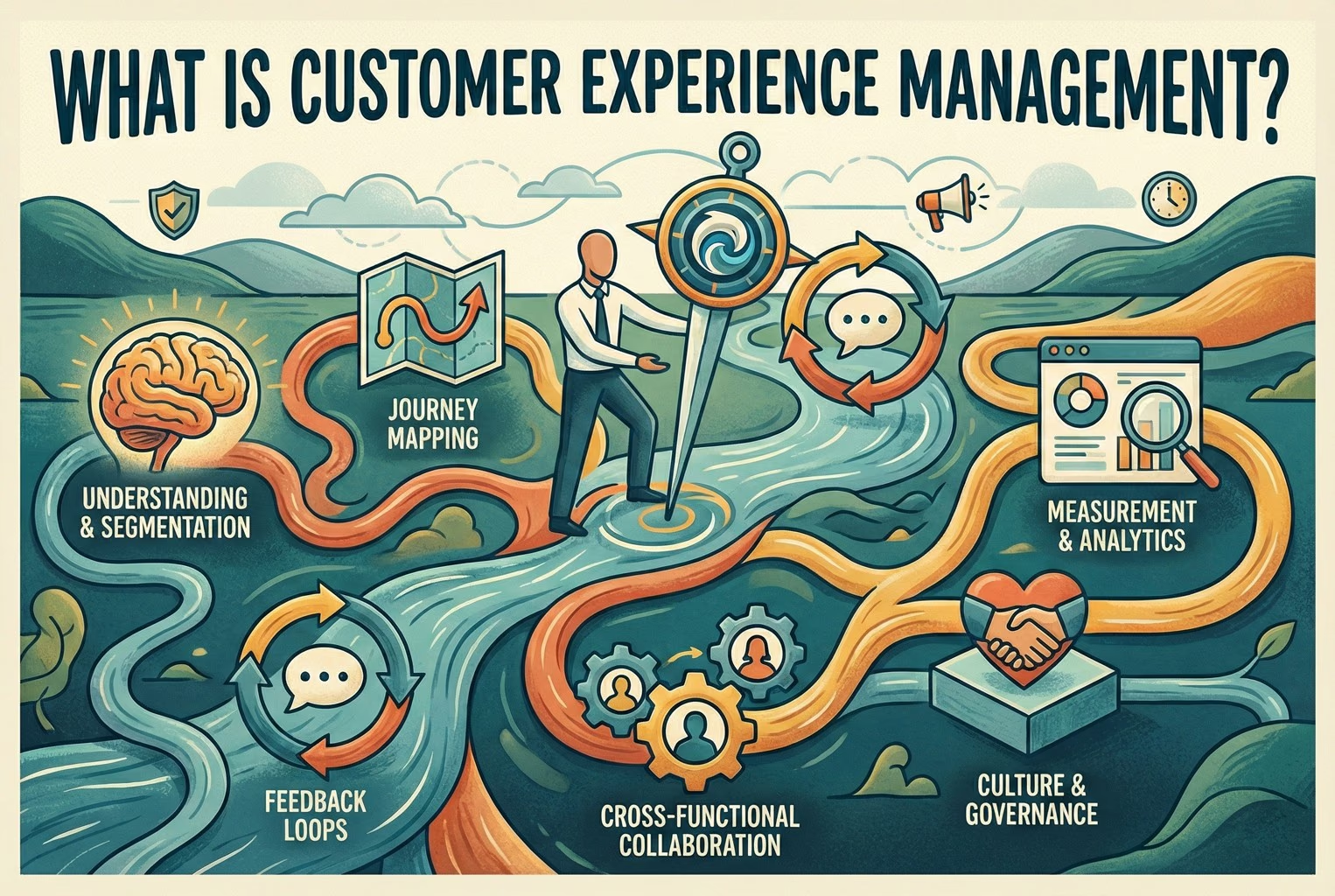
1. Customer Understanding & Segmentation
Start with empathy. Go beyond demographics to understand motivations and pain points.
Surveys, interviews, behavioural data
Personas that capture goals and frustrations
Segmentation by needs, not just age or income
2. Journey Mapping & Experience Design
Map steps, touchpoints, and emotions. Identify:
3. Voice of the Customer (VoC) & Feedback Loops
Feedback matters only if it drives action. Use the CX Improvement Loop:
Measure → Diagnose → Design → Test → Implement → Monitor → Repeat
4. Cross-Functional Collaboration
CXM is a team sport. Marketing, sales, service, and product must align.
5. Measurement & Analytics
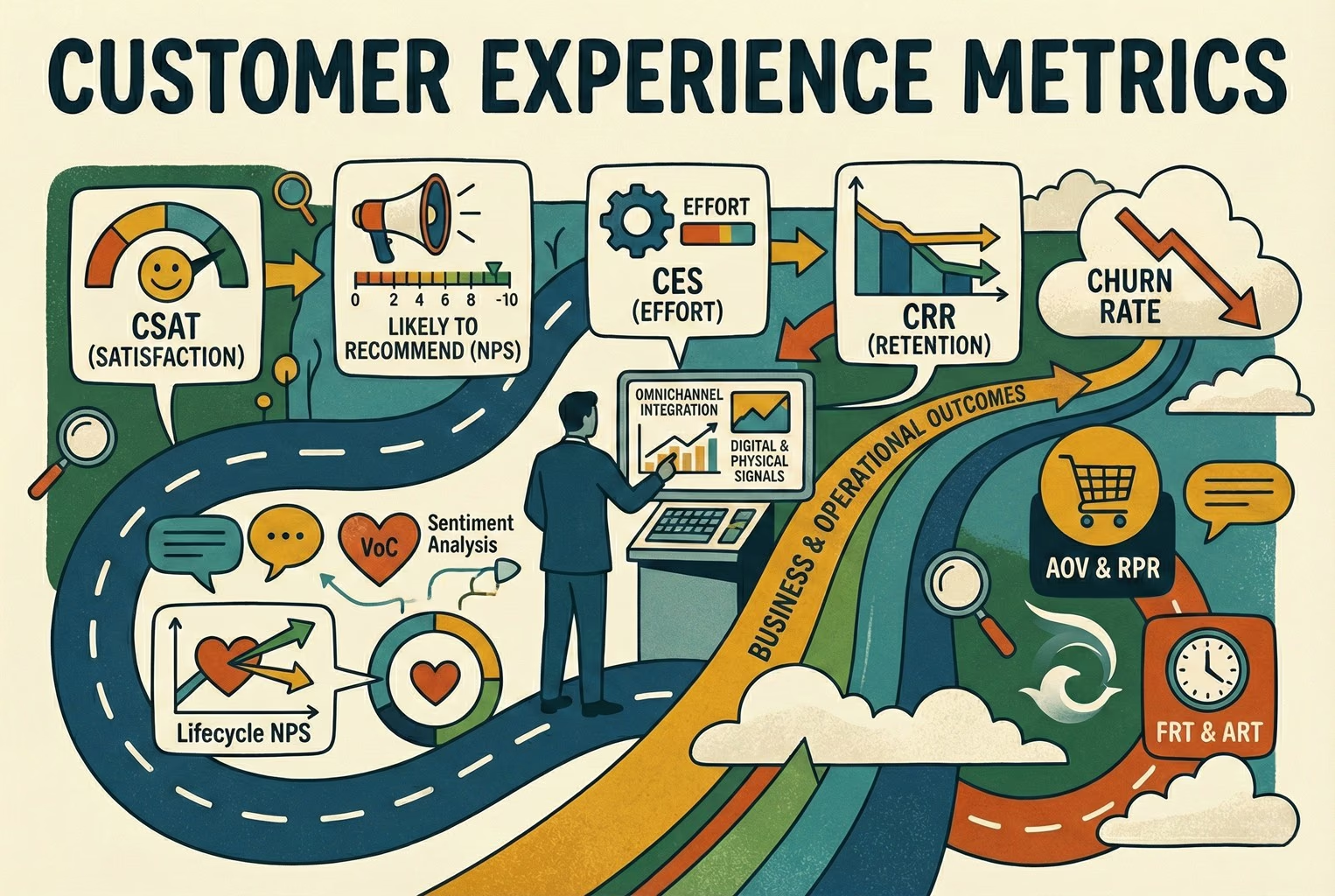
Balance metrics:
Experience: CSAT, NPS, CES
Behavioural: churn, retention, lifetime value
Operational: support cost, resolution time
Financial: ROI, growth, wallet share
6. Culture & Governance
Tools alone don’t deliver CX. Culture does.
Customer Experience Management Platforms
Why CXM Platforms Are Essential
CXM is a philosophy, but without tools it struggles to scale. Data sits in silos, feedback is scattered, and actions stall. A CXM platform unifies these elements, providing the infrastructure to listen, learn, and act in real time.
Think of it as the engine room of experience: while strategy defines where you want to go, the platform keeps every gear turning smoothly.
What CXM Platforms Actually Do
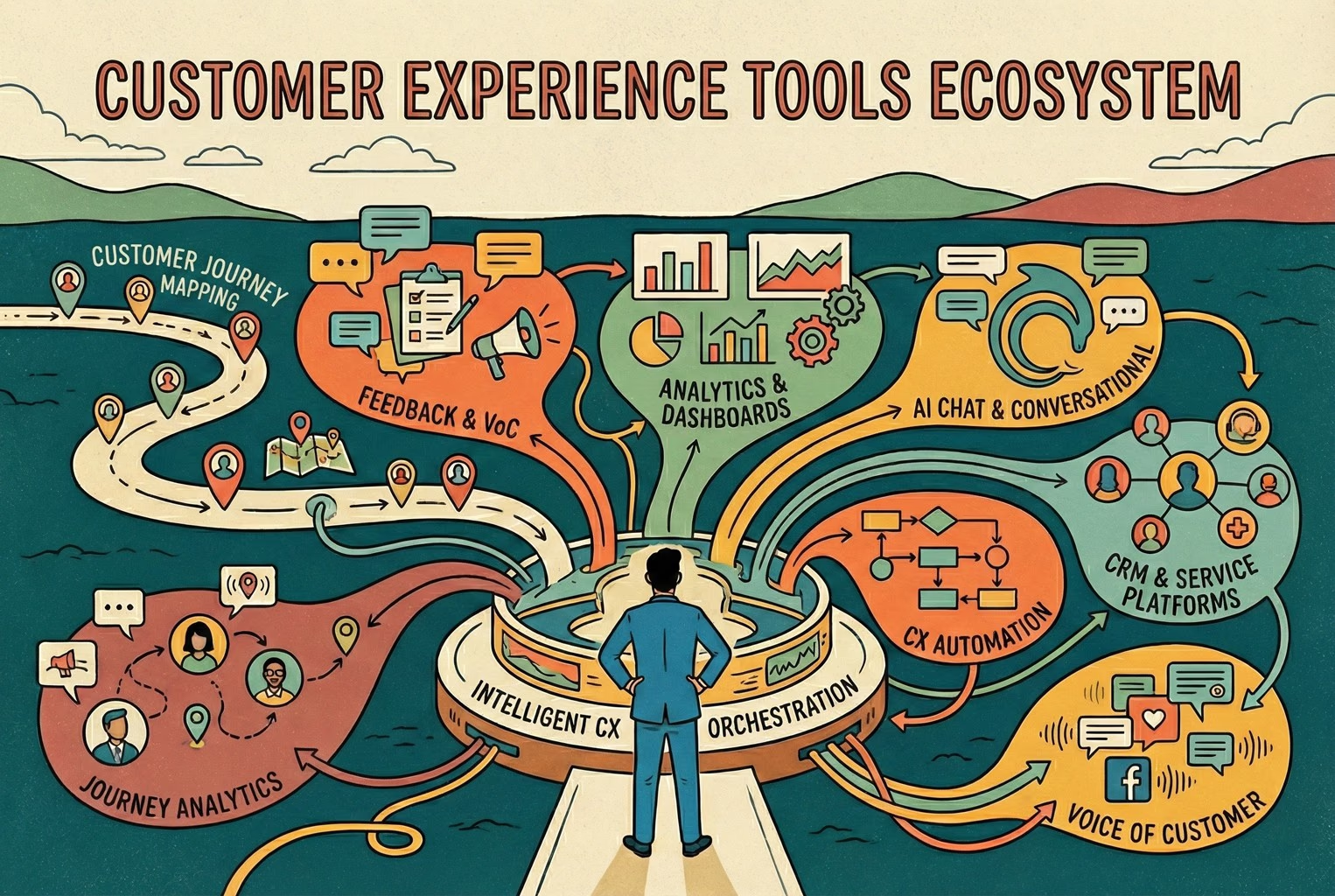
A well-designed CXM platform:
Captures multi-channel feedback (email, chat, in-app, web, surveys, social)
Unifies data into a single customer view
Analyses insights with dashboards, metrics, and sentiment analysis
Orchestrates workflows, e.g., alerting account managers when churn risk rises
Closes the loop by tracking how issues are resolved
Monitors experience health via real-time reporting
Integrates with CRM, ERP, and support systems to ensure flow
Core Features of CXM Platforms
Omnichannel Feedback Capture: Collect insights wherever customers interact.
Journey Mapping and Visualisation: Translate complex experiences into clear, actionable views.
Real-Time Dashboards: Track KPIs and spot trends before they become problems.
AI-Powered Insights: Surface patterns (e.g., sentiment, churn prediction) that humans might miss.
Closed-Loop Feedback Management: Ensure issues are not just recorded but resolved.
Integration Capabilities: Connect with CRM, marketing, support, and product analytics.
Scalability & Flexibility: Adapt to organisational growth and evolving CX needs.
Things to Look For in a CXM Platform
Before investing, ask:
Ease of Use: Can teams adopt without heavy IT dependence?
Cross-Functional Fit: Will it align marketing, service, product, and ops?
Customisation: Can dashboards and workflows adapt to your business?
Security & Compliance: Is data safeguarded appropriately?
Support & Community: Does the vendor help you succeed beyond the software?
Future-Readiness: Does it evolve with AI, personalisation, predictive analytics?
Why This Matters
Without a CXM platform, organisations risk fragmentation: insights lost in emails, disconnected systems, and slow responses.
With one, they gain clarity, coordination, and the ability to act in flow.
Challenges and Pitfalls in CXM
Even with tools, pitfalls exist:
Data silos
Metric overload
Feedback without follow-up
Over-focus on tech, under-focus on culture
Static strategies in dynamic markets
Solution: start small, measure impact, scale through trust and evidence.
The Future of CXM
Predictive Experiences: Anticipating needs proactively.
Omnichannel Flow: Continuity across physical and digital channels.
Emotional Loyalty: Building trust and belonging, not just satisfaction.
Purpose-Driven CX: Aligning experiences with ethics and values.
CX Happens
You know CXM is working when:
Your customer says, “That was easy,” and your team cheers quietly.
The “seamless” experience was stitched together by four teams and six strong coffees.
Your chatbot gets a “thank you” and it makes the support team’s day.
Flow Forward: Turning CXM Into Connection
CXM isn’t just a framework, it’s a philosophy of connection.
When strategy, culture, and technology move as one, experience stops being transactional and becomes emotional.
At AskDolphin, we believe CXM is how organisations turn information into empathy and empathy into loyalty. It’s the invisible flow that connects moments into relationships.
Flow Forward: every great customer experience is a conversation, one that never really ends.